
Arabica coffee beans are behind many of the coffees enjoyed in homes and specialty coffee shops around the world. Known for their potential to produce complex flavours and aromas, Arabica coffees can taste remarkably different depending on where they’re grown, their variety, processing method, roast and preparation.
But what exactly is Arabica coffee, where did it originate, and does the word Arabica automatically mean you’re buying better coffee?
This guide explores the history, characteristics and varieties of Arabica coffee beans, along with some useful tips for choosing and brewing them.
What are Arabica coffee beans?
Arabica coffee beans come from the coffee species Coffea arabica.
It’s one of the principal species cultivated commercially for drinking coffee, alongside Coffea canephora, commonly known as Robusta.
Arabica is particularly important to the specialty coffee industry because of the wide range of flavours its different varieties, origins and processing methods can produce.
However, Arabica isn’t a single flavour or style of coffee.
A naturally processed Ethiopian Arabica can taste dramatically different from a washed Colombian coffee or a Brazilian Arabica used for espresso.
That’s why the species is only the beginning of the story.
Where does Arabica coffee come from?
The history of Arabica begins in Africa.
Arabica’s natural origins are centred on Ethiopia and neighbouring parts of East Africa. The wild coffee forests of this region contain important genetic diversity that continues to matter to coffee researchers today.
Coffee was subsequently taken from Ethiopia to Yemen, where it became established as a cultivated crop.
From Yemen, coffee began a remarkable journey around the world.
According to World Coffee Research, coffee seeds moved from Yemen into India and subsequently travelled along different routes that eventually helped establish Arabica production across Asia, the Americas and other coffee-growing regions.
So Ethiopia is central to Arabica’s biological origin, while Yemen played an enormously important role in its cultivation and global history.
You can explore the Ethiopian side of the story in our Ethiopia coffee guide.
What do Arabica coffee beans taste like?
The flavour of Arabica coffee beans can vary enormously from one coffee to another.
Depending on the coffee, you might encounter characteristics reminiscent of:
- Chocolate
- Caramel
- Nuts
- Berries
- Citrus fruit
- Stone fruit
- Florals
- Spices
Some coffees are bright and fruit-forward, while others are rich, sweet and chocolatey.
Origin plays an important role, but it isn’t the only factor.
Variety, growing conditions, processing, roasting and brewing all contribute to what eventually reaches your cup.
This is why buying Arabica coffee beans based solely on the word “Arabica” doesn’t tell you exactly how the coffee will taste.
Arabica vs Robusta
Arabica and Robusta are often presented as if one is simply good and the other bad, but that’s an oversimplification.
They are different coffee species with different characteristics.
Arabica is widely associated with the specialty market and can offer considerable flavour complexity.
Robusta generally contains more caffeine and is often associated with greater bitterness and body. It is commonly used in instant coffee and can also form part of espresso blends.
High-quality examples can exist within different coffee species, so the species name shouldn’t be treated as a complete measure of quality.
For many specialty coffee drinkers, however, Arabica coffee beans remain the familiar choice because of their enormous diversity of varieties and flavour profiles.
What do Arabica beans look like?
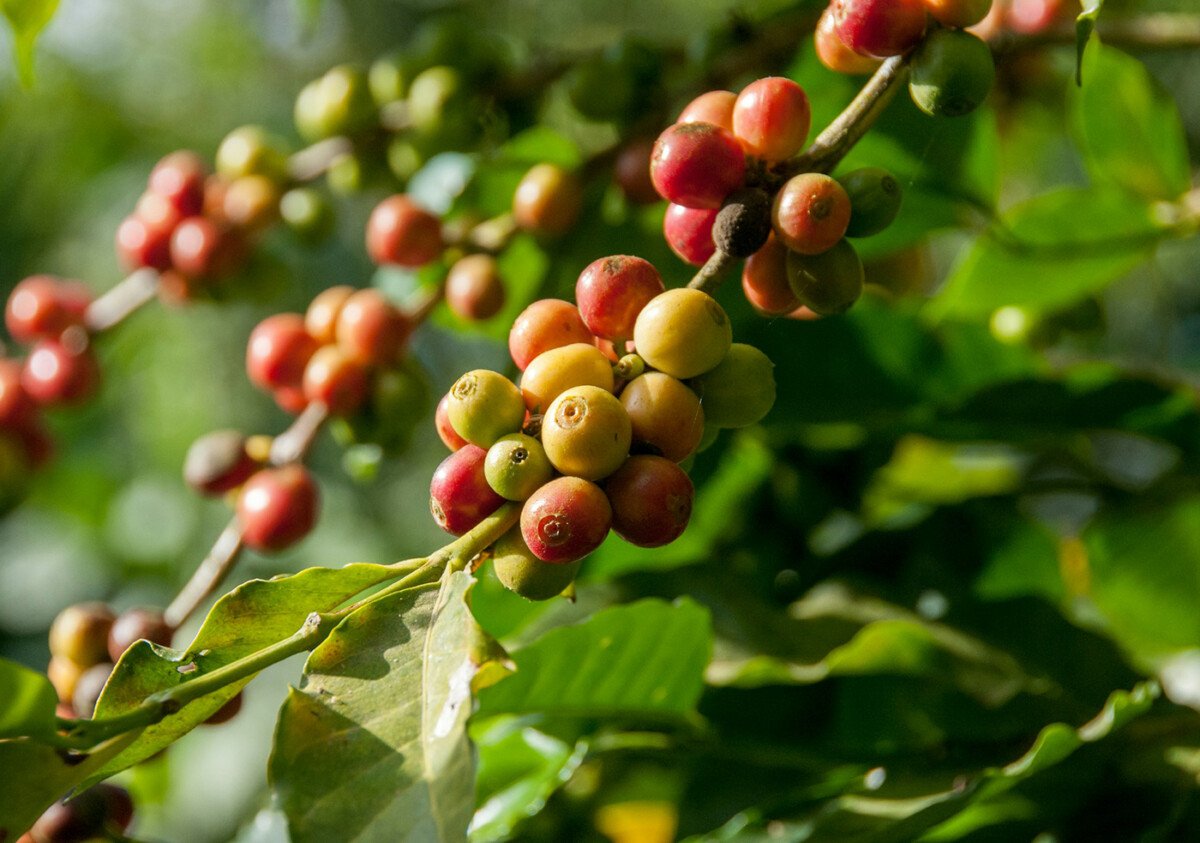
Coffee “beans” are actually seeds found inside coffee fruit, commonly called coffee cherries.
Once processed and dried, green Arabica seeds are prepared for roasting.
You’ll sometimes see Arabica described as having a more elongated or oval appearance than Robusta, with a curved centre groove.
These visual differences can be useful generalisations, but appearance alone isn’t a reliable way for an everyday coffee drinker to determine the quality or exact identity of a coffee.
Information about origin, variety, processing and roasting is much more useful when deciding what to buy.
Where are Arabica coffee beans grown?
Arabica is now cultivated across coffee-producing regions around the world.
Important producing countries include:
- Brazil
- Colombia
- Ethiopia
- Guatemala
- Costa Rica
- Mexico
- Kenya
- Rwanda
- El Salvador
- India
Each country contains multiple growing regions, microclimates, varieties and processing traditions.
Even coffees produced within the same country can taste noticeably different.
For example, Brazilian coffee is often associated with chocolate, nut and caramel characteristics, while some Ethiopian coffees are prized for floral, citrus and fruit-forward profiles.
Explore our guides to coffee from Brazil, Colombia, Guatemala and Kenya to see how diverse coffee origins can be.
Does Arabica have to grow at high altitude?
Arabica is strongly associated with highland coffee production, but there’s no single altitude at which every Arabica plant must be grown.
Suitable conditions depend on geography, climate and variety.
Kew describes wild Arabica as originating from tropical highland environments, while cultivated coffee is now grown under a wide range of regional conditions.
Altitude can influence temperature and the way coffee fruit develops, which is one reason elevation is often highlighted by specialty coffee producers.
But altitude shouldn’t be treated as a quality score on its own.
A high elevation printed on a bag doesn’t automatically guarantee that you’ll prefer the coffee inside.
Popular Arabica coffee varieties
One of the most interesting things about Arabica coffee beans is the diversity found within the species.
There are many cultivated varieties of Arabica coffee beans, and understanding a few of the major names can make coffee labels much more meaningful.
Typica
Typica is one of the historically important Arabica varieties.
Its descendants have been cultivated in coffee-producing countries around the world, and it played an important role in the spread of Arabica cultivation.
World Coffee Research describes Typica as having good cup-quality potential but relatively low production and susceptibility to major coffee diseases.
Bourbon
Bourbon is another historically significant variety.
It developed through coffee taken from Yemen to Bourbon Island, now known as Réunion, before spreading to other parts of the world.
Bourbon is associated with excellent cup-quality potential, although the plant can be susceptible to disease.
Caturra
Caturra is a natural mutation of Bourbon and became particularly important in Latin American coffee production.
Its compact growth allows farmers to plant trees more densely than traditional tall varieties.
Catuaí
Catuaí was developed in Brazil by crossing Mundo Novo with Caturra.
Its compact size and productivity helped it become an important cultivated variety in several coffee-producing countries.
Gesha or Geisha
Gesha has become one of the most famous names in specialty coffee.
The variety has Ethiopian origins but became particularly celebrated through coffees grown in Panama.
Certain Gesha coffees are known for distinctive floral and delicate characteristics, although flavour ultimately depends on much more than the variety name alone.
Ethiopian landraces
Ethiopia contains extraordinary Arabica genetic diversity.
Rather than all Ethiopian coffee belonging to one variety called “Ethiopian Heirloom”, there are numerous locally adapted populations and varieties.
World Coffee Research uses the term Ethiopian landrace for traditional, locally adapted varieties that have developed through domestication and adaptation over time.
Does Arabica always mean premium coffee?
No.
Understanding quality is important when choosing Arabica coffee beans, because the species alone doesn’t determine how good the coffee will be.
“100% Arabica” tells you which coffee species was used, but it doesn’t guarantee exceptional quality.
Coffee quality is influenced by numerous factors, including:
- Growing conditions
- Variety
- Harvesting
- Cherry ripeness
- Processing
- Storage
- Roasting
- Freshness
- Brewing
Poorly grown, processed or roasted Arabica can still produce disappointing coffee.
Conversely, carefully produced beans with clear information about their origin and roasting can give you a much better idea of what to expect.
How roasting changes Arabica coffee
Roasting has an enormous influence on the flavour of Arabica coffee beans.
Light roasts can preserve more of the distinctive characteristics associated with the coffee’s origin and processing.
Medium roasts can provide a balance between those origin characteristics and flavours created during roasting.
Darker roasting generally produces more pronounced roast-derived flavours and can reduce the prominence of some of the coffee’s original characteristics.
None is automatically better.
The right roast depends on the flavours you enjoy and how you intend to prepare your coffee.
Our coffee roast levels guide explores light, medium and dark roasting in more detail.
What’s the best way to brew Arabica coffee?
Arabica coffee beans can work with many brewing methods, so there’s no single approach that’s best for every coffee.
Different methods can emphasise different aspects of the same coffee.
For brighter or more delicate coffees, pour-over methods such as the V60 and Chemex can work particularly well.
An AeroPress gives you considerable flexibility to experiment with grind, temperature and brewing time.
A cafetiere can produce a fuller-bodied cup.
And for concentrated coffee, Arabica can work beautifully as espresso, either as a single-origin coffee or as part of a carefully constructed blend.
The best method is ultimately the one that produces the cup you enjoy.
How to choose Arabica coffee beans
Instead of looking only for “100% Arabica”, consider the other information available.
When choosing Arabica coffee beans, start with the roast level and flavour notes.
If you enjoy chocolatey and nutty coffee, look for tasting descriptions pointing in that direction. If you prefer fruit and floral flavours, choose accordingly.
Origin can provide another useful clue.
Once you discover countries and regions you particularly enjoy, you can use those preferences to explore similar coffees.
Freshness matters too.
Coffee is best treated as a fresh product rather than something to leave forgotten at the back of a cupboard indefinitely.
Our guide to storing coffee explains how to protect your beans from air, moisture, heat and light.
Discover Arabica coffee beans
Arabica’s appeal comes from its diversity.
The species has travelled from its East African origins to become part of coffee cultures and farming communities across the world.
Within that single species are numerous varieties, origins, processing methods and roast styles capable of producing remarkably different cups.
That’s why exploring Arabica coffee beans can be much more rewarding than simply looking for the word Arabica on a packet.
Try coffees from different origins. Compare roast levels. Experiment with brewing methods. Pay attention to which flavours you enjoy.
Over time, you’ll begin to understand what makes your ideal coffee.
Browse CoffeeHype’s range of freshly roasted coffee beans, roasted to order and available as whole beans or ground for different brewing methods.
Best Selling Products
-

Brazil Fazenda Pinhal Coffee
From: £9.99 — or subscribe to save 10% -
House Blend Coffee
From: £9.99 — or subscribe to save 10% -
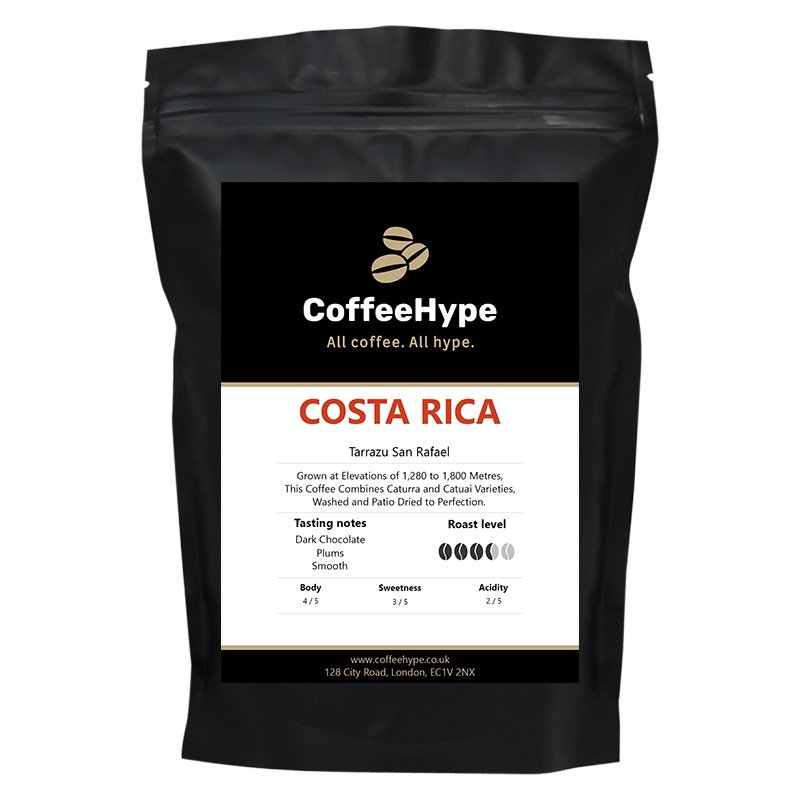
Costa Rica Tarrazu San Rafael Coffee
From: £9.99 — or subscribe to save 10% -
Volcanica Coffee Blend
From: £9.99 — or subscribe to save 10%


2024