
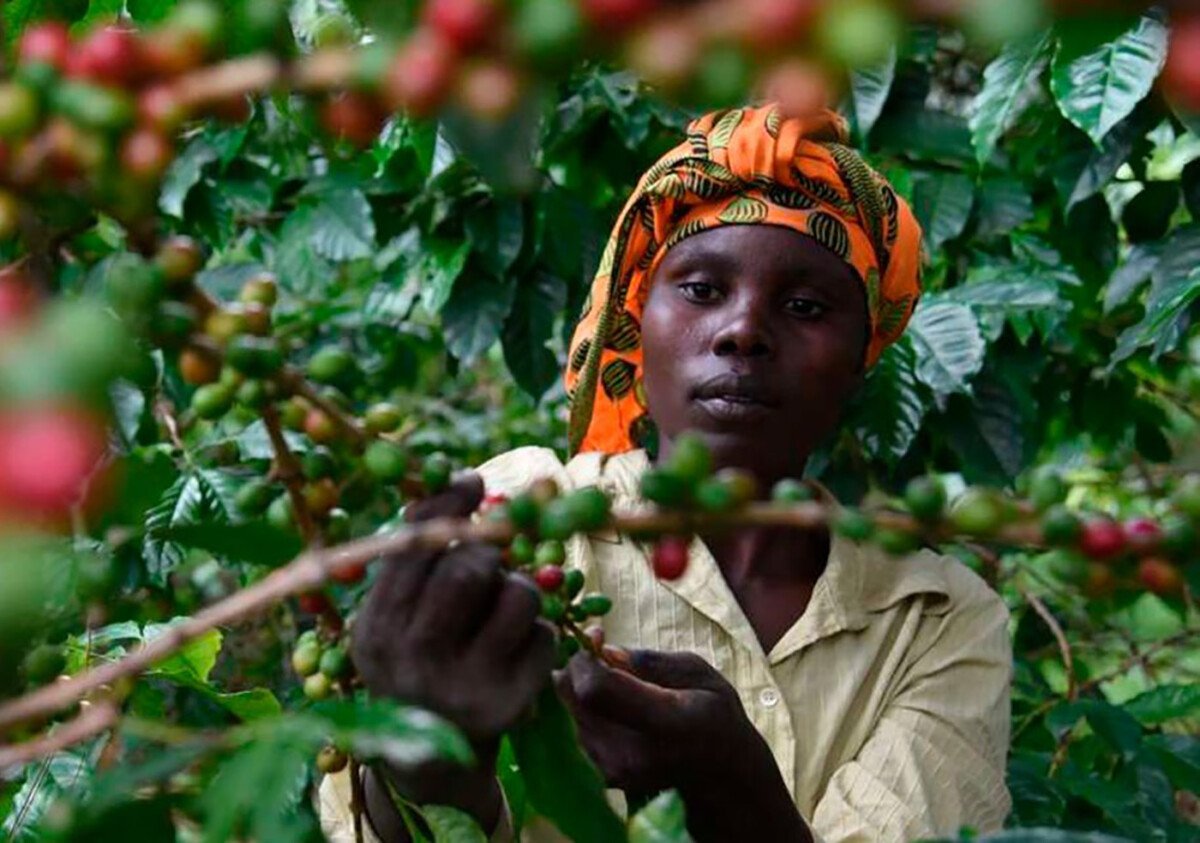
Kenya coffee has earned an international reputation for vibrant flavours, pronounced acidity and distinctive fruit characteristics.
From blackcurrant and berries to citrus, florals and sweeter notes, coffees grown in Kenya can produce remarkably complex cups. That makes the country particularly interesting for anyone who enjoys exploring single-origin coffee.
But there’s much more to Kenya coffee than its flavour.
Altitude, varieties such as SL28 and SL34, careful processing and the country’s distinctive grading and trading systems have all contributed to its identity.
In this Kenya coffee guide, we’ll explore its history, important growing regions, varieties, processing, grading and flavour characteristics before looking at some of the best ways to brew it at home.
A brief history of Kenya coffee
Coffee cultivation in Kenya developed during the late 19th and early 20th centuries, during the colonial period.
Commercial production subsequently expanded, although for much of the colonial era African farmers faced restrictions on growing coffee.
Following changes to the industry and eventually Kenyan independence in 1963, smallholder production became an increasingly important part of the country’s coffee sector.
Today, Kenya coffee is produced by both estates and large numbers of small-scale farmers, many of whom work through cooperative structures.
The country’s auction system has also played an important role in the way Kenyan coffees are marketed and traded.
Where does Kenya coffee grow?
Much of Kenya’s coffee is grown in elevated areas where conditions can be well suited to Arabica production.
Some of the country’s best-known producing areas are found around Mount Kenya and the Aberdare Range.
Important coffee-growing areas include:
- Nyeri
- Kirinyaga
- Kiambu
- Murang’a
- Embu
- Meru
- Machakos
- Nakuru
- Kericho
- Bungoma
Conditions aren’t identical across these regions, which means coffees from different parts of the country can display their own characteristics.
Altitude is particularly important.
Many Kenya coffee farms are located at relatively high elevations, where cooler conditions can allow coffee cherries to mature more slowly.
Altitude isn’t the only factor determining quality or flavour, however. Variety, soil, rainfall, farming practices, processing, roasting and brewing all contribute to what eventually reaches your cup.
If you enjoy comparing origins, our Ethiopia coffee guide explores another of Africa’s most famous coffee-producing countries.
What coffee varieties are grown in Kenya?
Two names appear repeatedly when discussing Kenya coffee: SL28 and SL34.
These varieties were selected during breeding work carried out by Scott Agricultural Laboratories during the 20th century and became closely associated with Kenyan coffee production. World Coffee Research’s SL28 variety profile provides further information about the variety, its history and characteristics.
SL28
SL28 is particularly well known within specialty coffee.
It has become associated with some highly regarded Kenyan coffees and can produce distinctive flavour characteristics under suitable growing and processing conditions.
SL34
SL34 is another important variety with a long history in Kenya.
Like SL28, it can be found across many established coffee-growing areas.
Ruiru 11
Ruiru 11 was developed with disease resistance and productivity among its breeding objectives.
It provides growers with an alternative to some of the older varieties that can be susceptible to important coffee diseases.
Batian
Batian is a more recently released variety developed in Kenya.
It was introduced as another option combining desirable production characteristics with resistance to major diseases.
Together, these varieties illustrate how Kenya coffee production combines established cultivars with continued efforts to address challenges facing growers.
How is Kenya coffee processed?
Washed processing is strongly associated with Kenya coffee.
After ripe coffee cherries are harvested, the fruit is removed before the coffee goes through stages that can include fermentation, washing and drying.
Many Kenyan coffees also undergo an additional soaking stage after washing.
The coffee is then dried until it reaches an appropriate moisture level for further processing and storage.
Careful washed processing can contribute to the clarity for which many Kenyan coffees are known, although the finished flavour is the result of many factors rather than processing alone.
You’ll sometimes encounter natural or other experimental processes from Kenya as well, particularly within specialty coffee, so don’t assume every Kenyan bean will have been processed in exactly the same way.
What does AA mean in Kenya coffee?
You’ve probably seen bags labelled Kenya AA.
It’s easy to assume that AA simply means “the best”, but that’s an oversimplification.
AA is principally a physical grading designation associated with the size of the green coffee beans.
Large beans are separated from smaller grades during grading, with AA among the larger commonly encountered grades.
Other Kenyan classifications include AB and PB, with PB referring to peaberry coffee.
Bean size can be useful for sorting and trading, but an AA label doesn’t guarantee that a coffee will taste better than every AB or other grade.
Farm, variety, processing, roast quality and freshness are all important.
So when choosing Kenya coffee, treat AA as useful information about the grade rather than a universal quality score.
What does Kenya coffee taste like?
This is where Kenyan coffee becomes particularly exciting.
Although no single flavour description applies to every bean produced across an entire country, Kenya coffee is often associated with lively acidity and pronounced fruit characteristics.
Depending on the particular coffee, you might encounter flavours or aromas reminiscent of:
- Blackcurrant
- Red berries
- Citrus
- Grapefruit
- Stone fruit
- Tropical fruit
- Florals
- Tea
- Caramel or brown sugar
Blackcurrant is one of the flavour descriptions particularly associated with some classic Kenyan coffees.
Acidity can also be prominent, giving the coffee a juicy, vibrant character.
Remember that tasting notes don’t mean ingredients such as blackcurrant or grapefruit have necessarily been added to the beans. They’re descriptions of flavours and aromas people perceive naturally in the brewed coffee.
Our guide to understanding coffee roasts and their flavours explains how roasting can influence what you experience in the cup.
Why can Kenyan coffees taste so fruity?
There isn’t one single reason.
The distinctive character associated with Kenya coffee can result from a combination of:
- Coffee variety
- Growing altitude
- Climate
- Soil and local growing conditions
- Cherry ripeness
- Processing
- Roasting
- Brewing
Varieties such as SL28 and SL34 are part of the story, while washed processing can help produce a clean cup in which distinctive characteristics are easier to perceive.
A skilled roast is equally important.
Roasting too dark can introduce stronger roast flavours that may make some of the more delicate characteristics harder to detect.
When is coffee harvested in Kenya?
Kenya is unusual in having two flowering and harvesting periods in many producing areas.
You’ll commonly hear these described as the main crop and the smaller fly crop.
Exact timing varies according to region, altitude and weather, so it’s better not to treat a single set of months as applying to every farm across the country.
After harvesting and processing, coffees also take time to move through milling, grading, sale, export and roasting before reaching consumers.
For most home coffee drinkers, the roast date and how the roasted beans have been stored are therefore more immediately useful than simply knowing the harvest month.
Read our guide on how to store your coffee for tips on keeping roasted beans in good condition at home.
How to brew Kenya coffee
There’s no single correct brewing method for Kenya coffee, but filter brewing is an excellent place to start if you want to explore its fruit and acidity.
V60
A V60 can produce a clean cup that allows distinctive flavours to come through clearly.
Try starting with a medium-fine grind and adjusting according to taste and brew time.
Our complete V60 brewing guide takes you through the method step by step.
Chemex
The Chemex is another good option when you’re looking for clarity.
Its paper filters can produce a clean style of coffee that works particularly well with beans displaying bright and complex characteristics.
See our Chemex brewing guide for more advice.
AeroPress
An AeroPress gives you enormous flexibility.
You can experiment with grind size, water temperature, brew time and coffee-to-water ratio to emphasise different aspects of the beans.
Our AeroPress guide will help you get started.
Cafetière
Prefer a fuller-bodied cup?
A cafetière can also work well with Kenyan beans, producing a different experience from paper-filter brewing.
See our cafetière brewing guide for a simple method.
What roast works best for Kenya coffee?
Light and medium roasts are popular choices for coffees with pronounced fruit and acidity because they can allow more of the bean’s distinctive characteristics to remain noticeable.
That doesn’t mean Kenya coffee must always be lightly roasted.
Roast choice depends on the particular beans and the flavour the roaster is trying to achieve.
A lighter roast might emphasise acidity and fruit, while additional roast development can introduce more caramelised and roast-related characteristics.
The best option ultimately depends on how you like your coffee.
Can you use Kenya coffee for espresso?
Absolutely.
Although Kenyan beans are often associated with filter brewing, they can also make distinctive espresso.
A fruit-forward Kenya coffee can produce an intense espresso with pronounced acidity and sweetness.
Whether that’s desirable depends on your preferences.
If you normally drink traditional chocolatey, lower-acidity espresso, a bright Kenyan single origin can taste dramatically different.
Adding milk changes the experience again. Fruit-forward espresso combined with milk can create unusual flavour combinations that some people love and others don’t.
If you’d like to experiment, our guide on how to make an espresso covers the fundamentals.
How does Kenya coffee compare with other origins?
Origin alone can’t tell you exactly how a coffee will taste, but comparing countries can be a useful way to start exploring.
Kenyan coffees are often associated with vibrant fruit and acidity, while coffees from other origins can offer very different characteristics.
For example, some Brazilian coffees can lean towards chocolate and nut-like flavours, while Ethiopian coffees can display floral, citrus and fruit characteristics of their own.
Colombia offers enormous diversity because coffee is grown across numerous regions and conditions.
You can compare them in our guides to Brazil coffee, Colombia coffee and Ethiopia coffee.
Why is Kenya coffee so highly regarded?
There’s no single characteristic responsible for Kenya’s reputation.
Instead, several elements come together:
- Distinctive varieties including SL28 and SL34
- High-altitude growing areas
- Established processing practices
- Detailed grading
- Strong smallholder and cooperative involvement
- Distinctive fruit and acidity in many coffees
Perhaps most importantly for the person drinking it, Kenya coffee can offer a flavour experience that’s immediately different from many more traditional chocolate-and-nut-focused coffees.
That’s why it remains such an interesting origin to explore.
Explore Kenya coffee at home
Kenya has built a distinctive place in the world of coffee.
Its combination of established varieties, diverse growing areas, washed processing and recognisable flavour characteristics can produce coffees ranging from bright and citrus-like to intensely juicy and berry-driven.
If you’ve never tried Kenya coffee before, start by brewing it as a filter coffee and tasting it without milk. Give the cup time to cool slightly too, as different characteristics can become more noticeable as the temperature changes.
Then experiment with brewing methods and recipes to find the style you prefer.
You can also read our guide to the best coffee beans in the world to explore how different origins compare.
And when you’re ready for your next brew, browse our freshly roasted coffee beans at CoffeeHype and explore different origins, blends and flavour profiles.
Best Selling Products
-

Brazil Fazenda Pinhal Coffee
From: £9.99 — or subscribe to save 10% -
House Blend Coffee
From: £9.99 — or subscribe to save 10% -
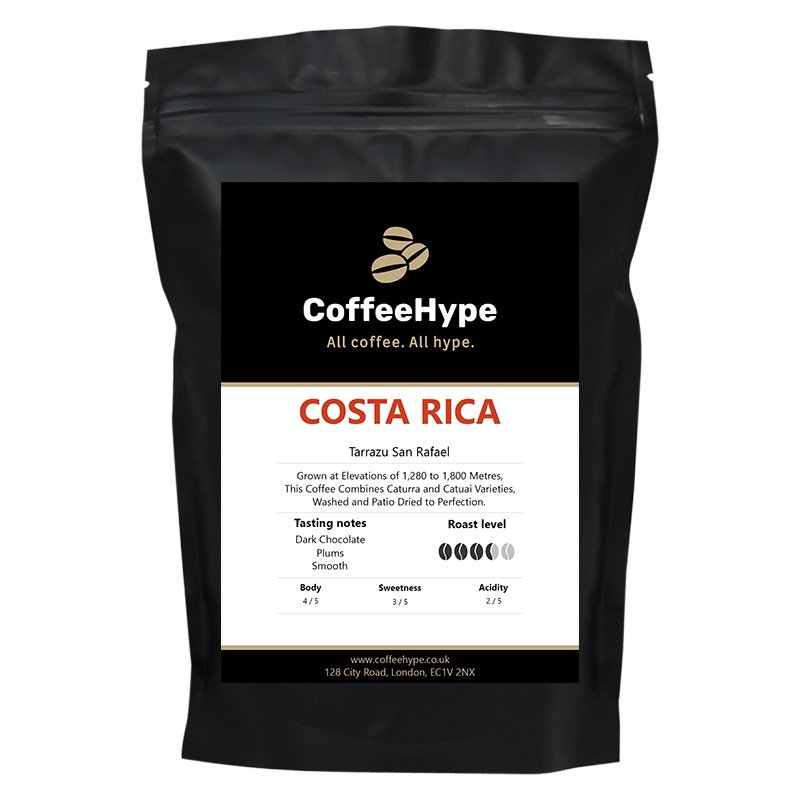
Costa Rica Tarrazu San Rafael Coffee
From: £9.99 — or subscribe to save 10% -
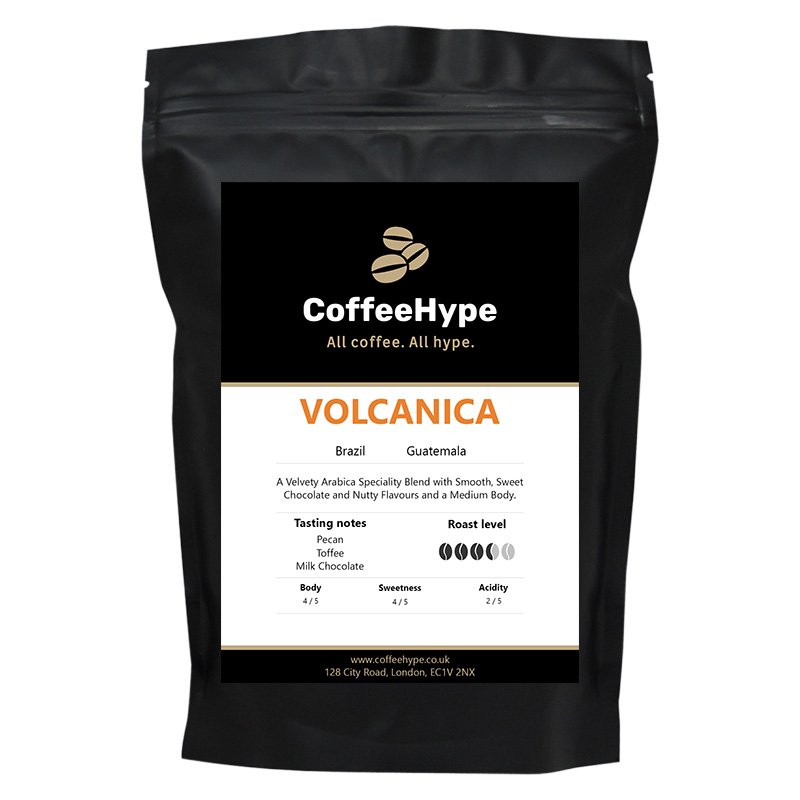
Volcanica Coffee Blend
From: £9.99 — or subscribe to save 10%

2025