Learning how to make espresso coffee at home is about controlling a few important variables: coffee dose, grind size, brew ratio, extraction time and temperature.
Espresso is a concentrated brewing method in which hot water is forced through finely ground coffee under pressure. It forms the foundation of drinks including lattes, cappuccinos, flat whites and mochas, but a well-made espresso can also be enjoyed on its own.
You don’t need to chase one supposedly perfect recipe. A good starting recipe gives you a baseline that you can adjust according to your beans, equipment and taste.
This guide explains how to make espresso coffee consistently and how to diagnose common problems when your shot doesn’t taste right.
What you’ll need
Before learning how to make espresso coffee, gather:
- Espresso machine
- Freshly roasted coffee beans
- Burr grinder suitable for espresso
- Portafilter and basket
- Tamper
- Digital scales
- Timer
- Espresso cup
A capable grinder is particularly important because relatively small grind adjustments can have a significant effect on espresso extraction.
Step 1: Choose your coffee
Espresso isn’t a particular type of coffee bean or roast.
You can make espresso using coffees from many origins and roast levels.
Medium and darker roasts are popular for their chocolatey, nutty, caramel-like and fuller-bodied characteristics, while lighter roasts can produce brighter, fruitier and more complex espresso.
Browse our freshly roasted coffee to find beans that suit your preferences.
Our guide to choosing the best coffee beans can also help you understand roast, origin and freshness.
Choosing suitable beans is an important first step in how to make espresso coffee that you genuinely enjoy.
Step 2: Heat your espresso machine
Give your espresso machine enough time to reach its normal operating temperature.
The exact warm-up procedure depends on the machine, so follow the manufacturer’s instructions.
Make sure the portafilter is also warm.
A cold portafilter can absorb heat during brewing, making temperature less consistent.
Before preparing your coffee, check that the basket is clean and dry.
Starting with clean, properly heated equipment makes how to make espresso coffee more repeatable.
Step 3: Choose your espresso dose
Your dose is the amount of dry ground coffee placed into the basket.
The appropriate amount depends partly on the size of your espresso basket.
For a double espresso, 18g is a useful starting point if your basket is designed for a dose around that size.
Don’t force 18g into a basket designed for considerably less coffee simply because a recipe recommends it.
Weighing your dose rather than estimating it by eye gives you a consistent baseline.
For this guide, we’ll use:
18g ground coffee
That gives us a starting point for learning how to make espresso coffee before adjusting other variables.
Step 4: Grind the coffee
Espresso generally requires a fine grind, but there’s no universal grinder setting that works for every machine, grinder and coffee.
Grind your measured beans immediately before preparing the shot where practical.
Place the ground coffee into your portafilter basket.
If your shot runs too quickly, grinding finer will generally increase resistance and slow the flow.
If it runs extremely slowly, grinding slightly coarser can speed it up.
Small grind adjustments are one of the most important tools you’ll use when learning how to make espresso coffee.
Step 5: Distribute and tamp
Distribute the ground coffee evenly across the basket before tamping.
You want to create a reasonably level coffee bed rather than leaving obvious mounds or gaps.
Place the portafilter on a stable surface and tamp the coffee level.
Consistency is more important than trying to apply an extreme amount of pressure.
An uneven coffee bed can encourage water to find easier paths through the grounds, potentially contributing to uneven extraction.
Once tamped, avoid knocking or disturbing the coffee unnecessarily.
Good preparation helps make how to make espresso coffee more consistent from shot to shot.
Step 6: Choose your brew ratio
Brew ratio compares the weight of dry coffee with the weight of espresso produced.
A useful starting point is approximately 1:2.
Using our 18g dose, that would mean aiming for around:
18g coffee in
36g espresso out
This isn’t a universal rule.
The Specialty Coffee Association has discussed how modern espresso recipes vary considerably, with brew ratios forming an important part of how professionals describe espresso preparation.
For home brewing, 18g in and approximately 36g out gives you a practical baseline for how to make espresso coffee before experimenting.
Step 7: Extract the espresso
Lock the portafilter securely into your machine.
Place your cup on scales beneath the portafilter and tare the scales.
Start the extraction and timer.
For our starting recipe, aim for approximately 36g of espresso from your 18g dose.
A shot time somewhere around 25–30 seconds can be a useful starting reference, but don’t treat the timer as the sole measure of quality.
Stop the extraction when you reach your target yield.
Using weight rather than simply filling a particular cup or shot glass makes how to make espresso coffee considerably easier to repeat.
Step 8: Taste the espresso
Taste the espresso rather than judging it only by appearance or extraction time.
Allow it to cool slightly first.
If it tastes balanced and enjoyable, your recipe is working.
If it tastes unpleasant, consider what needs adjusting.
Espresso that tastes sharp, thin or under-extracted may benefit from a finer grind or another adjustment that increases extraction.
Espresso that tastes excessively harsh or dry may require a coarser grind or another change to the recipe.
Taste should guide how to make espresso coffee rather than relying entirely on visual rules.
What should espresso crema look like?
Crema is the foam that forms on top of freshly extracted espresso.
Its appearance varies according to the coffee, roast, freshness and brewing conditions.
A thick crema doesn’t automatically mean you’ve produced excellent espresso, and a thinner crema doesn’t necessarily mean the shot is bad.
When learning how to make espresso coffee, use flavour as your main measure of quality.
Crema can tell you something about the extraction, but it shouldn’t replace tasting the coffee.
Why is my espresso running too fast?
If you reach your target yield much faster than expected, your coffee may be offering too little resistance.
Try grinding slightly finer.
Keep your dose and target yield unchanged while making the adjustment so you can understand what the grind change has done.
Then brew another shot and compare.
Changing one variable at a time is one of the most effective ways to improve how to make espresso coffee without becoming confused about what caused the difference.
Why is my espresso running too slowly?
If espresso barely drips from the portafilter or takes considerably longer than expected to reach your target yield, the grind may be too fine.
Try grinding slightly coarser.
Again, don’t change your dose, grind, ratio and temperature simultaneously.
Make one adjustment and taste the result.
This process is commonly known as dialing in your espresso.
Once you’ve found a recipe that works, write down your dose, yield and approximate extraction time.
Does espresso have to take 25–30 seconds?
No.
The familiar 25–30 second range is a useful starting reference, not a law that determines whether espresso is good or bad.
Different coffees and recipes may taste best outside that range.
Your dose and yield provide useful fixed measurements, while grind size can then be adjusted according to taste and flow.
If an espresso takes 32 seconds and tastes excellent, there’s no reason to ruin it simply to make the timer display 28 seconds.
Understanding this is an important part of how to make espresso coffee based on flavour rather than arbitrary numbers.
How much pressure should you use when tamping?
You need enough pressure to create a firm and level coffee bed.
Once the coffee is compressed, pushing dramatically harder isn’t necessarily going to improve the espresso.
Concentrate instead on keeping your tamp level and repeatable.
If one side of the coffee bed is noticeably higher than the other, water may pass through the puck unevenly.
A consistent preparation routine is more useful than trying to hit a particular tamping force every time.
Espresso coffee vs filter coffee
Espresso and filter coffee use very different brewing techniques.
Espresso uses pressure, a fine grind and a relatively small amount of water to create a concentrated drink.
Filter methods such as the V60 and Chemex use gravity to draw water through a bed of coffee and a paper filter.
A cafetière instead uses immersion brewing.
Exploring different methods can show how dramatically the same coffee can change depending on how it’s prepared.
Turn espresso into other coffee drinks
Once you understand how to make espresso coffee consistently, you have the base for many popular drinks.
For a milkier drink with silky microfoam, see how to make a latte.
For a smaller milk drink, try our flat white guide.
You can also learn how to make a cappuccino or combine espresso, chocolate and milk with our guide to making a mocha.
These drinks give you plenty of opportunities to practise pulling consistent espresso shots.
Clean your espresso machine
Cleaning is an essential part of how to make espresso coffee consistently.
Knock out the used coffee puck after brewing and rinse the portafilter and basket.
Wipe coffee residue from the group area and follow your machine manufacturer’s instructions for flushing, backflushing where applicable, descaling and deeper cleaning.
Old coffee oils can negatively affect flavour, while scale can interfere with the operation of the machine.
A regular cleaning routine helps protect both your coffee quality and your equipment.
Make your espresso coffee
Start with a straightforward recipe:
18g coffee
36g espresso
Approximately 25–30 seconds as an initial reference
Taste the shot and make small adjustments from there.
Don’t chase extraction time in isolation. Pay attention to dose, yield, grind and, most importantly, flavour.
The key to how to make espresso coffee consistently is to control your variables and change only one thing at a time.
Once you’ve found a recipe that suits your coffee, record it so you have a reliable starting point for your next espresso.
Best Selling Products
-

Brazil Fazenda Pinhal Coffee
From: £9.99 — or subscribe to save 10% -
House Blend Coffee
From: £9.99 — or subscribe to save 10% -
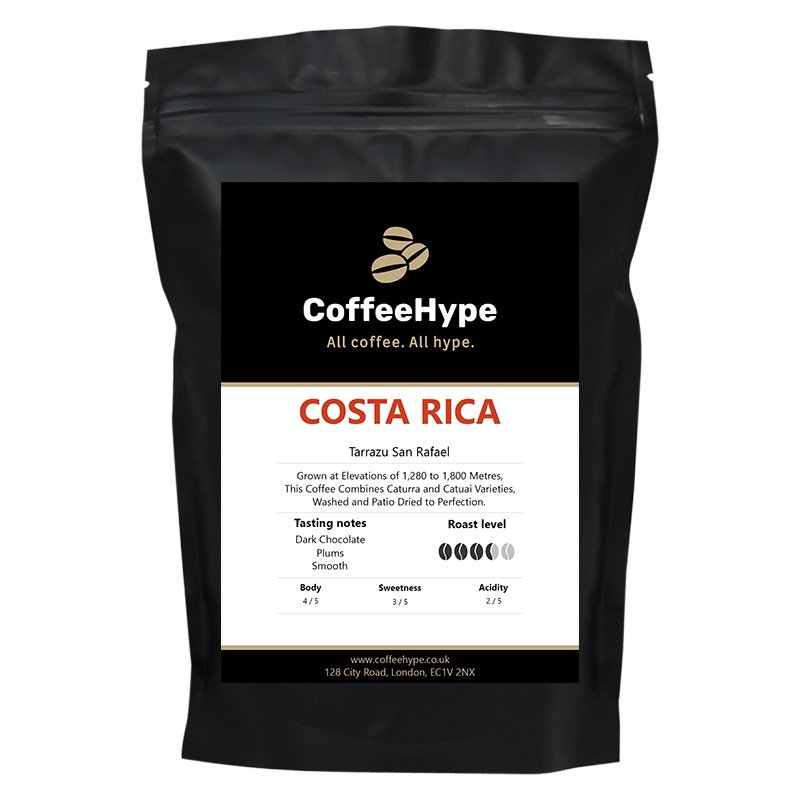
Costa Rica Tarrazu San Rafael Coffee
From: £9.99 — or subscribe to save 10% -
Volcanica Coffee Blend
From: £9.99 — or subscribe to save 10%



2023