




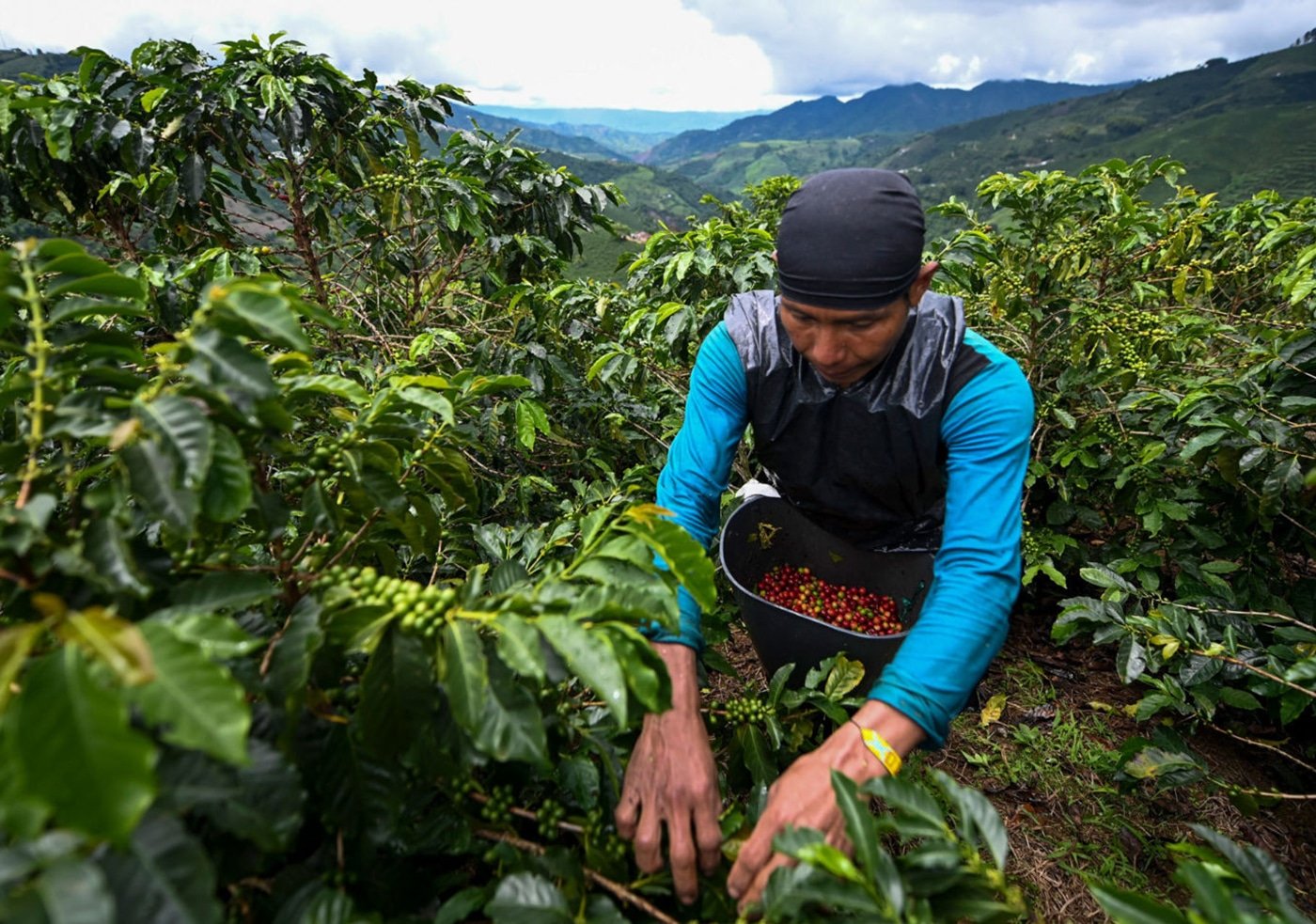
Colombia coffee is recognised around the world, but the country’s enormous geographical diversity means there’s far more to explore than one familiar flavour profile.
Coffee grows across the Colombian Andes, where differences in elevation, rainfall, temperature and soil create a remarkable range of growing conditions. Regions such as Huila, Nariño, Cauca, Antioquia and the Coffee Cultural Landscape each contribute something different.
Colombia is particularly associated with high-quality washed Arabica, although producers increasingly experiment with natural, honey and fermentation-led processing.
This Colombia coffee guide explores its history, major growing regions, important Arabica varieties, processing methods, flavours and some of the best ways to brew Colombian beans.
The history of Colombia coffee
Coffee has been cultivated in Colombia for centuries.
Historical accounts generally place its arrival during the 18th century, although details surrounding precisely who first introduced coffee aren’t completely certain.
Commercial cultivation expanded significantly during the 19th century.
Coffee eventually became one of Colombia’s most important agricultural products and played a major role in rural communities and the country’s export economy.
A particularly important development came in 1927 with the establishment of the Federación Nacional de Cafeteros de Colombia, or National Federation of Coffee Growers.
The organisation has subsequently played an important role in research, farmer support, quality and the international promotion of Colombian coffee.
Today, Colombia is one of the world’s leading exporters of Arabica and coffee is grown across much of the country.
You can learn more about the country’s coffee sector through World Coffee Research’s Colombia overview.
Why is Colombia so good for growing coffee?
Colombia lies close to the equator and is crossed by the Andes.
Its mountainous geography creates enormous variation in altitude, temperature, rainfall and microclimate.
Rather than forming one mountain range through the country’s main coffee areas, the Colombian Andes divide into three principal branches known as cordilleras.
This complex terrain creates many different coffee-growing environments.
Altitude can provide cooler temperatures that influence cherry development, while rainfall patterns affect flowering and harvesting.
But altitude alone doesn’t determine quality.
Variety, soil, farm management, cherry ripeness, processing and roasting all influence the final cup.
These interacting factors are what make Colombia coffee so diverse.
Where is coffee grown in Colombia?
Coffee is cultivated across a large proportion of Colombia.
World Coffee Research reports production in 23 of the country’s 32 departments, primarily involving smallholder farmers.
Some of the best-known coffee origins include:
- Huila
- Nariño
- Cauca
- Antioquia
- Caldas
- Quindío
- Risaralda
- Tolima
- Santander
- Sierra Nevada
These names represent very different landscapes and growing environments.
Understanding the specific department, municipality, farm or producer can therefore tell you considerably more about Colombia coffee than the country name alone.
Huila coffee
Huila in southern Colombia has developed a particularly strong reputation within speciality coffee.
Its mountainous terrain provides a wide range of elevations and microclimates.
Coffee production is spread across numerous small farms, creating considerable diversity between individual lots.
Depending on variety and processing, Huila coffees can offer combinations of fruit, citrus, caramel, chocolate and floral characteristics.
The region is particularly interesting for coffee drinkers who enjoy sweet and complex filter coffees.
Nariño coffee
Nariño lies in the far southwest of Colombia near the border with Ecuador.
Coffee is cultivated in mountainous environments, including farms at impressive elevations.
Cooler temperatures at higher altitudes can slow coffee development, while the region’s proximity to the equator helps provide conditions suitable for cultivation.
Nariño coffees can offer bright acidity, sweetness and complex fruit or floral characteristics.
However, the individual farm, variety and processing method remain more useful predictors of flavour than the regional name by itself.
Cauca coffee
Cauca is another important southern Colombia coffee origin.
The department contains varied mountainous terrain and numerous small coffee farms.
Different elevations and microclimates allow farmers to produce a wide range of Arabica coffees.
Cauca beans may offer combinations of caramel, fruit, citrus, chocolate and floral notes depending on the individual lot.
Comparing coffees from Cauca, Huila and Nariño can be an excellent introduction to the diversity of southern Colombian coffee.
Antioquia coffee
Antioquia has a long history of coffee production and played an important role in the expansion of Colombia’s coffee industry.
The department surrounds Medellín and contains extensive mountainous areas suitable for cultivation.
Coffee remains closely connected with rural life across many communities.
Individual Antioquia coffees can range from traditional chocolatey and nutty profiles to more fruit-driven speciality lots.
As elsewhere in Colombia, modern producers increasingly explore different varieties and processing techniques.
Colombia’s Coffee Cultural Landscape
Caldas, Quindío and Risaralda are closely associated with Colombia’s traditional coffee heartland.
Parts of this area form the Coffee Cultural Landscape of Colombia, which UNESCO added to the World Heritage List in 2011.
The landscape reflects generations of smallholder coffee cultivation adapted to difficult mountainous terrain.
The area has also become closely associated with coffee tourism.
Although these departments have an important shared coffee heritage, they shouldn’t be treated as producing identical beans.
Individual farms and microclimates still create significant variation.
Santander and northern Colombia
Coffee is also grown further north.
Santander has one of Colombia’s oldest coffee traditions and provides different environmental conditions from many southern origins.
The Sierra Nevada de Santa Marta on Colombia’s Caribbean side creates another distinctive coffee-growing environment.
These northern origins demonstrate why it’s misleading to think of Colombia coffee purely in terms of the famous central coffee-growing departments.
The country’s production extends across an exceptionally broad geographical area.
Why can Colombia harvest coffee at different times?
One of Colombia’s unusual advantages is its ability to produce fresh coffee across different periods of the year.
The country’s equatorial position, mountain ranges and varied rainfall patterns mean flowering and cherry maturation don’t occur simultaneously everywhere.
Some regions have a principal harvest and a smaller secondary crop, commonly called the mitaca.
The timing and importance of these harvests differ according to location and climate.
That’s why describing the Colombian harvest simply as September to December misses much of the picture.
The geographical diversity behind Colombia coffee allows different regions to reach peak harvest at different times.
Arabica coffee in Colombia
Colombia is strongly associated with Coffea arabica.
Arabica includes numerous varieties with different agricultural characteristics and quality potential.
Colombia has also invested heavily in coffee research, particularly in developing varieties capable of combining good cup quality with resistance to coffee leaf rust.
World Coffee Research describes Colombia as one of the world’s leading Arabica exporters and highlights the country’s advanced coffee research and farmer-support systems.
If you’d like to understand the species itself, read our guide to Arabica coffee beans.
Colombia coffee varieties
Several Arabica varieties are important within Colombia.
Depending on the farm, you may encounter:
- Caturra
- Castillo
- Colombia
- Typica
- Bourbon
- Tabi
- Geisha
Caturra was historically extremely important in Colombian production.
World Coffee Research identifies Caturra as a natural mutation of Bourbon and notes that it once accounted for a very large share of Colombia’s production. However, its high susceptibility to coffee leaf rust encouraged the adoption of resistant varieties. World Coffee Research’s Caturra profile provides more information about its history.
Colombia’s variety landscape has continued evolving as farmers respond to disease, climate and quality requirements.
What is Castillo coffee?
Castillo is particularly important to modern Colombia coffee.
It was developed by Cenicafé, Colombia’s national coffee research centre, as part of efforts to improve resistance to coffee leaf rust while maintaining desirable agricultural and cup characteristics.
Castillo has Caturra ancestry and exists as different regional and general compositions.
Large-scale renovation programmes encouraged farmers to replace susceptible coffee plants with resistant varieties, including Castillo.
World Coffee Research reports that rust-resistant varieties now occupy a substantial majority of Colombia’s coffee area.
This illustrates how coffee varieties aren’t chosen solely for flavour. Farmers must also consider disease, productivity, local climate and long-term resilience.
Geisha coffee in Colombia
Geisha has become particularly prominent in the high-end speciality coffee market.
Although strongly associated with Panama’s speciality coffee industry, the variety ultimately traces its genetic origin to Ethiopia and is now cultivated in several producing countries, including Colombia.
Suitable Colombian farms can produce distinctive Geisha lots with floral, citrus and tea-like characteristics.
These coffees can command high prices because of their quality, limited production and demand.
However, Geisha represents only a small and specialised part of the much broader Colombia coffee landscape.
How Colombia coffee is harvested
Mountainous terrain means much Colombian coffee is harvested manually.
Coffee cherries on the same tree don’t necessarily ripen simultaneously, making selective picking of ripe fruit valuable for quality-focused production.
The country’s smallholder farming structure also influences how coffee is cultivated and harvested.
World Coffee Research estimates that smallholders produce around 70% of Colombian coffee.
After harvesting, careful processing becomes essential to preserve the quality developed on the farm.
Washed Colombian coffee
Colombia has traditionally been strongly associated with washed coffee.
After harvesting, ripe cherries are pulped to remove the outer fruit.
The remaining mucilage can then be broken down through fermentation or removed using mechanical approaches before the coffee is washed and dried.
Washed processing can create a clean cup that makes acidity, sweetness and individual origin characteristics easier to distinguish.
This processing tradition is one reason classic Colombia coffee is often associated with clean, balanced flavour profiles.
Natural, honey and experimental processing
Washed processing isn’t the whole story.
Speciality coffee producers increasingly use natural, honey and controlled fermentation techniques to develop different flavours.
Natural processing dries the coffee inside the fruit, potentially creating greater fruit intensity and sweetness.
Honey processing leaves varying amounts of mucilage around the seed during drying.
Producers may also carefully control fermentation variables to influence the final sensory profile.
These approaches have dramatically expanded the range of flavours available from Colombia coffee.
What does Colombia coffee taste like?
There’s no single Colombian coffee flavour.
Depending on region, variety, processing and roast, you might encounter:
- Caramel
- Chocolate
- Nuts
- Citrus
- Red fruit
- Stone fruit
- Berries
- Floral notes
Traditional washed coffees are often associated with balanced acidity, sweetness and a clean finish.
Modern speciality lots can be considerably more adventurous, particularly when producers combine unusual varieties with experimental processing.
A washed Caturra from one region may taste completely different from a naturally processed Geisha grown elsewhere.
The tasting notes on an individual bag are therefore much more useful than expecting every Colombia coffee to taste the same.
Is Colombia coffee good for filter brewing?
Colombian beans can work exceptionally well with filter brewing.
A V60 can highlight acidity, sweetness and individual fruit characteristics.
A Chemex can produce a particularly clean cup.
An AeroPress provides more flexibility to experiment with grind, ratio and brewing time.
Lighter, fruitier speciality coffees can be particularly interesting with paper-filter methods.
Is Colombia coffee good for espresso?
Yes. Colombian beans are extremely versatile.
A coffee with chocolate, caramel and nut characteristics can make a balanced espresso and work particularly well with milk.
Fruitier speciality lots can produce brighter and more distinctive single-origin shots.
Roast profile has a major influence on how easily the coffee extracts and how it tastes as espresso.
Our guide to how to make espresso coffee covers dose, yield, grind and extraction.
Trying the same Colombia coffee as espresso and filter coffee can reveal very different aspects of its flavour.
Choosing Colombia coffee beans
Don’t stop at the word Colombia when choosing beans.
Look for details including:
- Department or growing region
- Farm or producer
- Variety
- Processing method
- Roast level
- Tasting notes
A washed Caturra from Huila, for example, tells you considerably more than a bag labelled simply “Colombian coffee”.
Our best coffee beans guide explains what else to consider when comparing beans.
Freshly roasted coffee and grinding shortly before brewing can also help preserve its aroma and flavour.
Discover Colombia coffee
Colombia’s reputation for coffee has been built over generations, but its diversity is what makes the country particularly interesting to explore today.
Huila, Nariño, Cauca, Antioquia and the traditional central coffee-growing areas all offer different conditions. Add varieties such as Caturra, Castillo, Bourbon and Geisha alongside washed and experimental processing, and the range becomes enormous.
Browse our freshly roasted coffee beans and compare different origins, roast levels and flavour profiles.
Whether you enjoy balanced chocolate and caramel flavours or brighter fruit and floral characteristics, Colombia coffee offers an exceptional range to explore.
Best Selling Products
-

Brazil Fazenda Pinhal Coffee
From: £9.99 — or subscribe to save 10% -
House Blend Coffee
From: £9.99 — or subscribe to save 10% -
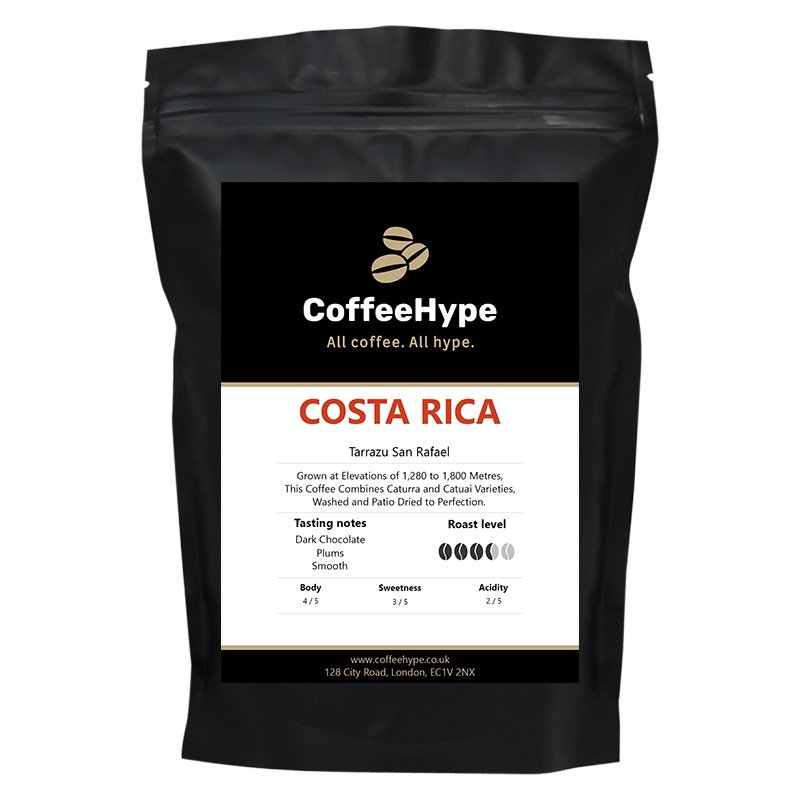
Costa Rica Tarrazu San Rafael Coffee
From: £9.99 — or subscribe to save 10% -
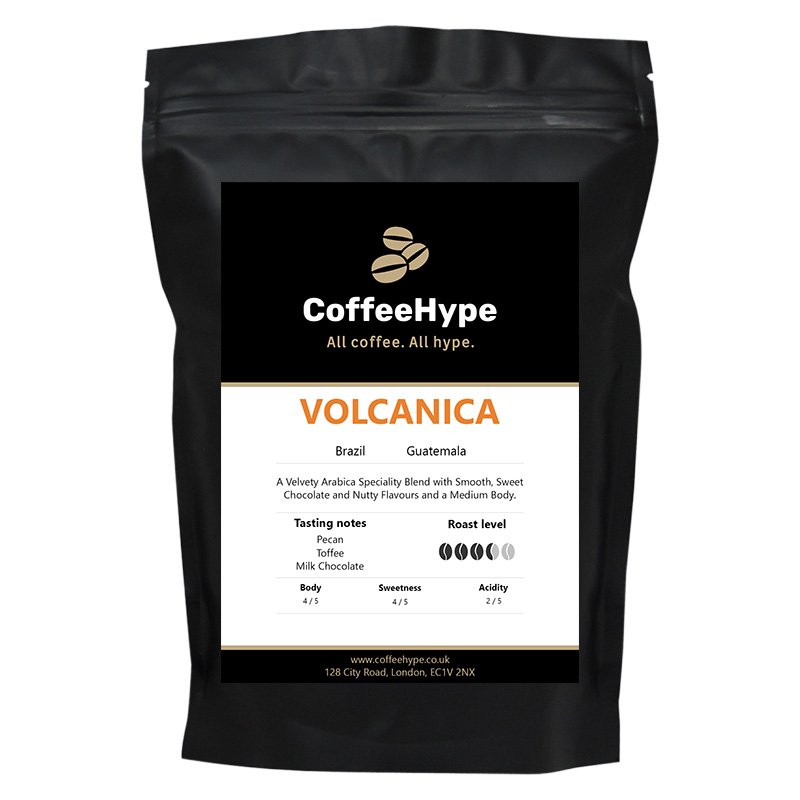
Volcanica Coffee Blend
From: £9.99 — or subscribe to save 10%


2023