


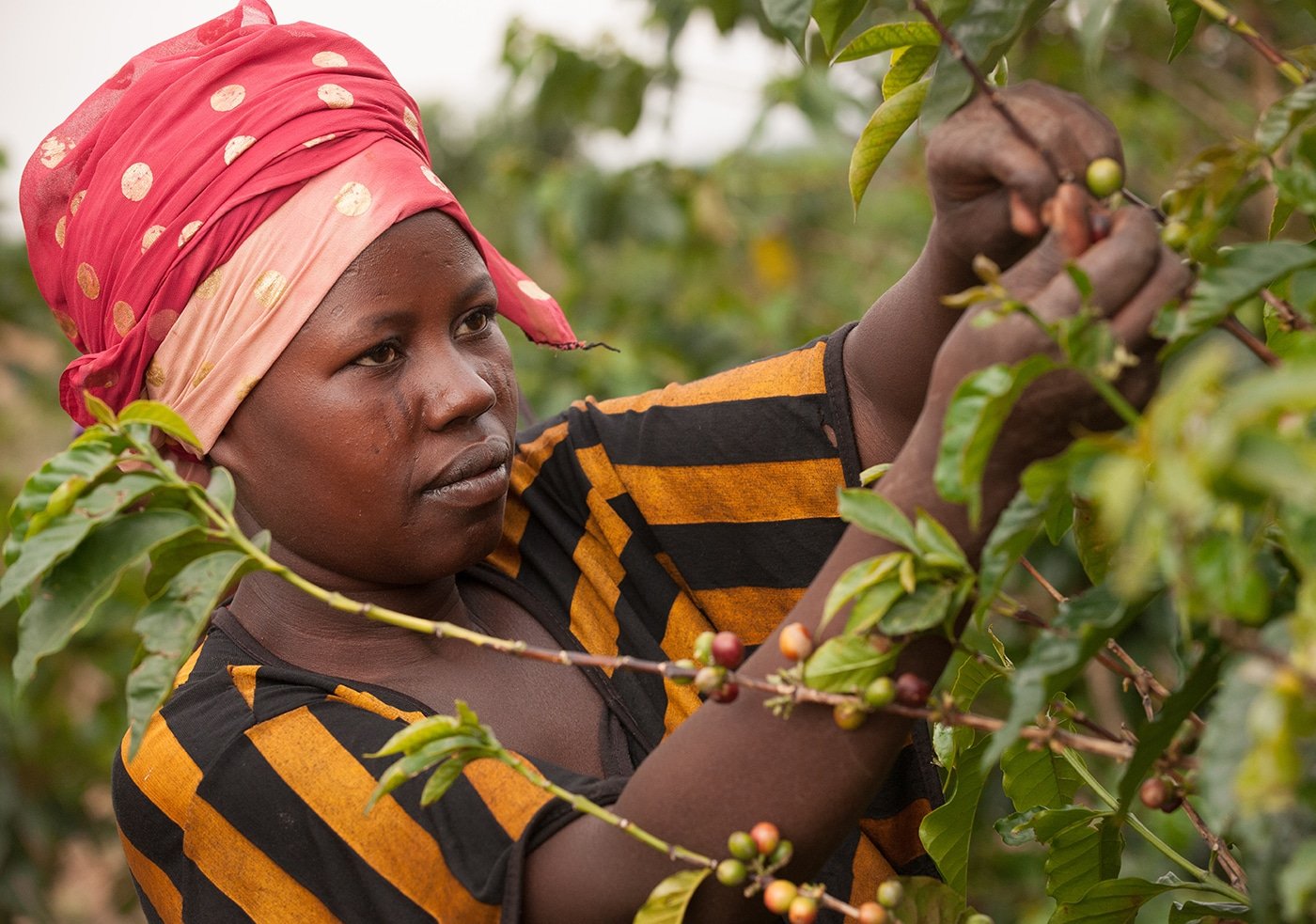
Rwanda coffee has developed an impressive reputation within the speciality coffee world. Grown across the country’s mountainous landscape, its Arabica coffees can offer bright acidity, fruit, floral characteristics and considerable sweetness.
The country’s modern coffee story is particularly interesting. Coffee was introduced in the early 20th century, but major changes to processing and quality development helped transform the industry during the decades that followed.
Today, hundreds of thousands of smallholder farming families are involved in coffee production, while washing stations play an important role in processing cherries from farms across different communities.
This Rwanda coffee guide explores its history, growing areas, important Arabica varieties, processing methods, flavours and some of the best ways to brew Rwandan beans.
The history of Rwanda coffee
Coffee is a relatively recent arrival in Rwanda compared with origins such as Ethiopia.
Rwanda’s National Agricultural Export Development Board, known as NAEB, states that coffee was introduced by the Germans in the early 1900s.
Cultivation subsequently expanded, and coffee became an important agricultural export.
For much of the 20th century, however, production was more focused on volume than the distinctive speciality coffees for which Rwanda would later become known.
The country’s coffee industry was also severely affected by the devastating events surrounding the 1994 genocide against the Tutsi.
During the years that followed, rebuilding agriculture and rural livelihoods became part of Rwanda’s wider recovery.
Coffee played a role in that process.
Investment in coffee washing stations, farmer organisation, training and quality helped Rwanda develop greater access to the speciality market.
Today, coffee remains important to rural livelihoods and agricultural exports.
You can learn more about the industry through Rwanda’s National Agricultural Export Development Board.
Smallholder coffee farming in Rwanda
Smallholder farmers are central to Rwanda coffee.
NAEB estimates that approximately 400,000 smallholder farming families produce coffee and depend on the crop for at least part of their livelihoods.
Individual farms are typically small.
World Coffee Research reports that farmers commonly manage plots averaging around 600 coffee trees, highlighting how different Rwanda’s production structure is from a landscape dominated by enormous plantations.
This smallholder structure also explains the importance of cooperatives, washing stations and other organisations that bring together cherries from numerous farms for processing.
Quality therefore depends on careful work throughout the chain, from cultivation and picking to processing, drying and storage.
Why is Rwanda good for growing coffee?
Rwanda is famously known as the “Land of a Thousand Hills”, and its mountainous landscape creates numerous environments suitable for Arabica.
Elevation, rainfall, temperature and soil conditions vary between locations.
Much of the country’s coffee is cultivated on hillsides, where altitude can provide the cooler conditions generally associated with Arabica production.
NAEB reports that coffee is grown across most provinces of Rwanda.
The country’s location close to the equator also provides conditions suitable for coffee cultivation.
However, geography alone doesn’t guarantee quality.
Variety, farm management, cherry ripeness, processing, drying and roasting all contribute to what eventually reaches your cup.
Where is Rwanda coffee grown?
Coffee cultivation is spread across much of Rwanda rather than being confined to one small area.
Coffee drinkers may encounter beans associated with districts and areas such as:
- Nyamasheke
- Rusizi
- Huye
- Gakenke
- Karongi
- Rutsiro
- Ngororero
- Muhanga
Western Rwanda around Lake Kivu is particularly important, while coffee is also cultivated throughout southern, northern and other parts of the country.
Specific washing-station names are often equally important when buying speciality Rwanda coffee.
A bag may identify the washing station, district or cooperative rather than simply giving a broad regional designation.
Nyamasheke and western Rwanda
Nyamasheke lies beside Lake Kivu in western Rwanda and is one of the names frequently encountered on speciality coffee bags.
Its hilly landscape supports numerous small coffee farms and washing stations.
Depending on variety, processing and roast, coffees from the area can offer fruit, citrus, floral and sweet characteristics.
Nearby districts around Lake Kivu also contribute to western Rwanda’s importance as a coffee-producing area.
As elsewhere in the country, individual washing stations can provide a more precise indication of origin than the district name alone.
Huye and southern Rwanda
Huye is an important coffee-growing district in southern Rwanda.
The surrounding highlands provide suitable environments for Arabica, while washing stations process cherries delivered by local farmers.
Huye has also become familiar to international speciality coffee buyers through high-quality individual lots.
The flavours naturally vary between producers and harvests, but fruit, sweetness and bright acidity can all appear in coffees from southern Rwanda.
Exploring coffees from Huye alongside western origins is a useful way to experience the diversity of Rwanda coffee.
Arabica coffee in Rwanda
Rwandan production is overwhelmingly based on Coffea arabica.
World Coffee Research describes production as nearly all Arabica, with traditional varieties from the Bourbon and Typica genetic groups playing an important role.
Bourbon-related coffees are particularly strongly associated with Rwanda.
Arabica has excellent quality potential under suitable conditions but can also be vulnerable to important diseases.
This has encouraged research into varieties that combine cup quality with improved agricultural characteristics.
If you’d like to understand the species in greater detail, read our guide to Arabica coffee beans.
Bourbon and Rwanda coffee
Bourbon is one of the names most closely associated with Rwanda coffee.
However, describing every Rwandan coffee simply as “Bourbon” can hide some interesting genetic differences.
World Coffee Research identifies several Bourbon-related varieties found in Rwanda, including Bourbon Mayaguez 71 and Bourbon Mayaguez 139.
Bourbon Mayaguez 139 is a vigorous, productive variety with good cup-quality potential and is commonly found in Rwanda and neighbouring Burundi.
Bourbon Mayaguez 71 is also found in both countries and has good quality potential, although it is susceptible to major coffee diseases.
These varieties demonstrate that the country’s coffee landscape is more complicated than a single generic Bourbon type.
Other Rwanda coffee varieties
Rwanda also grows other established and newer Arabica varieties.
These include names such as:
- Mibirizi
- Jackson
- Bourbon Mayaguez 71
- Bourbon Mayaguez 139
- RAB C15
- Harar Rwanda
Mibirizi is particularly interesting because World Coffee Research considers it likely to be one of the oldest varieties still grown in Rwanda.
Jackson has a different history and belongs to the Bourbon genetic group.
More recently, RAB C15 was developed to provide resistance to both coffee leaf rust and coffee berry disease while maintaining good cup-quality potential.
These varieties illustrate how Rwanda coffee continues to combine historical planting material with modern breeding and research.
How Rwanda coffee is harvested
Rwanda has one principal coffee crop each year.
NAEB reports that harvesting can begin from late February around the shores of Lake Kivu and from early March elsewhere.
In some northern areas, harvesting can continue until August.
This means the March-to-July description often used for Rwanda is a reasonable generalisation, but it isn’t a rigid national harvest window.
For quality-focused production, ripe cherries are selectively picked.
Careful selection matters because underripe or overripe fruit can negatively affect flavour and consistency.
Once harvested, cherries are often delivered to a nearby washing station for processing.
Why are coffee washing stations important in Rwanda?
Washing stations are central to Rwanda’s modern speciality coffee industry.
Because many farmers cultivate relatively small plots, individual growers may not have the equipment or volume required to process and prepare speciality coffee independently.
A washing station can receive cherries from many surrounding farmers.
The cherries can then be sorted, pulped, fermented, washed and dried under more controlled conditions.
Investment in washing stations expanded significantly after 2000 and helped Rwanda increase production of fully washed coffee.
World Coffee Research reports that fully washed coffee now represents a substantial share of the country’s exports.
For anyone exploring Rwanda coffee, the washing station named on the bag can therefore be an important part of the coffee’s identity.
Fully washed Rwanda coffee
Rwanda is particularly associated with fully washed processing.
After ripe cherries arrive at the washing station, they are sorted before the outer fruit is removed.
The coffee then undergoes fermentation to help remove the remaining mucilage before washing.
Afterwards, the parchment coffee is carefully dried.
Exact procedures vary between washing stations, but careful processing can produce exceptionally clean coffees with clearly defined acidity, sweetness and fruit characteristics.
This style has played a major role in establishing Rwanda’s speciality coffee reputation.
Natural and experimental processing
Fully washed processing isn’t the only option.
Rwandan producers also create natural and other specially processed coffees.
With natural processing, the whole coffee cherry is dried before the dried fruit is removed from the seed.
This can produce greater fruit intensity and sweetness when managed carefully.
Producers are also experimenting with controlled fermentation and anaerobic techniques.
These methods provide a noticeably different expression of Rwanda coffee from the country’s traditional fully washed profile.
What does Rwanda coffee taste like?
There isn’t one flavour shared by every Rwandan coffee.
Depending on origin, variety, processing and roast, you may encounter:
- Red berries
- Blackcurrant
- Citrus
- Stone fruit
- Floral notes
- Caramel
- Chocolate
- Tea-like characteristics
NAEB associates Rwandan Arabica with bright acidity, complexity and berry characteristics.
Washed coffees can be particularly clean and vibrant, while natural and experimental processes may emphasise ripe fruit and sweetness.
The individual tasting notes on a bag are therefore a better guide than assuming every Rwanda coffee will taste identical.
What is potato taste defect?
One unusual subject associated with coffee from Rwanda and some neighbouring Great Lakes origins is potato taste defect.
Coffee affected by it can produce an aroma and flavour reminiscent of raw potato.
The defect is linked to compounds produced following damage to coffee cherries, with insect activity among the factors associated with its development.
It’s unpredictable and can sometimes affect only an individual bean.
Research and improved sorting practices continue to help producers reduce its occurrence.
Its existence doesn’t mean Rwandan coffee generally tastes like potato. Most cups are unaffected, and high-quality Rwanda coffee is internationally recognised for its clean and complex flavour.
Is Rwanda coffee good for filter brewing?
Rwandan coffees can be excellent for filter brewing.
Washed coffees with bright acidity, fruit and floral characteristics are particularly well suited to methods that emphasise clarity.
A V60 can highlight individual flavours and aromas.
A Chemex can produce an especially clean cup.
An AeroPress gives you more freedom to adjust ratio, grind and brewing time.
Match the recipe to the individual beans and roast rather than treating every Rwandan coffee the same way.
Is Rwanda coffee good for espresso?
Yes. Suitable Rwandan beans can produce distinctive espresso.
Fruitier coffees can create bright, sweet single-origin shots, while beans with chocolate, caramel and deeper fruit characteristics can work particularly well with milk.
Lighter speciality roasts may require more careful adjustment to achieve an even extraction.
Our guide to how to make espresso coffee explains dose, yield, grind and extraction.
Trying the same Rwanda coffee as espresso and filter coffee can reveal surprisingly different flavours.
Choosing Rwanda coffee beans
When choosing beans, look for more than the country name.
Useful information includes:
- District or growing area
- Washing station
- Cooperative or producer
- Coffee variety
- Processing method
- Roast level
- Tasting notes
A fully washed coffee from a particular washing station can provide a very different experience from a natural coffee produced elsewhere in Rwanda.
Our best coffee beans guide explains what else to consider when comparing beans.
Choosing freshly roasted coffee and grinding shortly before brewing can also help preserve its aroma and flavour.
Discover Rwanda coffee
Rwanda’s coffee industry has undergone remarkable change.
From coffee’s introduction in the early 20th century to the growth of washing stations and speciality production, the industry has become an important part of rural livelihoods and agricultural exports.
Its mountainous landscape, smallholder farms, Bourbon-related Arabica varieties and careful processing can produce coffees with impressive sweetness, fruit and acidity.
Browse our freshly roasted coffee beans and compare coffees from different origins and flavour profiles.
Whether you’re looking for bright berry flavours, floral complexity or a sweet and balanced filter brew, Rwanda coffee offers plenty to discover.
Best Selling Products
-

Brazil Fazenda Pinhal Coffee
From: £9.99 — or subscribe to save 10% -
House Blend Coffee
From: £9.99 — or subscribe to save 10% -
Costa Rica Tarrazu San Rafael Coffee
From: £9.99 — or subscribe to save 10% -
Volcanica Coffee Blend
From: £9.99 — or subscribe to save 10%


2023