


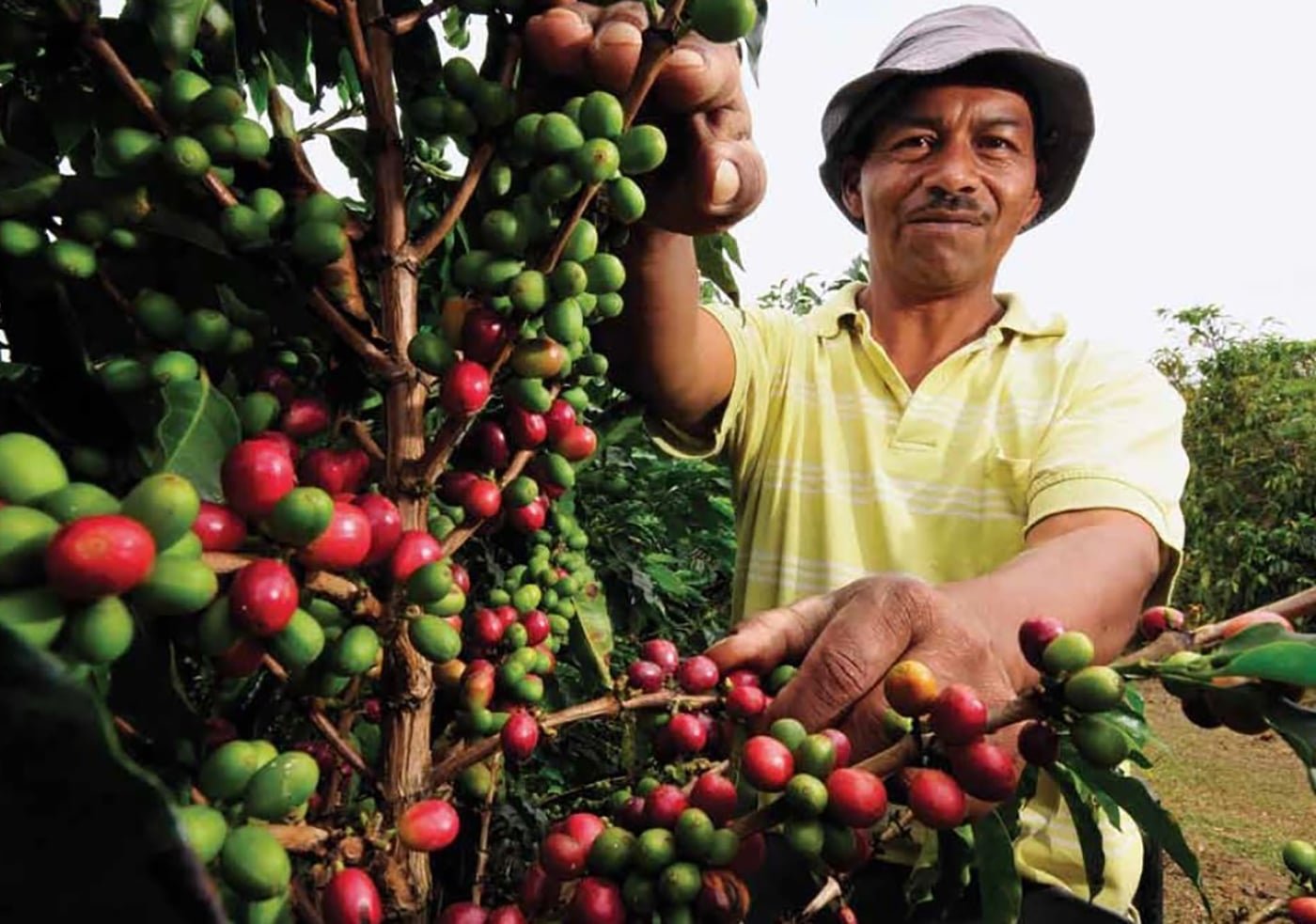
Mexico coffee offers considerably more variety than many coffee drinkers realise. From the mountains of Chiapas to the historic plantations of Veracruz, different elevations, climates and farming traditions produce coffees with their own distinctive characteristics.
The country is particularly associated with Arabica, although Robusta is also cultivated. Traditional washed processing remains important, while Mexico’s speciality coffee producers increasingly explore different varieties and processing techniques.
This Mexico coffee guide explores its history, major growing regions, Arabica varieties, processing methods, flavours and some of the best ways to brew Mexican beans.
The history of Mexico coffee
Coffee arrived in Mexico during the 18th century.
Early production became established around Córdoba in Veracruz. Historical Mexican government records indicate that coffee believed to have originated around Córdoba was already being exported during the opening years of the 19th century.
Cultivation subsequently spread to other parts of the country as producers discovered suitable environments for coffee.
Chiapas eventually developed into Mexico’s largest producing state, while Veracruz, Puebla and Oaxaca also became particularly important.
Coffee production became closely connected with rural communities, including many Indigenous farming communities.
Today, Mexico coffee combines this long agricultural history with an increasingly diverse speciality coffee sector.
You can learn more about the country’s coffee industry through the Mexican Government’s Ministry of Agriculture.
Where is coffee grown in Mexico?
Coffee is cultivated across numerous Mexican states.
The most important producing areas include:
- Chiapas
- Veracruz
- Puebla
- Oaxaca
- Guerrero
Production also takes place in states including Hidalgo, San Luis Potosí, Nayarit, Jalisco, Colima and Tabasco.
Chiapas, Veracruz, Puebla and Oaxaca account for the majority of national production.
These regions contain substantial differences in altitude, rainfall, temperature, soil and farming practices.
That means Mexico coffee shouldn’t be treated as having one universal flavour profile.
Chiapas coffee
Chiapas is Mexico’s leading coffee-producing state.
Located in southern Mexico beside Guatemala, the state contains mountainous areas with conditions well suited to Arabica.
Important coffee-growing zones include areas around the Sierra Madre de Chiapas and Soconusco.
Coffee production supports numerous small farms and rural communities.
Depending on the individual origin, variety and processing, Chiapas coffees can offer combinations of chocolate, caramel, nuts, citrus and fruit.
The region can produce approachable, balanced coffees as well as more distinctive speciality lots.
Veracruz coffee
Veracruz has an especially important place in the history of Mexico coffee.
Córdoba was one of the country’s earliest centres of commercial coffee cultivation, and Veracruz remains an important producing state today.
Mountainous terrain creates significant changes in elevation and climate across relatively short distances.
Coatepec is perhaps the best-known coffee name associated with Veracruz.
The area’s combination of elevation, rainfall and established coffee culture has helped make it one of Mexico’s recognised coffee origins.
Depending on the individual beans, Veracruz coffees can display chocolate, nuts, caramel, fruit and gentle citrus characteristics.
Oaxaca coffee
Oaxaca combines coffee production with extraordinary cultural and geographical diversity.
Coffee is cultivated in several mountainous areas, frequently by smallholder and Indigenous farming communities.
One of its best-known origins is Pluma Hidalgo.
The name has a long association with coffee cultivation in Oaxaca and is also connected with Typica-derived coffee traditionally cultivated in the area.
Oaxaca coffees can range from chocolatey and nutty to fruitier and more floral profiles.
As elsewhere in Mexico, looking at the individual producer, variety and processing method provides more information than the state name alone.
Puebla coffee
Puebla is another major Mexican coffee-producing state.
Its mountainous areas provide suitable environments for Arabica cultivation, with coffee forming an important agricultural activity in several communities.
The state doesn’t always receive the same international attention as Chiapas or Veracruz, but it contributes significantly to Mexico’s coffee production.
Individual Puebla coffees can offer balanced sweetness, chocolate, caramel, nuts and fruit characteristics.
Speciality production is also creating opportunities to highlight individual farms and micro-regions more precisely.
Guerrero and other growing regions
Mexico coffee extends beyond its four most prominent producing states.
Guerrero is another important origin, while coffee is cultivated on a smaller scale across several additional states.
This geographical spread demonstrates the diversity of Mexican coffee.
Even neighbouring farms can experience differences in altitude, shade, soil and exposure that influence growing conditions.
Processing and variety add further variation.
The result is a coffee-producing country with far more diversity than a generic “Mexican coffee” label might suggest.
Arabica coffee in Mexico
Most Mexican coffee production is Arabica.
Coffea arabica generally performs best in cooler highland environments and has the potential to produce excellent cup quality.
Several traditional Arabica varieties have been cultivated in Mexico, while newer disease-resistant varieties have become increasingly important.
This is particularly significant because coffee leaf rust has caused serious problems across Mexico and Central America.
Variety selection therefore involves more than flavour.
Farmers must balance cup quality with productivity, disease resistance and suitability for their particular growing environment.
For more about the species itself, see our guide to Arabica coffee beans.
Mexico coffee varieties
Coffee drinkers may encounter several Arabica varieties when exploring Mexican beans.
These can include:
- Typica
- Bourbon
- Caturra
- Mundo Novo
- Catimor-related varieties
- Rust-resistant varieties developed or introduced for Mexican conditions
Typica has particular historical importance.
World Coffee Research traces Typica’s spread into Mexico to the late 18th century. It subsequently became one of the foundational Arabica varieties cultivated across the Americas. World Coffee Research’s Typica profile explains its history and characteristics.
Today, Mexico’s variety landscape continues to change as farms replace ageing or disease-susceptible trees.
Typica coffee in Mexico
Typica is one of the most historically significant Arabica varieties.
It’s a tall plant with relatively low yields and susceptibility to important coffee diseases, but it has strong cup-quality potential when cultivated under suitable conditions.
In Mexico, Typica is also known by names including Criollo and Pluma Hidalgo in particular contexts.
Traditional Typica remains interesting to speciality coffee buyers because of its history and potential quality.
However, susceptibility to coffee leaf rust means farmers must carefully consider whether maintaining it is practical.
Modern Mexico coffee therefore includes both traditional varieties and newer plants selected for greater resilience.
Bourbon and Caturra
Bourbon is another historically important Arabica group.
It has excellent quality potential but is susceptible to major diseases.
Caturra is a natural mutation of Bourbon that was discovered in Brazil during the early 20th century.
Its compact size allows plants to be grown more densely than traditional tall Bourbon plants.
Caturra subsequently spread throughout Latin America and became an important variety in several coffee-producing countries.
Both names can appear on Mexican speciality coffee, although the precise varieties cultivated vary between farms and regions.
Coffee leaf rust and new varieties
Coffee leaf rust has had a substantial effect on Mexican production.
The fungal disease damages coffee leaves and can seriously reduce productivity.
Traditional Arabica varieties such as Typica and Bourbon are highly susceptible.
As a result, renovation programmes have encouraged the planting of newer resistant varieties.
World Coffee Research reports that since 2015, Mexican renovation programmes have replanted large areas with rust-resistant and quality-focused seedlings, including varieties such as Oro Azteca and Costa Rica 95.
This means the varieties behind Mexico coffee are continuing to evolve as farmers adapt to agricultural challenges.
Robusta coffee in Mexico
Mexico also produces Coffea canephora, commonly known as Robusta.
Robusta can tolerate warmer growing conditions than Arabica and is generally more resistant to some important diseases.
World Coffee Research reports that Robusta production has been expanding in lower-altitude areas of Veracruz, Chiapas and Oaxaca.
Its flavour characteristics and agricultural requirements differ from Arabica.
Robusta can contribute body, bitterness and intensity to blends, while carefully cultivated higher-quality Robusta can offer considerably more complexity than its traditional reputation suggests.
How Mexico coffee is harvested
Mexico’s coffee harvest varies according to region, altitude and local climate.
Government agricultural information indicates that most of the national coffee-cherry harvest is concentrated between November and March.
Harvesting may begin earlier or finish later in individual areas.
Quality-focused producers often selectively pick ripe cherries rather than harvesting fruit at very different stages of ripeness together.
This helps provide more consistent raw material for processing.
After harvesting, the cherries need to be processed and dried carefully to preserve their quality.
Washed Mexican coffee
Washed processing is particularly important in Mexico.
With this approach, the outer fruit is removed after harvesting and the remaining mucilage is removed before the coffee is dried.
Specific techniques vary between farms and processing facilities.
Well-executed washed processing can produce clean, balanced coffees where acidity, sweetness and origin characteristics are easy to distinguish.
This style works particularly well with the chocolate, nut, caramel and fruit characteristics commonly found in many Mexican Arabicas.
Natural and honey processing
Not every Mexico coffee is washed.
Speciality producers increasingly experiment with natural and honey processing as well as controlled fermentation.
Natural processing dries the coffee while the seeds remain inside the whole cherry.
This can increase fruit intensity and sweetness when drying is managed carefully.
Honey processing removes the skin but leaves some mucilage around the coffee during drying.
These approaches can create noticeably different flavours from traditionally washed Mexican beans.
Checking the processing method on the bag can therefore help you choose a coffee that suits your preferences.
Shade-grown coffee in Mexico
Shade is an important feature of many Mexican coffee farms.
Coffee may be cultivated beneath a canopy containing different tree species rather than in completely exposed plantations.
Shade can influence the farm’s microclimate, while diverse tree cover can provide habitat and other ecological benefits when managed effectively.
However, “shade-grown” doesn’t describe one standard farming system.
The density, composition and management of shade trees can differ substantially between farms.
It’s therefore best understood as one element of coffee production rather than a guarantee of a particular flavour or quality.
What does Mexico coffee taste like?
There isn’t one flavour profile shared by every Mexican coffee.
Depending on region, variety, processing and roast, you might encounter:
- Chocolate
- Caramel
- Nuts
- Citrus
- Red fruit
- Stone fruit
- Brown sugar
- Floral notes
- Spices
Many washed Mexican coffees can offer an approachable balance of sweetness and acidity.
Others, particularly speciality lots using distinctive varieties or alternative processing, can be brighter and considerably more fruit-forward.
The individual coffee’s tasting notes provide a better guide than assuming all Mexico coffee will taste the same.
Is Mexico coffee good for filter brewing?
Mexican beans can work extremely well with filter methods.
A balanced washed coffee can produce a sweet and clean cup with a V60.
A Chemex can further emphasise clarity, particularly with lighter and more delicate coffees.
An AeroPress provides greater flexibility for experimenting with strength and extraction.
Choose your recipe according to the individual beans and roast rather than using identical brewing parameters for every Mexico coffee.
Is Mexico coffee good for espresso?
Yes. Mexican coffee can be extremely versatile for espresso.
Beans with chocolate, caramel and nut characteristics can produce balanced shots that work particularly well in milk drinks.
Fruitier speciality coffees can create brighter single-origin espresso.
Roast profile will have a major influence on extraction and flavour.
Our guide to how to make espresso coffee explains dose, yield, grind and extraction in more detail.
Choosing Mexico coffee beans
When comparing Mexican beans, look beyond the country name.
Useful information includes:
- State and growing area
- Farm or producer
- Coffee variety
- Processing method
- Roast level
- Tasting notes
A washed Typica from Oaxaca, for example, may offer a very different experience from a modern variety grown in Chiapas.
Our best coffee beans guide explains what else to consider when choosing coffee.
Freshly roasted beans and grinding shortly before brewing can also help preserve their aroma and flavour.
Discover Mexico coffee
Mexico has a long and diverse coffee tradition stretching from the historic plantations of Veracruz to the mountains of Chiapas, Oaxaca and Puebla.
Arabica remains at the heart of production, while traditional varieties coexist with newer disease-resistant coffees and an expanding Robusta sector.
Different regions and processing techniques add even more variety.
Browse our freshly roasted coffee beans and compare coffees from different origins and flavour profiles.
Whether you enjoy chocolate and caramel sweetness or brighter fruit and floral characteristics, Mexico coffee offers a diverse range of flavours worth exploring.
Best Selling Products
-

Brazil Fazenda Pinhal Coffee
From: £9.99 — or subscribe to save 10% -
House Blend Coffee
From: £9.99 — or subscribe to save 10% -
Costa Rica Tarrazu San Rafael Coffee
From: £9.99 — or subscribe to save 10% -
Volcanica Coffee Blend
From: £9.99 — or subscribe to save 10%

2023