
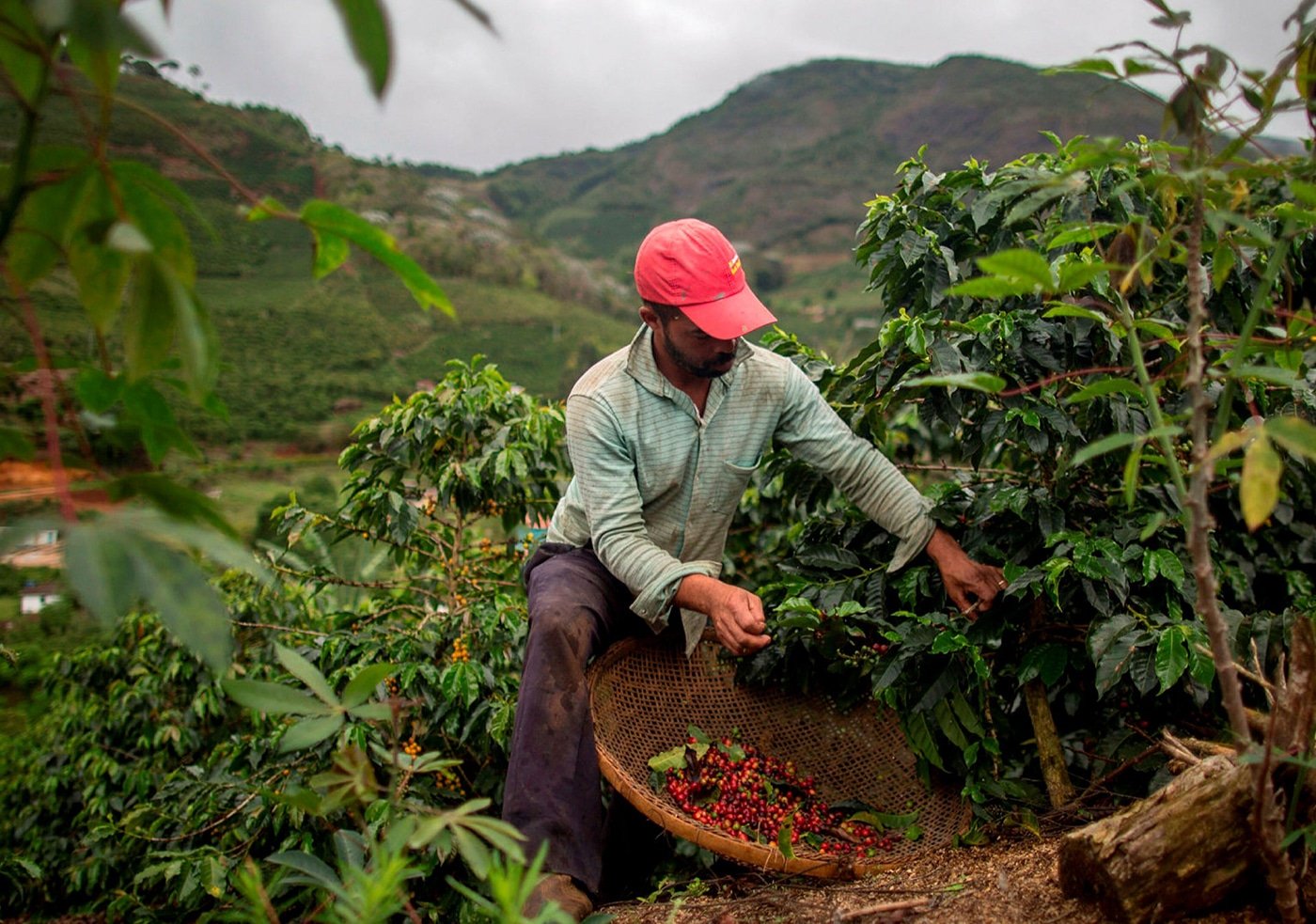
Brazil coffee has played an enormous role in shaping the global coffee industry. From the mountains of Minas Gerais to the conilon-growing areas of Espírito Santo, Brazil produces an exceptionally diverse range of coffees.
The country is known for approachable chocolatey and nutty flavour profiles, but that’s only part of the story. Different regions, varieties, altitudes and processing methods can produce everything from rich, sweet espresso coffees to fruitier speciality lots.
In this Brazil coffee guide, we’ll explore its history, major growing areas, coffee species, processing methods and flavours before looking at the best ways to brew it at home.
The history of Brazil coffee
The history of Brazil coffee can be traced to 1727, when Francisco de Mello Palheta brought coffee plants and seeds into Pará from French Guiana.
Stories surrounding exactly how Palheta obtained the coffee have become part of coffee folklore, but the important historical point is that coffee cultivation became established in northern Brazil before gradually spreading south.
During the 19th century, coffee became increasingly important to Brazil’s economy as cultivation expanded through areas including Rio de Janeiro, São Paulo and Minas Gerais.
By the middle of the 19th century, Brazil had become the world’s leading coffee producer.
Coffee wealth contributed to the development of railways, ports, towns and commercial centres. However, this expansion also has a darker history that shouldn’t be overlooked: much of Brazil’s 19th-century coffee economy depended heavily on enslaved labour before slavery was abolished in Brazil in 1888.
The Brazilian government’s history of coffee cultivation in Brazil provides a useful overview of how production developed across the country.
Today, Brazil coffee remains enormously important to both the country’s agricultural economy and the international coffee market.
Why is Brazil so important to coffee?
Brazil’s importance comes partly from the sheer scale and diversity of its coffee-growing industry.
Coffee is cultivated across numerous states and growing environments, allowing the country to produce different species, varieties, qualities and flavour profiles.
Brazil grows both Arabica and conilon, the Brazilian term commonly used for locally cultivated Coffea canephora.
Arabica dominates many of Brazil’s well-known speciality coffee regions, while conilon production is particularly important in Espírito Santo and Rondônia.
This combination allows Brazil coffee to serve many parts of the global market, from large commercial blends to distinctive traceable speciality lots.
Where is coffee grown in Brazil?
Brazil is enormous, so talking about Brazilian coffee as though it comes from one uniform growing environment can be misleading.
Climate, altitude, soil, varieties and farming practices differ considerably between regions.
Some of the most important areas include:
- Minas Gerais
- Espírito Santo
- São Paulo
- Bahia
- Rondônia
- Paraná
Within those states are individual growing areas with their own characteristics and reputations.
Understanding origin is therefore one of the best ways to explore Brazil coffee beyond simply looking at the country name printed on the bag.
Minas Gerais
Minas Gerais is at the heart of Brazilian Arabica production and contains several internationally recognised coffee-growing areas.
These include Sul de Minas, Cerrado Mineiro, Matas de Minas and Chapada de Minas.
Because Minas Gerais covers such a large area, there’s no single flavour profile that represents every coffee produced there.
However, coffees from the state can offer combinations of chocolate, nuts, caramel, fruit and sweetness depending on their precise origin, variety and processing.
Cerrado Mineiro is particularly well known within the speciality coffee industry for traceable coffees and clearly defined regional identity.
If you’re exploring Brazil coffee for the first time, Minas Gerais is an excellent place to begin.
Espírito Santo
Espírito Santo plays a different but equally interesting role.
The state produces both Arabica and conilon coffee and is particularly important to Brazil’s conilon industry.
Arabica is grown in the state’s mountainous areas, while warmer, lower-altitude regions are strongly associated with conilon.
Modern high-quality conilon demonstrates why it’s worth looking beyond the simplistic assumption that Arabica is always superior to Coffea canephora.
Careful cultivation and processing can produce interesting coffees from both species.
This diversity makes Espírito Santo an important part of the wider Brazil coffee story.
São Paulo
São Paulo has enormous historical importance to Brazilian coffee.
Coffee expansion helped transform the state’s economy during the 19th and early 20th centuries, while the Port of Santos became closely connected with Brazil’s international coffee trade.
Today, areas such as Mogiana continue to produce coffee.
Depending on the lot, coffees from this part of Brazil may show sweetness, body and familiar chocolate, nut and caramel characteristics.
São Paulo is therefore important both to the history and continuing production of Brazil coffee.
Bahia and other growing regions
Bahia has developed into another significant coffee-producing state, with cultivation occurring across different environments.
The country’s coffee map extends further still.
Rondônia is particularly associated with Coffea canephora production, while Paraná has a long history of coffee cultivation despite production changing substantially over time.
The geographical diversity of Brazil is one reason it’s difficult to describe all Brazilian coffees with a single tasting profile.
Arabica and conilon coffee in Brazil
Two principal coffee species underpin Brazilian production.
Coffea arabica is widely grown in areas with conditions suited to Arabica cultivation and accounts for many coffees found in the speciality market.
Coffea canephora, particularly Brazilian conilon, is adapted to different growing conditions and forms another major part of the country’s production.
If you’d like to understand Arabica in more detail, see our guide to Arabica coffee beans.
The species is only one part of the equation, though.
Variety, growing conditions, ripeness, processing, roasting and brewing all influence what ultimately ends up in your cup.
That’s why exploring Brazil coffee by individual producer and region can be much more rewarding than making assumptions based purely on species.
Brazil coffee varieties
Brazil grows numerous Arabica varieties and cultivars.
You may encounter names such as:
- Bourbon
- Mundo Novo
- Catuaí
- Acaiá
- Yellow Bourbon
- Arara
Each has its own agricultural characteristics, while the flavour in your cup is influenced by much more than variety alone.
Incidentally, the name Catuaí is sometimes misspelled as “Catura”. Caturra is a separate coffee variety.
Rather than choosing coffee solely because of the variety printed on the bag, consider the combination of region, producer, processing method, roast and tasting notes.
How Brazil coffee is harvested
Brazil’s scale and terrain mean there isn’t one harvesting method used everywhere.
In areas with relatively flat and accessible farms, mechanical harvesting can be practical and efficient.
In mountainous areas or on farms where machinery is unsuitable, coffee may instead be harvested manually or using other techniques.
Harvesting decisions also depend on farm size, terrain, labour availability and the quality objectives of the producer.
This diversity is another reason broad descriptions of Brazil coffee production can sometimes oversimplify what actually happens on individual farms.
How Brazil coffee is processed
Processing has a major influence on flavour.
Brazil is particularly associated with the natural process, where coffee cherries are dried with the fruit surrounding the seed before being hulled.
Natural processing can contribute to sweetness, body and pronounced fruit characteristics, although the result depends heavily on the coffee and how carefully it is processed.
Another important approach is the pulped natural process, where some or most of the outer fruit is removed before drying.
Washed coffees are also produced.
More experimental lots may use controlled fermentation or other processing techniques as producers continue exploring different ways to influence flavour.
Processing diversity means two Brazil coffee lots grown relatively close together can taste surprisingly different.
What does Brazil coffee taste like?
Brazilian coffees are frequently associated with approachable flavours such as:
- Chocolate
- Cocoa
- Nuts
- Caramel
- Brown sugar
- Dried fruit
Many also offer a rounded body and balanced sweetness, which helps explain their popularity in espresso blends.
But these descriptors aren’t rules.
Speciality lots can display brighter fruit, floral characteristics and more pronounced acidity depending on region, variety, processing and roast.
Instead of expecting every Brazil coffee to taste like chocolate and nuts, use the tasting notes on an individual coffee as your guide.
Is Brazil coffee good for espresso?
Brazilian coffees can work exceptionally well for espresso.
Chocolatey, nutty and caramel-like profiles can produce rich and approachable shots and pair naturally with milk in drinks such as cappuccinos, flat whites and lattes.
That’s also why Brazilian beans are frequently found as components of espresso blends.
If you want to prepare it this way, our guide to how to make espresso coffee explains dose, grind, brew ratio and extraction.
Try Brazil coffee as a single-origin espresso as well as in blends. The results can be very different.
Other ways to brew Brazil coffee
There’s no single best brewing method.
A chocolatey medium roast may work beautifully in a cafetière, where the metal filter can produce a fuller-bodied cup.
For greater clarity, try a V60 or Chemex.
An AeroPress gives you plenty of flexibility to experiment with ratio, temperature and brewing time.
You can even use suitable beans for cold brew if you prefer a chilled drink.
Match your brewing method to the individual coffee rather than assuming every Brazilian bean should be prepared in the same way.
Choosing Brazil coffee beans
When buying Brazil coffee, look beyond the country name.
Check whether the bag tells you:
- Growing region
- Producer or farm
- Coffee variety
- Processing method
- Roast level
- Tasting notes
These details give you a much better idea of what to expect.
Freshness also matters. Buying freshly roasted beans and grinding shortly before brewing can help preserve their aroma and flavour.
Our coffee collection includes freshly roasted coffees from different origins, allowing you to compare Brazil with coffees grown elsewhere around the world.
Discover Brazil coffee
From its arrival in Pará in 1727 to its development into a global coffee powerhouse, Brazil has had an extraordinary influence on coffee history.
Yet scale shouldn’t obscure its diversity.
Brazil coffee encompasses different regions, species, varieties, farms, processing methods and flavour profiles. A sweet, chocolatey natural from Minas Gerais can provide a completely different experience from a carefully produced conilon or a more fruit-forward speciality lot.
Exploring those differences is what makes Brazilian coffee so interesting.
Choose a coffee that appeals to you, brew it using a method you know well and pay attention to its aroma, sweetness, acidity, body and finish.
You may discover there’s far more to Brazil coffee than the familiar chocolate-and-nut profile for which the country is famous.
Best Selling Products
-

Brazil Fazenda Pinhal Coffee
From: £9.99 — or subscribe to save 10% -
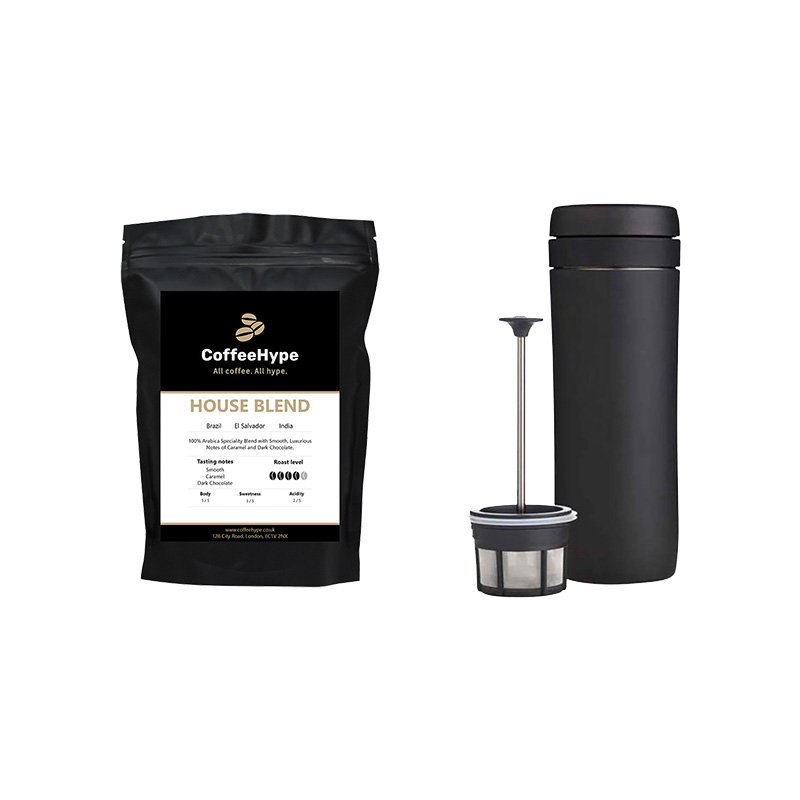
House Blend Coffee
From: £9.99 — or subscribe to save 10% -
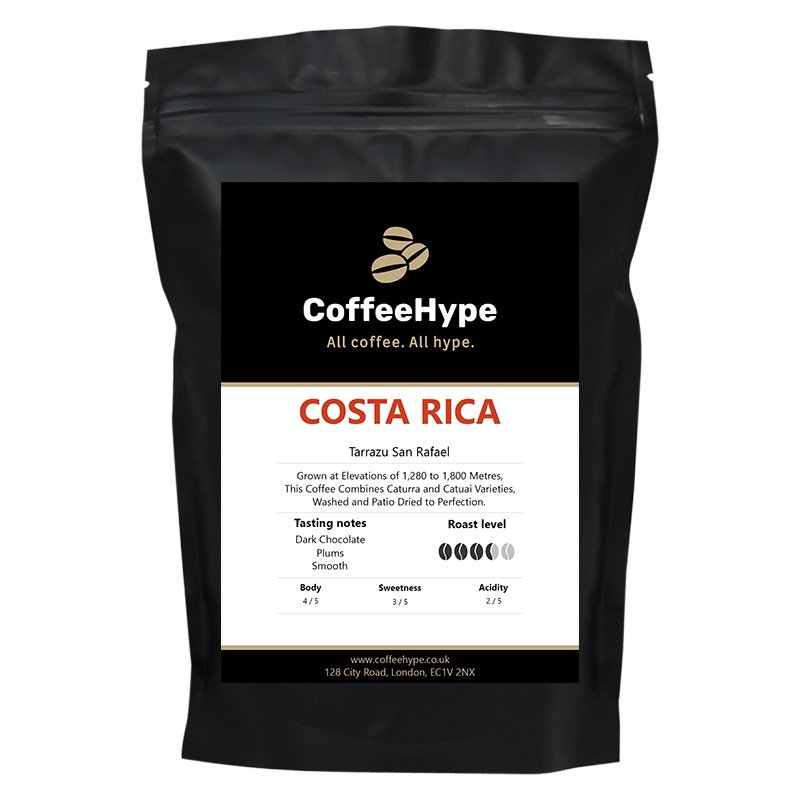
Costa Rica Tarrazu San Rafael Coffee
From: £9.99 — or subscribe to save 10% -
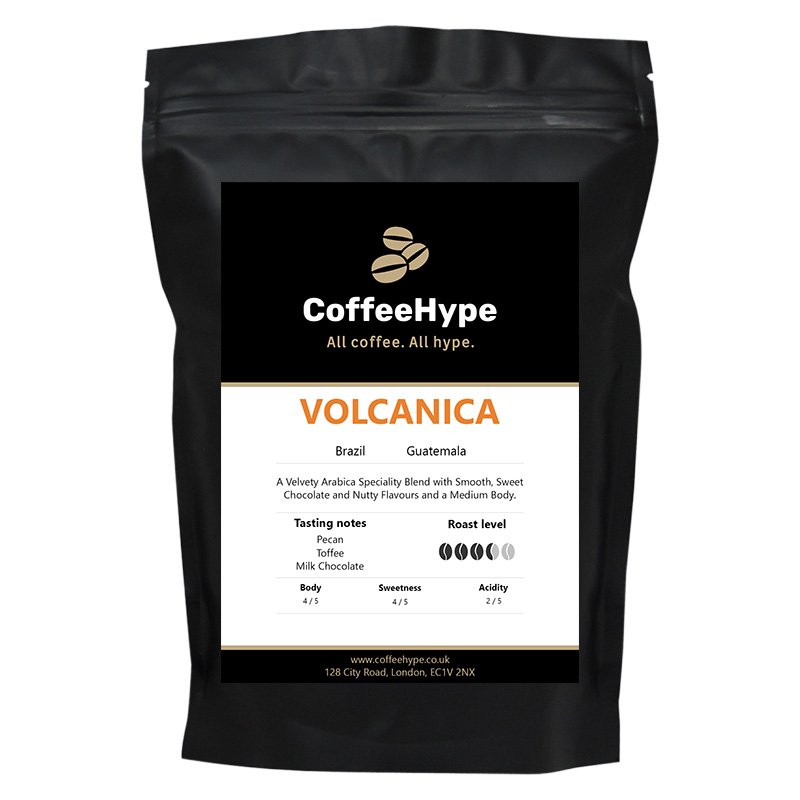
Volcanica Coffee Blend
From: £9.99 — or subscribe to save 10%


2023