
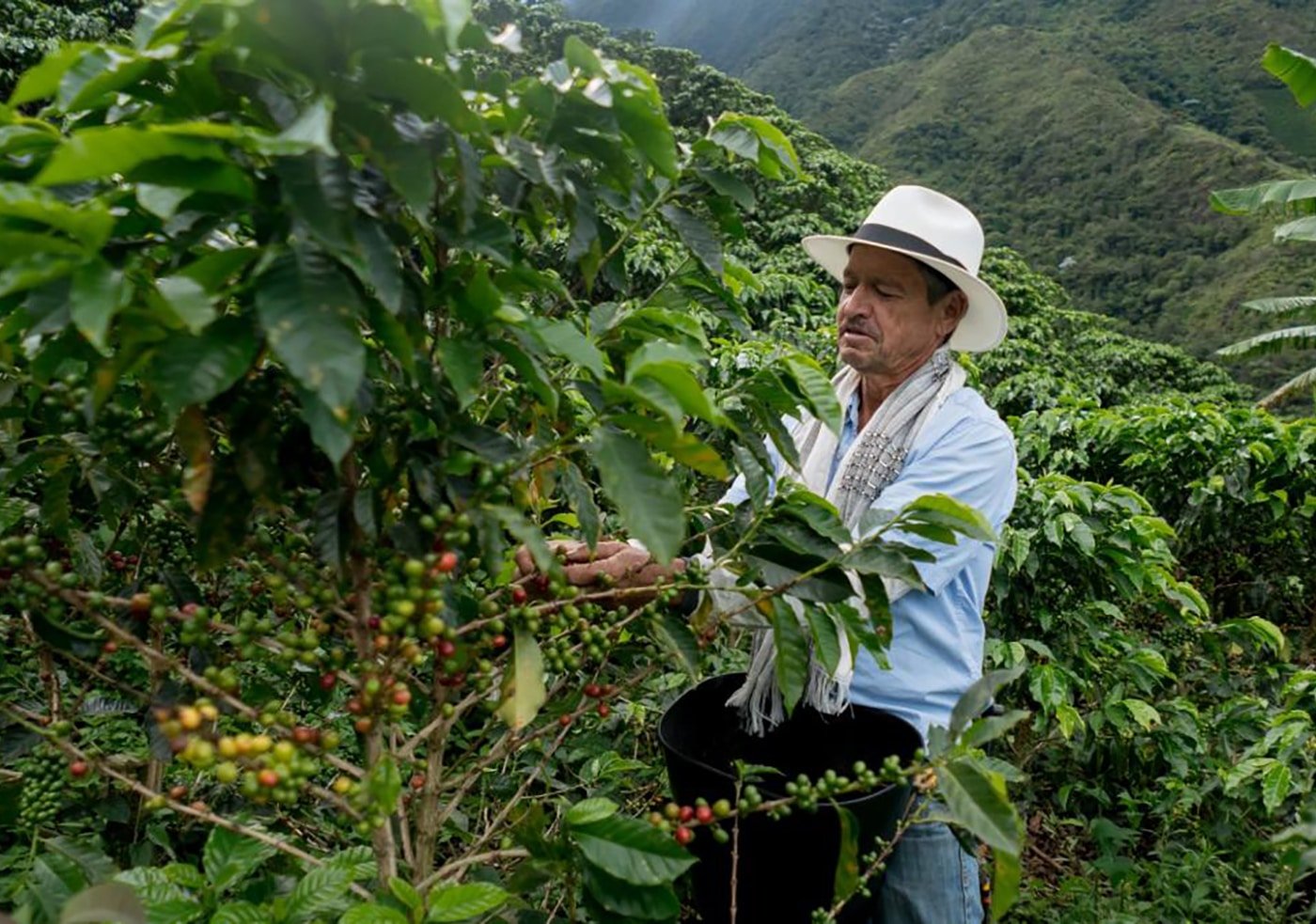
El Salvador coffee has a long history and an outsized reputation for a relatively small Central American country.
Volcanic landscapes, varied microclimates and established Arabica varieties have helped El Salvador develop a distinctive coffee culture. The country is particularly associated with Bourbon, Pacas and Pacamara, while producers increasingly work with other varieties and processing techniques.
From sweet chocolate and caramel notes to fruitier and more floral speciality lots, there’s considerable diversity to explore.
This El Salvador coffee guide looks at the country’s history, growing regions, famous varieties, processing methods, flavours and the best ways to brew its beans at home.
The history of El Salvador coffee
Coffee has been cultivated in El Salvador for centuries, although accounts of precisely when and how it was introduced vary.
Coffee became particularly important during the 19th century as commercial cultivation expanded and the crop developed into a major part of the country’s export economy.
Its expansion profoundly influenced El Salvador’s economy, land ownership and rural society. That history wasn’t simply a story of agricultural success: the expansion of commercial coffee cultivation was also connected with significant political and social change.
By the late 19th and early 20th centuries, coffee had become one of the country’s defining agricultural industries.
The story of El Salvador coffee since then has included periods of growth alongside political conflict, changing international prices, natural disasters and crop disease.
Coffee leaf rust caused particularly serious disruption across Central America in 2012–13. El Salvador was heavily affected, contributing to efforts to renovate farms and introduce more disease-resistant varieties.
Despite these challenges, coffee remains important to rural communities and the country’s agricultural identity.
What makes El Salvador good for coffee?
El Salvador may be geographically small, but its landscape provides a range of coffee-growing environments.
Volcanic soils, mountainous terrain, altitude and distinct microclimates can all influence coffee cultivation.
Many farms grow Arabica coffee at elevations where cooler temperatures can slow cherry development.
Altitude alone doesn’t determine quality, though.
Variety, soil, rainfall, shade, farm management, harvesting, processing and storage all influence the final result.
These interacting factors help explain why El Salvador coffee can display such a wide range of flavours despite coming from a relatively compact country.
El Salvador coffee growing regions
Coffee is produced across several areas of El Salvador.
You’ll encounter names including:
- Apaneca-Ilamatepec
- Alotepec-Metapán
- Bálsamo-Quezaltepec
- Chichontepec
- Tecapa-Chinameca
- Cacahuatique
Individual farms within the same broader region can still have different elevations, microclimates, varieties and processing methods.
That’s why looking at the precise origin printed on a coffee bag can tell you much more than simply knowing the country.
Apaneca-Ilamatepec
Apaneca-Ilamatepec in western El Salvador is one of the country’s best-known coffee-growing areas.
Its mountainous volcanic landscape includes areas around Santa Ana and Ahuachapán.
Coffee farms operate across different elevations and growing conditions, producing a variety of flavour profiles.
The region is also closely connected with El Salvador’s coffee heritage.
For anyone beginning to explore El Salvador coffee, coffees from Apaneca-Ilamatepec provide an excellent introduction to the country’s speciality production.
Chalatenango and Alotepec-Metapán
Northern El Salvador is another important part of the country’s speciality coffee story.
Chalatenango is particularly well known among speciality coffee enthusiasts and has developed a reputation for high-quality lots.
Farms in these mountainous areas can produce coffees with pronounced sweetness and complex fruit characteristics.
As with every origin, however, flavour varies between farms, varieties, processing methods and roast profiles.
It’s better to use tasting notes from the individual coffee than assume everything from one region will taste identical.
Bourbon coffee in El Salvador
Bourbon has played an especially important role in El Salvador.
It’s one of the historically significant Arabica varieties found throughout Central America and is known for its potential to produce excellent cup quality under suitable conditions.
Bourbon plants are relatively tall and susceptible to important coffee diseases, including coffee leaf rust.
Despite those agricultural disadvantages, the variety has remained important because of its established presence and quality potential.
Much of the story of El Salvador coffee is closely connected with Bourbon and varieties descended from it.
Pacas: a Salvadoran discovery
Pacas has an even more direct connection with the country.
The variety was discovered in 1949 on a farm belonging to the Pacas family in the Santa Ana region of El Salvador.
Pacas is a natural mutation of Bourbon that produces a more compact plant. Its smaller stature can allow farmers to plant coffee more densely than traditional tall Bourbon.
The Salvadoran Institute for Coffee Research later carried out selection work on the variety.
Today, Pacas remains strongly associated with El Salvador and forms an important part of the country’s coffee heritage.
For coffee enthusiasts, encountering Pacas provides an opportunity to taste a variety whose history is directly connected to the country where it was discovered.
Pacamara: created in El Salvador
Pacamara is perhaps the most famous variety associated with El Salvador coffee.
It was developed from a cross between Pacas and Maragogipe by the Salvadoran Institute for Coffee Research.
The idea was to combine desirable characteristics from the two parent varieties.
Pacamara is particularly recognisable for its very large beans and has demonstrated exceptional potential for cup quality when grown in suitable conditions.
However, it isn’t an easy variety in every respect. It can have relatively low yield and is highly susceptible to coffee leaf rust.
Those trade-offs demonstrate an important point: a variety capable of exceptional coffee isn’t necessarily the easiest or most productive variety for a farmer to grow.
Pacamara has nevertheless become internationally associated with high-quality Salvadoran coffee.
Other coffee varieties
Bourbon, Pacas and Pacamara aren’t the only coffees grown in El Salvador.
Other varieties and cultivars can include Catimor-related and Sarchimor-related coffees, Catuaí, Cuscatleco and Tekisic.
Tekisic has another particularly interesting Salvadoran connection.
It is a selection of Bourbon developed by the Salvadoran Institute for Coffee Research, with selection work beginning in 1949 before its eventual release in 1977.
As farmers respond to coffee leaf rust, climate pressures and changing economic conditions, the country’s variety mix continues to evolve.
Understanding the variety can add another layer to exploring El Salvador coffee, but it shouldn’t be considered in isolation from region, processing and roast.
How El Salvador coffee is harvested
Coffee cherries don’t all ripen simultaneously.
For quality-focused production, harvesting ripe cherries can help provide more consistent raw material for processing.
The precise harvest period varies according to altitude, region, weather and farm conditions rather than following one identical calendar across the entire country.
Once harvested, the cherries need to be processed relatively quickly and carefully.
How producers handle the coffee at this stage can significantly influence the flavours eventually found in your cup.
How El Salvador coffee is processed
El Salvador producers use several processing approaches.
Washed coffee
With washed processing, the fruit is removed and the coffee is fermented and washed before drying.
Washed coffees can offer clarity that makes the characteristics of the variety and growing environment easier to distinguish.
Honey process
Honey processing removes the outer skin while leaving varying amounts of mucilage around the seed during drying.
Depending on how the coffee is handled, this can contribute additional sweetness and body.
Natural process
Natural coffee is dried with the fruit surrounding the seed.
Carefully produced natural coffees can develop pronounced fruit, sweetness and body.
Producers may also experiment with controlled fermentation and other processing techniques.
This variety of approaches means processing is worth checking when choosing El Salvador coffee because it can dramatically influence what you taste.
What does El Salvador coffee taste like?
There’s no single flavour that defines every coffee from the country.
Common tasting characteristics may include:
- Chocolate
- Caramel
- Brown sugar
- Nuts
- Citrus
- Stone fruit
- Berries
- Floral notes
A traditional washed Bourbon may taste very different from a naturally processed Pacamara.
Roasting also has an enormous influence.
A lighter roast may preserve more fruit, floral characteristics and acidity, while a darker roast can emphasise deeper roasted, chocolatey and caramelised flavours.
Think of El Salvador coffee as a broad spectrum rather than one fixed flavour profile.
Is El Salvador coffee good for filter brewing?
High-quality Salvadoran coffees can work particularly well with filter methods.
A V60 can highlight clarity and delicate flavour characteristics.
A Chemex also uses paper filtration and can produce a clean cup that works well with more nuanced coffees.
These methods can be especially interesting for fruitier or floral washed coffees where you want to explore individual tasting notes.
Use the individual coffee’s roast and flavour profile to guide your recipe rather than treating every Salvadoran coffee identically.
Is El Salvador coffee good for espresso?
Yes. Many coffees from El Salvador can also produce excellent espresso.
Sweeter coffees with chocolate, caramel, nut or ripe fruit characteristics can work particularly well as espresso and in milk-based drinks.
Pacamara can also produce distinctive single-origin espresso when the coffee and roast are suitable.
Our guide on how to make espresso coffee explains how to control dose, yield, grind and extraction.
An AeroPress provides another flexible option if you want to experiment with different ratios and brewing temperatures.
Trying the same El Salvador coffee using two brewing methods is an excellent way to discover how preparation changes its flavour.
How to choose El Salvador coffee beans
Don’t choose a bag based solely on the country name.
Look for information including:
- Region
- Farm or producer
- Variety
- Altitude
- Processing method
- Roast level
- Tasting notes
A Bourbon from one farm may taste completely different from a Pacamara grown and processed elsewhere.
If you’re new to buying speciality coffee, our best coffee beans guide explains the main details worth considering.
Freshness matters too.
Choosing freshly roasted beans and grinding shortly before brewing can help you get more from the coffee’s aroma and flavour.
Discover El Salvador coffee
El Salvador’s coffee industry combines a long history with an unusually strong connection to some fascinating Arabica varieties.
Bourbon established deep roots in the country’s coffee industry. Pacas emerged as a natural Bourbon mutation discovered on a Salvadoran farm, while Pacamara was later created through Salvadoran coffee research and became internationally recognised for its quality potential. The history of these varieties is documented in the World Coffee Research variety catalogue.
Today, El Salvador coffee encompasses traditional washed lots alongside honey, natural and more experimental processing, creating a broad spectrum of flavours.
Browse our freshly roasted coffee beans and compare different origins, varieties and flavour profiles.
Whether you prefer chocolatey sweetness, bright fruit or more complex floral characteristics, exploring El Salvador coffee offers a fascinating introduction to one of Central America’s historic coffee-producing countries.
Best Selling Products
-

Brazil Fazenda Pinhal Coffee
From: £9.99 — or subscribe to save 10% -
House Blend Coffee
From: £9.99 — or subscribe to save 10% -
Costa Rica Tarrazu San Rafael Coffee
From: £9.99 — or subscribe to save 10% -
Volcanica Coffee Blend
From: £9.99 — or subscribe to save 10%


2023