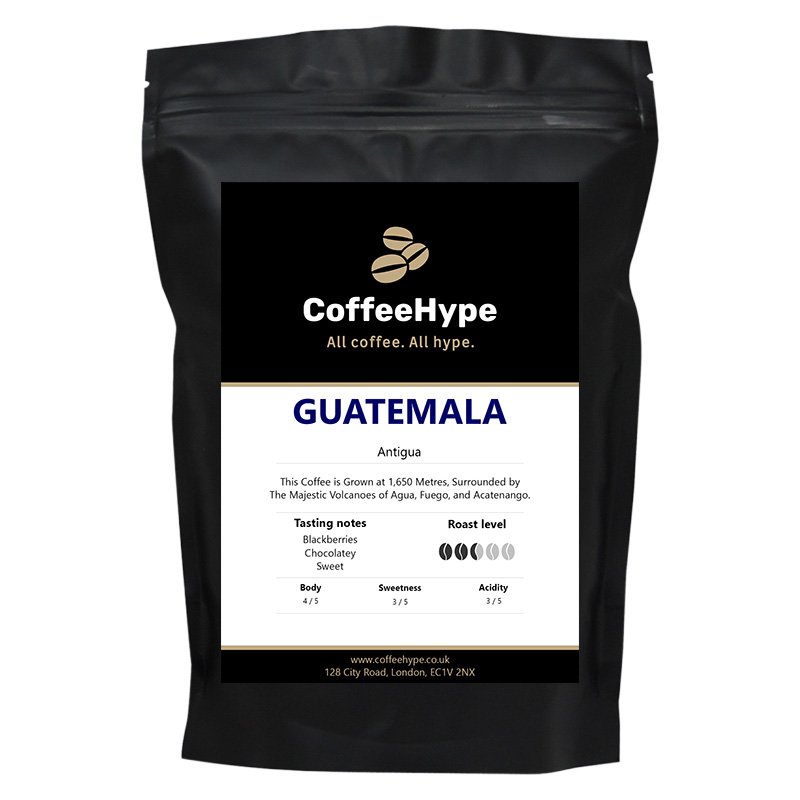


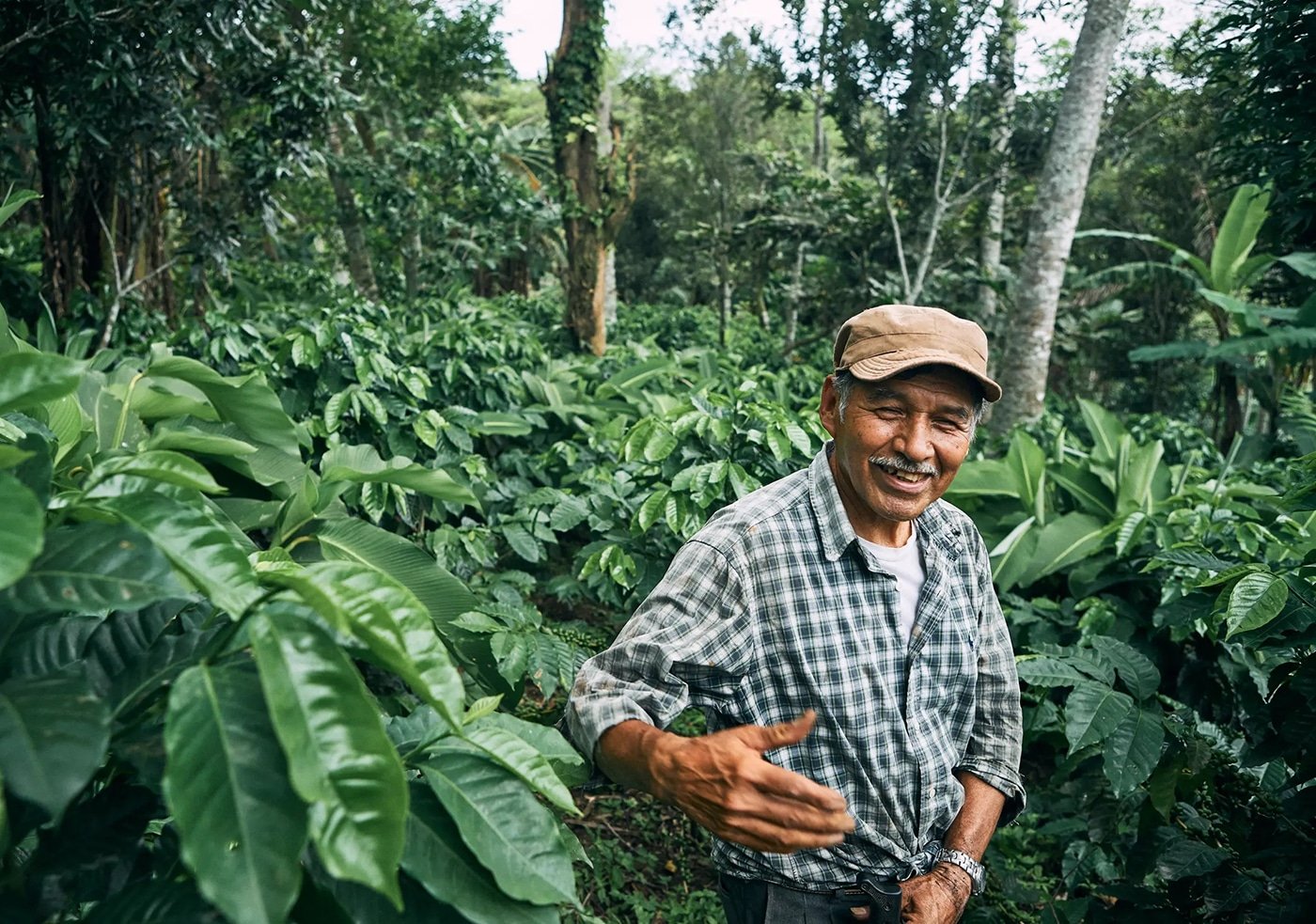
Guatemala coffee is known for its diversity. Mountain ranges, volcanic landscapes, varied rainfall and hundreds of microclimates create growing conditions capable of producing remarkably different coffees within one relatively small Central American country.
Some Guatemalan coffees are rich and chocolatey, while others offer citrus, floral, fruit or caramel characteristics. Region, altitude, variety, processing and roast all influence what eventually reaches your cup.
This Guatemala coffee guide explores the country’s history, eight recognised growing regions, important Arabica varieties, processing methods, flavours and some of the best ways to brew the beans at home.
The history of Guatemala coffee
Coffee has a long history in Guatemala.
According to Guatemala’s National Coffee Association, Anacafé, traditional knowledge surrounding coffee cultivation has been important to the country’s economic, social and cultural development since the first half of the 18th century.
Commercial production became increasingly significant during the 19th century.
As cultivation expanded, coffee became an important export crop and helped shape Guatemala’s agricultural economy. Its history was also tied to major changes in land ownership and labour, making the development of the industry considerably more complex than a simple story of commercial success.
Coffee remains an important part of Guatemala’s agricultural identity today. You can learn more about the country’s coffee industry through Anacafé, Guatemala’s National Coffee Association.
Modern Guatemala coffee combines that long history with speciality production, regional differentiation and continued experimentation by producers.
Why is Guatemala good for growing coffee?
Guatemala has an unusually varied landscape for its size.
Anacafé identifies more than 300 microclimates created by a combination of mountain ranges, volcanoes, crater lakes, different soil types, rainfall patterns and the influence of the Atlantic and Pacific oceans.
These conditions help explain why coffees grown in different parts of the country can have noticeably different characteristics.
Altitude can also affect how coffee develops, with cooler conditions at higher elevations potentially slowing cherry maturation.
However, altitude isn’t a guarantee of quality.
Variety, rainfall, soil, shade, farming practices, cherry ripeness, processing and storage all contribute to the final cup.
This combination of factors gives Guatemala coffee considerable diversity.
The eight Guatemala coffee regions
Anacafé established eight recognised regional profiles to distinguish coffees produced in different parts of Guatemala.
They are:
- Antigua Coffee
- Acatenango Valley
- Traditional Atitlán
- Rainforest Cobán
- Fraijanes Plateau
- Highland Huehue
- New Oriente
- Volcanic San Marcos
Each has different geography and growing conditions.
These regional identities are useful when choosing Guatemala coffee because they provide more information than the country name alone.
Antigua Coffee
Antigua is perhaps one of Guatemala’s most internationally recognised coffee origins.
The region lies in a valley surrounded by volcanoes, including Agua, Fuego and Acatenango.
Its combination of elevation, volcanic influence and climate creates distinctive growing conditions.
Antigua coffees can offer sweetness, balance and complexity. Chocolate and caramel characteristics are commonly associated with coffees from the region, although individual lots can differ substantially.
If you’re exploring Guatemala coffee for the first time, Antigua is one of the classic origins to look for.
Highland Huehue
Highland Huehue refers to coffees from the mountainous Huehuetenango area in western Guatemala.
The region’s elevation and varied terrain provide conditions for producing distinctive speciality coffees.
Depending on the individual lot, you may encounter fruit, floral characteristics, sweetness and lively acidity alongside more familiar chocolate and caramel flavours.
These characteristics can make Highland Huehue particularly interesting for filter brewing.
As always, the farm, variety, processing method and roast matter as much as the broader regional name.
Traditional Atitlán
Lake Atitlán provides the dramatic setting for another established Guatemala coffee region.
Coffee is grown around the lake in areas influenced by mountainous and volcanic terrain.
Anacafé’s regional descriptions associate Traditional Atitlán with citrus-like acidity and substantial body.
The area’s distinctive geography helps create another example of how dramatically growing conditions can change within Guatemala.
Rainforest Cobán
Cobán differs considerably from some of Guatemala’s drier coffee regions.
Its humid, rainy environment creates its own growing conditions, contributing to a regional identity distinct from Antigua, Atitlán and Huehuetenango.
This illustrates why describing all Guatemala coffee simply as chocolatey or bright can be misleading.
Origin within the country can matter considerably.
Acatenango Valley
Acatenango Valley is another highland coffee-growing area with volcanic influences.
Anacafé describes the regional profile as fragrant, with caramel aroma, citrus-like acidity and a persistent finish.
Individual coffees naturally vary, but the region has become recognised for speciality production.
Its proximity to volcanic terrain also makes Acatenango an interesting comparison with neighbouring Antigua.
Fraijanes Plateau
Fraijanes Plateau combines volcanic soils with elevated growing areas and its own climatic conditions.
Anacafé has associated coffees from this region with chocolate and caramel flavours, bright acidity and a creamy, substantial body.
These characteristics can make suitable coffees versatile across both filter and espresso brewing.
Volcanic San Marcos
San Marcos lies in western Guatemala and contains mountainous volcanic terrain.
Regional coffees can offer floral and caramel characteristics alongside noticeable acidity.
Rainfall patterns and local microclimates distinguish San Marcos from other established growing areas.
The result is another expression of the remarkable geographical diversity behind Guatemala coffee.
New Oriente
New Oriente in eastern Guatemala represents a comparatively newer chapter in the country’s speciality coffee story.
Coffee cultivation has become an important agricultural activity in the area, with mountainous terrain providing suitable growing environments.
As with the other recognised origins, the value of the regional designation is that it encourages coffee drinkers to explore Guatemala beyond a single national flavour profile.
Shade-grown coffee in Guatemala
Shade is an important characteristic of coffee cultivation in Guatemala.
Rather than necessarily growing as exposed rows of coffee plants, coffee can be cultivated beneath a canopy of trees.
Anacafé highlights shade cultivation as one of the defining characteristics of Guatemalan coffee production.
Shade can moderate conditions around coffee plants while creating a more complex growing environment.
The exact system varies between farms, but understanding how coffee is grown provides useful context when exploring Guatemala coffee.
Arabica varieties grown in Guatemala
Arabica dominates Guatemala’s coffee-growing landscape. Anacafé reports that approximately 96.4% of the country’s coffee-growing area in its varietal survey was Coffea arabica, with Coffea canephora accounting for the remainder.
Coffee drinkers may encounter varieties including:
- Bourbon
- Caturra
- Catuaí
- Typica
- Pache
- Villa Sarchí
- Geisha
- Various disease-resistant cultivars
Bourbon, Caturra and Catuaí are particularly familiar names in Central American coffee.
Each variety has different agricultural characteristics, but variety alone doesn’t determine flavour.
Where the coffee grows and how it is harvested, processed and roasted can have an equally significant effect.
For more information about the species itself, read our guide to Arabica coffee beans.
How Guatemala coffee is harvested
Anacafé identifies hand harvesting as an important characteristic of Guatemala’s coffee production.
Selective picking allows workers to target ripe cherries, although exact harvesting practices vary between farms.
Harvest timing also varies according to region and elevation rather than following one identical schedule across the entire country.
Once picked, careful handling becomes essential.
The choices made during processing can significantly influence sweetness, acidity, body and fruit characteristics.
How Guatemala coffee is processed
Washed processing has a particularly strong association with Guatemala.
In a typical washed process, the outer fruit is removed before the coffee undergoes fermentation and washing. The beans are subsequently dried to an appropriate moisture level.
Washed processing can produce clean and clearly defined flavour characteristics.
However, it isn’t the only approach.
Guatemalan producers also work with natural, honey and experimental processes. Anacafé’s regional competitions specifically recognise innovative processes, including honey and natural coffees.
This experimentation creates even greater diversity within Guatemala coffee.
What does Guatemala coffee taste like?
There isn’t one flavour profile that applies to every Guatemalan coffee.
Depending on region, variety, processing and roast, you might encounter:
- Chocolate
- Cocoa
- Caramel
- Citrus
- Stone fruit
- Berries
- Nuts
- Floral notes
Anacafé broadly characterises high-grown Guatemalan coffees as aromatic, with pleasant acidity, body and delicate sweetness, while its regional profiles demonstrate how these characteristics differ across the country.
A chocolatey coffee from Fraijanes can provide a very different experience from a fruitier speciality lot from Huehuetenango.
Checking the tasting notes on an individual bag is therefore more useful than expecting every Guatemala coffee to taste the same.
Is Guatemala coffee good for filter brewing?
Many Guatemalan coffees are particularly well suited to filter brewing.
A V60 can highlight clarity, acidity and delicate fruit or floral notes.
A Chemex is another good option for coffees where you want a clean and refined cup.
For greater flexibility, an AeroPress allows you to experiment easily with grind, ratio, temperature and brewing time.
The best method ultimately depends on the individual coffee and your personal taste.
Is Guatemala coffee good for espresso?
Guatemalan beans can also make excellent espresso.
Coffees with chocolate, caramel and nut characteristics can produce balanced shots and work particularly well with milk.
Fruitier speciality coffees can create more distinctive single-origin espresso.
If you’re brewing this way, our guide to how to make espresso coffee covers dose, yield, grind and extraction.
Try the same Guatemala coffee as both espresso and filter coffee and you may discover quite different sides to its flavour.
How to choose Guatemala coffee beans
Country of origin is only the starting point.
When comparing beans, look for details such as:
- Growing region
- Farm or producer
- Variety
- Processing method
- Roast level
- Tasting notes
These details help you understand what you’re buying and make it easier to find coffees that match your preferences.
Our best coffee beans guide explains what else to consider when choosing beans.
Buying freshly roasted coffee and grinding shortly before brewing can also help preserve its aroma and flavour.
Discover Guatemala coffee
Centuries of cultivation, varied landscapes and hundreds of microclimates have created a remarkably diverse coffee origin.
From Antigua and Acatenango to Huehuetenango, Atitlán and Cobán, exploring individual regions reveals just how much variety exists within one country.
Guatemala coffee can deliver chocolate and caramel sweetness, bright citrus, fruit, floral characteristics and much more depending on where and how it was produced.
Browse our freshly roasted coffee beans to discover coffees from different origins and compare their flavour profiles.
Whether you prefer rich espresso or a clean filter brew, Guatemala coffee offers plenty of opportunities to explore the diversity of Central American coffee.
Best Selling Products
-

Brazil Fazenda Pinhal Coffee
From: £9.99 — or subscribe to save 10% -
House Blend Coffee
From: £9.99 — or subscribe to save 10% -
Costa Rica Tarrazu San Rafael Coffee
From: £9.99 — or subscribe to save 10% -
Volcanica Coffee Blend
From: £9.99 — or subscribe to save 10%


2023