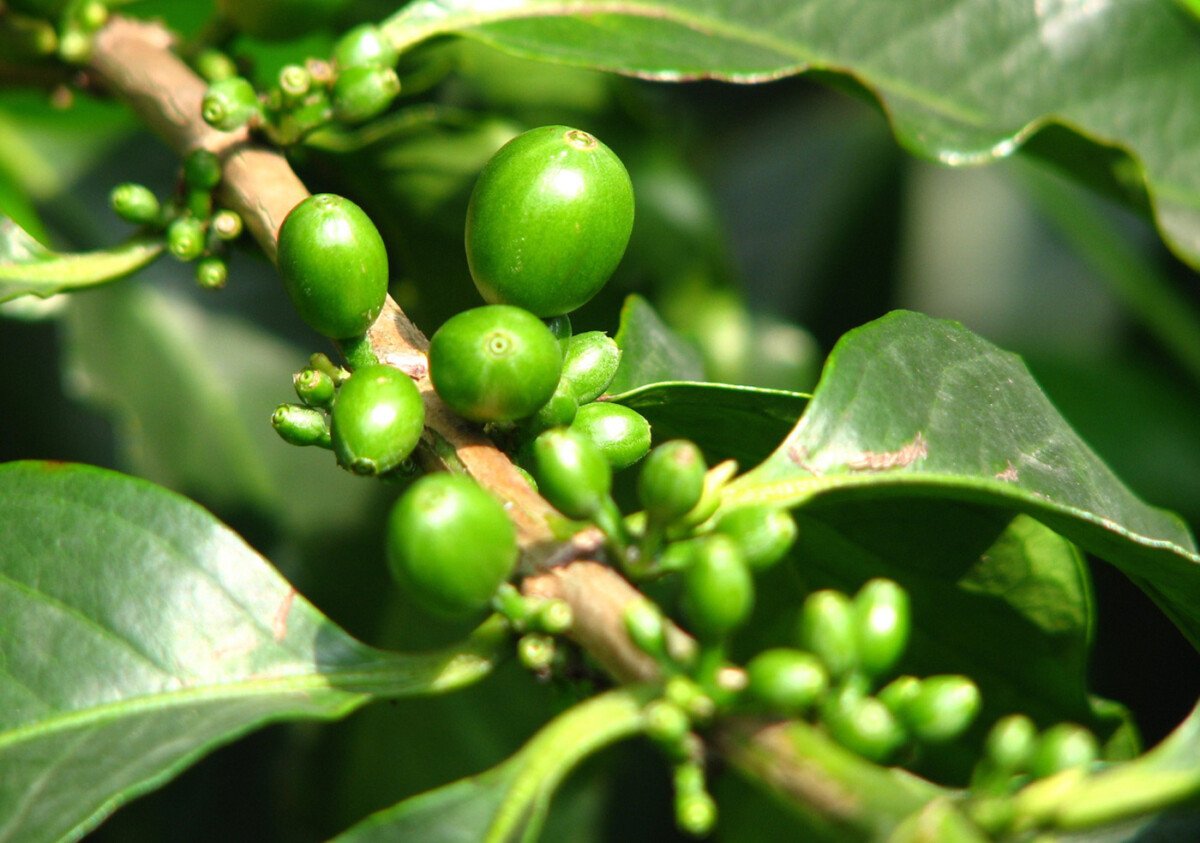
Most of the coffee we drink comes from just a small number of species, with Arabica and Robusta dominating global production.
But researchers are also investigating lesser-known wild coffee species that could potentially play a role in coffee’s future.
One of the most fascinating is Coffea stenophylla.
Once cultivated in parts of West Africa before largely disappearing from production, Coffea stenophylla was rediscovered growing wild in Sierra Leone in 2018. Research has since attracted international attention because the species combines tolerance of relatively high temperatures with a flavour that professional tasters found surprisingly similar to high-quality Arabica.
Could this forgotten coffee eventually help the industry adapt to a warmer climate?
What is Coffea stenophylla?
Coffea stenophylla is a coffee species native to West Africa.
It isn’t a newly discovered species. In fact, botanical records of the species stretch back to the 19th century, and it was once cultivated as a coffee crop in Upper West Africa.
However, cultivation declined dramatically and the plant became extremely difficult to find.
Researchers searching Sierra Leone eventually located Coffea stenophylla growing in the wild in 2018 after it had not been recorded there in the wild for decades.
That rediscovery opened the door to renewed research into a coffee that had largely disappeared from cultivation.
The Royal Botanic Gardens, Kew has published details of the rediscovery and subsequent research into the species.
Why is Coffea stenophylla important?
Coffee production faces significant long-term challenges from changing temperatures and rainfall patterns.
Arabica is particularly associated with relatively cool tropical growing conditions, making climate change an important issue for researchers and producers.
Wild coffee species contain genetic diversity that could potentially help researchers develop coffee plants suited to changing conditions.
Coffea stenophylla is particularly interesting because research suggests it can tolerate considerably warmer growing conditions than Arabica while still producing a desirable cup.
That combination is unusual.
Finding a plant capable of surviving warmer conditions is one challenge. Finding one that can also produce coffee consumers actually want to drink is another.
Stenophylla potentially offers both.
A forgotten coffee rediscovered in Sierra Leone
The modern Coffea stenophylla story is better described as a rediscovery than a discovery.
The species was historically known and had previously been cultivated in West Africa.
However, it had become extremely rare.
Researchers from the Royal Botanic Gardens, Kew and their collaborators travelled to Sierra Leone in 2018 to search for surviving plants.
After locating a single plant at one site, the team eventually found a healthy wild population elsewhere.
The discovery gave scientists an opportunity to investigate whether historical reports about the coffee’s quality had any basis in modern sensory analysis.
Coffea stenophylla and a warmer climate
This is where the species becomes particularly interesting.
Research published in Nature Plants in 2021 compared the environmental requirements of Coffea stenophylla with commercially important coffee species.
Researchers found that stenophylla grows and crops under substantially warmer conditions than Arabica.
The study estimated its mean annual temperature requirement at around 6.2–6.8°C higher than Arabica under comparable rainfall conditions.
That doesn’t mean Coffea stenophylla is a ready-made solution to climate change.
Researchers still need to understand its agronomic performance, yields, disease resistance, scalability and suitability for different growing environments.
But its apparent heat tolerance gives researchers another potential resource when considering how coffee production could adapt.
What does Coffea stenophylla taste like?
Climate resilience would be considerably less useful commercially if nobody enjoyed drinking the resulting coffee.
This is another reason stenophylla attracted so much attention.
Professional sensory evaluations found that Coffea stenophylla had characteristics comparable to high-quality Arabica.
In blind testing, 81% of the judges identified the stenophylla sample as Arabica, despite it being a completely different species.
Tasters identified characteristics including:
- Peach
- Blackcurrant
- Mandarin
- Honey
- Black tea
- Jasmine
- Chocolate
- Caramel
- Nuts
- Floral notes
Researchers also reported natural sweetness, medium-high acidity, fruitiness and good body.
Importantly, these aren’t flavours artificially added to the beans. They’re sensory descriptions used by tasters to communicate characteristics perceived in the coffee.
If you’re interested in how these descriptions work, our guide to coffee roasts and their flavours explains more about interpreting coffee flavours.
Is Coffea stenophylla Arabica?
No.
Coffea stenophylla and Coffea arabica are separate coffee species.
What’s remarkable is that professional tasters found the stenophylla samples surprisingly similar to high-quality Arabica.
Arabica remains the species most closely associated with specialty coffee, so finding desirable sensory characteristics in another species could be valuable.
It also demonstrates how much unexplored diversity exists within the wider Coffea genus.
For more on the coffee most people already know, read our guide to Arabica coffee beans.
Is Coffea stenophylla drought tolerant?
You’ll sometimes see stenophylla described as drought tolerant.
There is historical and observational evidence supporting this possibility, but the researchers behind the influential 2021 study specifically noted that its drought tolerance required further investigation.
It’s therefore better to distinguish between its stronger evidence for heat tolerance and claims about drought resistance that still require additional research.
This distinction is important because climate resilience involves much more than temperature alone.
Coffee plants can face changing rainfall, drought, pests, diseases and extreme weather as growing conditions change.
Why wild coffee species matter
Coffea stenophylla is part of a much bigger story.
Arabica and Robusta dominate the coffee we drink, but numerous wild Coffea species exist.
These species represent an important source of genetic diversity.
Some may possess characteristics useful for addressing challenges such as:
- Higher temperatures
- Changing rainfall
- Drought
- Pests
- Disease
- Crop resilience
Research from Kew has also warned that many wild coffee species themselves face threats from habitat loss and climate change.
Conservation therefore isn’t simply about protecting unusual plants.
Preserving wild coffee diversity could retain genetic resources that prove valuable to coffee production in the future.
Could Coffea stenophylla replace Arabica?
Not anytime soon.
Arabica has an enormous established production, processing and trading infrastructure behind it.
Coffea stenophylla, by contrast, remains extremely limited as a crop.
Before large-scale commercial production could become realistic, researchers and producers need much more information about issues including:
- Yield
- Plant performance
- Disease resistance
- Propagation
- Farm management
- Processing
- Consistency
- Market demand
The interesting question isn’t necessarily whether Coffea stenophylla will replace Arabica.
It may instead become an additional coffee crop or provide useful material for coffee breeding.
Could we eventually buy Coffea stenophylla?
Potentially, but widespread availability shouldn’t be expected yet.
Kew currently has an active project focused on revitalising Coffea stenophylla production in Sierra Leone.
The project includes establishing nurseries and trial plots, evaluating diversity within the species and investigating which plants perform best.
The aim is to provide evidence about whether production can be successfully expanded.
That means the story has moved beyond simply rediscovering the plant, but there’s still a considerable difference between research trials and seeing stenophylla routinely available alongside Arabica and Robusta.
What recent research has found
Research into Coffea stenophylla has continued since the widely reported 2021 taste study.
Scientists are investigating why its flavour can resemble Arabica despite the two species not being particularly closely related.
That work could improve understanding of the chemistry behind coffee quality and potentially help researchers identify useful characteristics for future coffee breeding.
The important point is that Coffea stenophylla isn’t being presented scientifically as a miracle solution.
It’s a promising research subject with characteristics that could prove valuable.
What does this mean for coffee drinkers?
For now, most people aren’t going to replace their everyday Arabica beans with stenophylla.
The significance is longer term.
Coffee drinkers often explore different origins without necessarily thinking about species. A coffee from Kenya, Ethiopia or Colombia may taste remarkably different while still being Arabica.
Exploring entirely different species creates another level of diversity.
If Coffea stenophylla eventually becomes commercially viable, it could give farmers another crop option and coffee drinkers an entirely different coffee to explore.
Is Coffea stenophylla the future of coffee?
It’s far too early to know.
What makes the species exciting is the unusual combination researchers have identified: an ability to grow under substantially warmer conditions than Arabica alongside a sensory profile comparable to high-quality Arabica.
That’s enough to justify serious research.
But commercial success will depend on much more than flavour and temperature tolerance.
Coffea stenophylla needs to work for farmers as well as coffee drinkers.
Current research into propagation, cultivation and performance should give us a much clearer picture of its potential.
A fascinating glimpse at coffee’s future
The rediscovery of Coffea stenophylla shows why coffee biodiversity matters.
Rather than a previously unknown species suddenly appearing, this is the story of a coffee known to science for almost two centuries being found again in the wild and reconsidered for a very different world.
Its heat tolerance is promising. Its Arabica-like flavour is unusual. And current research into bringing the crop back into production makes Coffea stenophylla one of the most interesting lesser-known coffees to watch.
Whether it ultimately becomes an important commercial crop remains to be seen.
For now, you can explore the remarkable diversity already available by reading our guide to the best coffee beans in the world or browsing CoffeeHype’s freshly roasted coffee beans.
Best Selling Products
-

Brazil Fazenda Pinhal Coffee
From: £9.99 — or subscribe to save 10% -
House Blend Coffee
From: £9.99 — or subscribe to save 10% -
Costa Rica Tarrazu San Rafael Coffee
From: £9.99 — or subscribe to save 10% -
Volcanica Coffee Blend
From: £9.99 — or subscribe to save 10%



2025