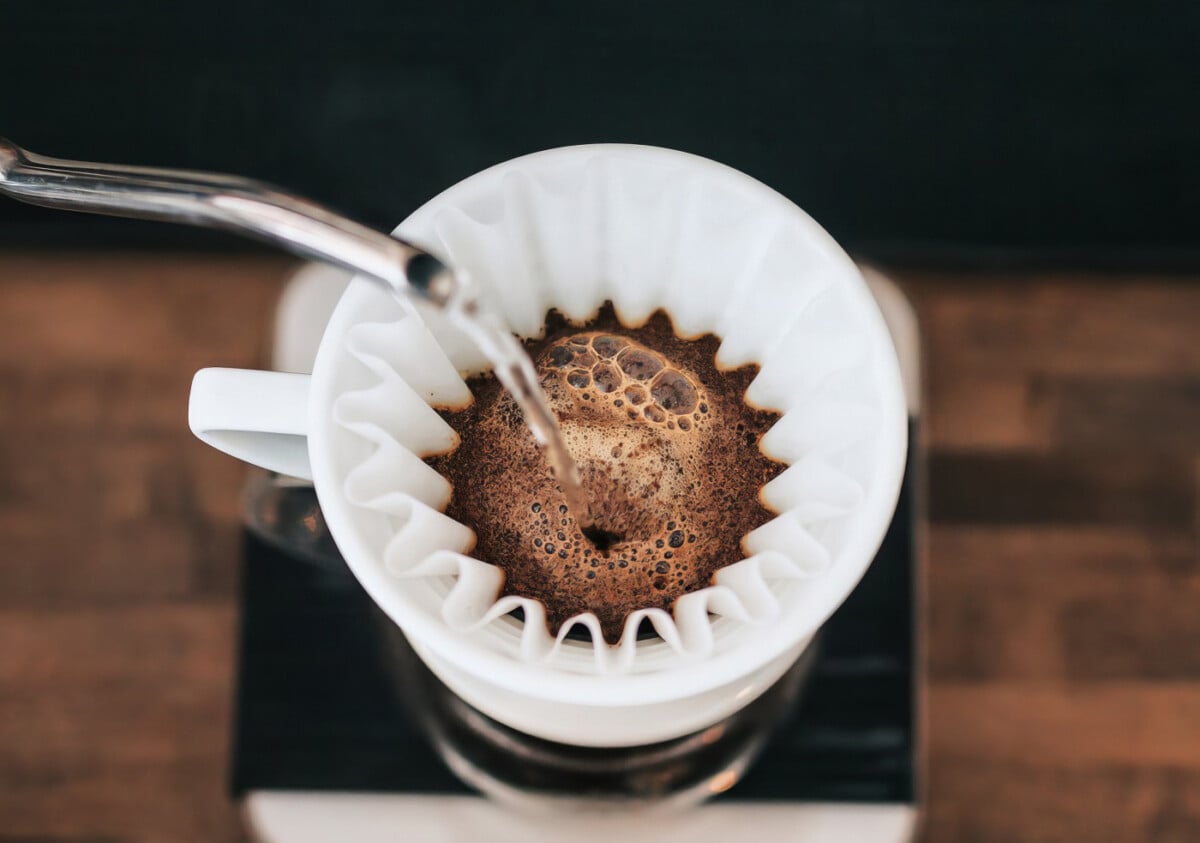
Coffee filter papers might seem like a small part of your brewing setup, but they can have a noticeable influence on the coffee in your cup.
Coffee flavour is affected by everything from origin and roast to grind size, water and brewing method. The filter you choose is another important part of that process.
Whether you’re a pour-over enthusiast or regularly use a filter coffee machine, choosing the right coffee filter papers can help you achieve a clean, balanced and consistent brew.
In this guide, we’ll cover the different types, sizes and shapes available, explain bleached and unbleached filters, compare paper with metal filters and show you how to choose the right option for your brewing equipment.
Why do coffee filter papers matter?
Coffee filter papers separate the brewed coffee from the grounds while retaining much of the fine sediment and some of the oils that would otherwise pass into your cup.
This generally produces a cleaner cup with greater clarity than brewing methods that use a coarse metal filter or no filter at all.
The paper itself can also affect how quickly water moves through the coffee bed. Differences in thickness, material, shape and construction can therefore influence brewing time and extraction.
Choosing a filter isn’t simply about finding one that fits. Using coffee filter papers designed for your brewer helps you achieve more consistent results.
A brief history of coffee filter papers
The modern paper coffee filter can be traced back to Melitta Bentz in Dresden, Germany.
In 1908, Bentz experimented with a perforated brass container and blotting paper to produce coffee without the unwanted grounds that commonly ended up in the cup.
Her idea became the foundation of the Melitta business and helped transform the way filtered coffee was prepared.
You can read more about the invention on the Melitta Group’s history of the coffee filter.
More than a century later, the same basic principle remains at the heart of coffee filter papers: allowing brewed coffee to pass through while retaining the grounds and fine particles.
Bleached vs unbleached coffee filter papers
One of the first choices you’ll encounter when buying coffee filter papers is whether to choose white or brown filters.
The difference is primarily in how the paper has been processed.
Bleached coffee filters
Bleached filters are processed to give the paper its familiar white appearance.
Depending on the manufacturer and product, different bleaching processes may be used.
One of their main advantages is that good-quality white filters tend to impart very little noticeable paper flavour when brewing.
They’re widely available for pour-over brewers and filter coffee machines.
Unbleached coffee filters
Unbleached filters retain the natural brown appearance of the paper because they haven’t undergone the same whitening process.
Some coffee drinkers prefer them because they undergo less processing.
However, depending on the particular paper, an unbleached filter can sometimes contribute a noticeable papery taste if it isn’t rinsed before brewing.
Whichever type you choose, rinsing the filter with hot water before adding your coffee is a useful step.
Should you rinse coffee filter papers?
Yes, particularly when making pour-over coffee.
Rinsing coffee filter papers with hot water before brewing can help remove loose paper fibres or unwanted paper flavours.
It also serves another useful purpose: warming your brewer and serving vessel before the coffee is brewed.
Place the filter into your brewer, pour hot water evenly across the paper and then discard the rinse water before adding your ground coffee.
It’s a simple step that only takes a few seconds.
Coffee filter paper sizes explained
Getting the right filter size is essential because your coffee filter papers need to fit the brewer correctly.
Unfortunately, there isn’t one universal sizing system that applies to every manufacturer and brewing device.
You may encounter filters labelled with sizes such as 1, 2, 4 or 6, while other systems use labels such as 1×2 and 1×4. Specialist brewers can also require their own particular filter dimensions.
The safest approach is therefore to check the manufacturer’s recommended filter for your brewer rather than choosing based solely on the number printed on the packet.
Using coffee filter papers that are too small can lead to overflowing grounds, while oversized or incorrectly shaped filters may not sit properly inside the brewer.
Cone, flat-bottom and speciality filter shapes
The size isn’t the only thing that matters. Your filter also needs to be the correct shape.
Cone and V-shaped filters
Cone and V-shaped coffee filter papers are commonly found in manual pour-over brewers and some filter machines.
The shape directs the water through the coffee bed towards a smaller exit area.
Different brewers use different cone angles and filter designs, so it’s important to buy papers intended for your particular brewer.
If you use a V60, our V60 brewing guide explains how to get more from this popular pour-over method.
Flat-bottom and basket filters
Flat-bottom or basket-style filters are commonly used with certain drip coffee machines and manual brewers.
Rather than tapering to a single point, the coffee bed sits across a flatter base.
As with cone filters, the best results come from matching the paper to the brewer rather than trying to force an incorrectly shaped filter to fit.
Chemex filters
The Chemex uses its own style of bonded paper filter, which is notably different from many standard pour-over papers.
If you brew with a Chemex, choose filters designed for your particular brewer.
You can learn more about the process in our Chemex brewing guide.
Paper vs metal coffee filters
Coffee filter papers aren’t your only option. Some brewers can also use reusable metal filters.
The choice can noticeably change the character of your coffee.
Paper filters
Paper filters retain much of the sediment and oils that might otherwise enter the cup.
The result is typically:
- A clean cup
- Less fine sediment
- Good flavour clarity
- Easy disposal and cleanup
Metal filters
Metal filters have larger openings than paper at a microscopic level, allowing more oils and fine particles into the finished coffee.
This can produce:
- More body
- A heavier mouthfeel
- More sediment
- A reusable brewing option
Neither is automatically better.
If you enjoy a clean and clear cup, coffee filter papers are likely to suit you. If you prefer more body and texture, you may prefer a metal filter.
Coffee filter machines vs pour-over drippers
The right filter also depends on how you like to brew.
Pour-over drippers
Manual pour-over brewing gives you direct control over factors such as pouring speed, water distribution and brew time.
Different drippers can behave quite differently, which is why using the correct coffee filter papers for your particular brewer is important.
If you enjoy experimenting with grind size, water and pouring technique, pour-over brewing offers plenty of control.
Filter coffee machines
Automatic filter coffee machines handle most of the brewing process for you.
They’re convenient when you want consistent coffee with minimal preparation and are particularly useful when brewing several cups at once.
Again, check the manufacturer’s instructions to make sure you’re using the correct size and shape of filter.
How to use coffee filter papers
Once you have the correct filter, using it is straightforward.
- Place the filter paper into your dripper or filter machine and make sure it sits correctly.
- Rinse the paper with hot water and discard the rinse water.
- Add freshly ground coffee with a grind suitable for your brewing method.
- Add your brewing water according to the requirements of your brewer.
- Allow the water to pass through the coffee and filter before serving.
A useful starting point for filter brewing is around 60g of coffee per litre of water, although you can adjust the ratio to suit your taste.
The correct grind size will depend on the brewer, coffee and recipe you’re using.
Do different coffee filter papers affect brewing?
Yes. Even coffee filter papers designed for the same brewer can behave differently.
Paper thickness, density and construction can influence how quickly water flows through the filter.
A faster-flowing paper may require you to adjust your grind or pouring technique, while a slower paper can extend the total brewing time.
This is one reason experienced pour-over brewers sometimes experiment with different filter papers even when using the same dripper.
You don’t need to overcomplicate things when starting out, though. Choose a reputable filter designed for your brewer and concentrate on developing a consistent brewing technique first.
What coffee is best for filter brewing?
Filter brewing is particularly good at showcasing the distinctive flavours found in different coffees.
The clean cup produced by coffee filter papers can make it easier to notice differences in acidity, sweetness, aroma and origin characteristics.
You might enjoy:
- African coffees with bright, fruity or floral characteristics
- Central American coffees with balanced sweetness and acidity
- South American coffees with chocolate, nut and caramel characteristics
- Different roast levels depending on the flavours you prefer
Rather than assuming one roast level is always best, experiment with different origins and roast profiles.
Our guides to Ethiopian coffee, Colombian coffee and Brazilian coffee are useful places to start exploring different origins.
You can also read our guide to understanding coffee roasts and their flavours to find a roast that suits your preferences.
How do you choose the right coffee filter papers?
Start with your brewing equipment.
Check which size and shape the manufacturer recommends, then decide whether you prefer bleached or unbleached paper.
When choosing coffee filter papers, consider:
- Brewer compatibility
- Filter size
- Filter shape
- Bleached or unbleached paper
- Paper thickness and flow characteristics
- Pack size and how frequently you brew
For most people, compatibility should come first. A premium filter isn’t much use if it doesn’t fit your brewer properly.
Once you’ve found suitable filters, you can experiment with different papers to see whether you notice a difference in flow rate or flavour.
Find the right coffee filter papers for your brew
Coffee filter papers might be inexpensive compared with a grinder or brewer, but they’re still an important part of making great filter coffee.
Choose a filter that matches your equipment, rinse it before brewing and pay attention to how quickly your coffee draws down. If you change to a different paper, you may need to make a small adjustment to your grind or technique.
Most importantly, experiment and find the combination that produces coffee you enjoy.
Browse the CoffeeHype filter papers collection to find coffee filter papers for your brewing setup.
And if you need fresh coffee to go with them, explore our freshly roasted coffee collection, with whole bean and freshly ground options roasted to order.
Best Selling Products
-

Brazil Fazenda Pinhal Coffee
From: £9.99 — or subscribe to save 10% -
House Blend Coffee
From: £9.99 — or subscribe to save 10% -
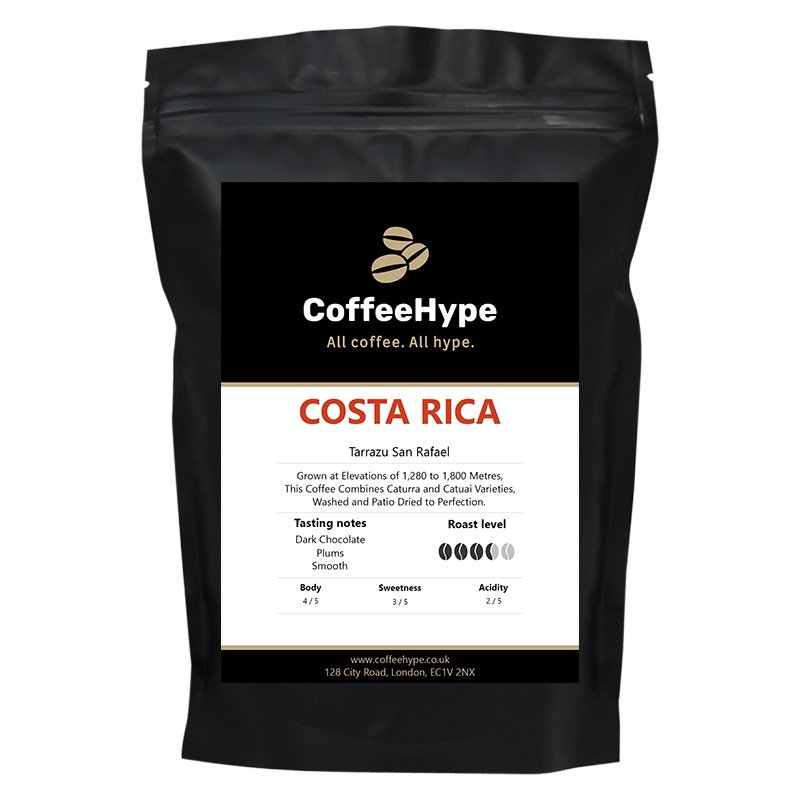
Costa Rica Tarrazu San Rafael Coffee
From: £9.99 — or subscribe to save 10% -
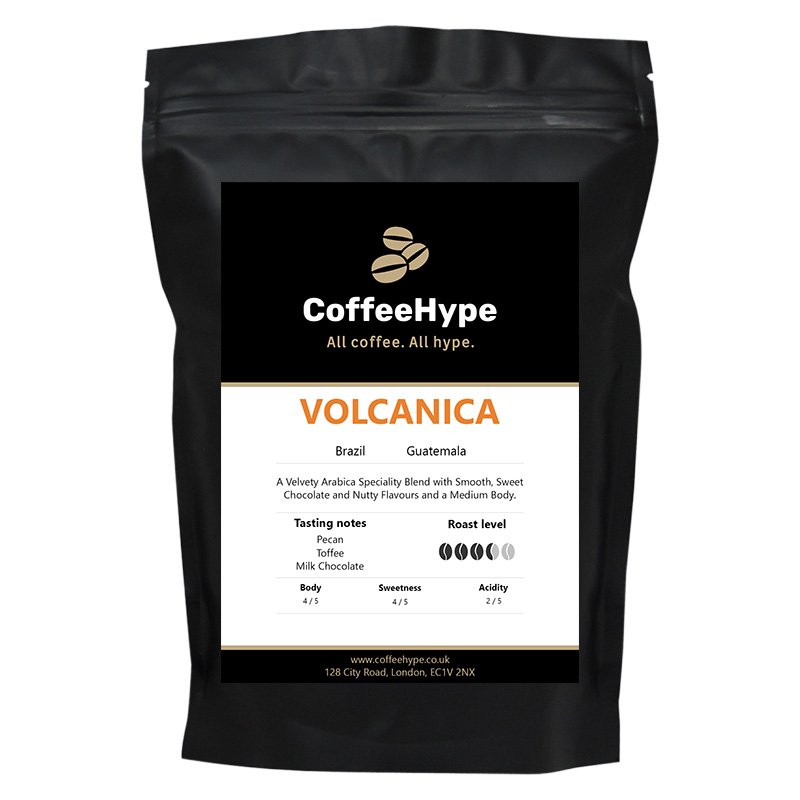
Volcanica Coffee Blend
From: £9.99 — or subscribe to save 10%


2026