Costa Rica coffee has earned an international reputation for quality, but there’s far more to the country’s beans than a single flavour profile.
Volcanic soils, mountainous landscapes and varied microclimates create distinctive growing conditions across this relatively small Central American country. Costa Rica is also notable for its focus on Arabica and its long-established coffee-processing industry.
From the famous coffees of Tarrazú to those grown in the Central and Western Valleys, there’s considerable variety to explore.
This Costa Rica coffee guide covers its history, eight growing regions, important varieties, processing methods, flavours and some of the best ways to brew the beans at home.
The history of Costa Rica coffee
Coffee cultivation in Costa Rica dates back more than two centuries.
The Coffee Institute of Costa Rica, known as ICAFE, records that coffee began taking root in the country from 1808, although the first plants arrived towards the end of the 18th century.
Costa Rica subsequently became the first Central American country to establish a commercial coffee industry.
Following independence in 1821, authorities actively encouraged cultivation. Coffee plants were distributed and policies were introduced to encourage farmers to grow the crop.
The first recorded coffee export went to Panama in 1820, while trade with Europe developed during the following decades. By the 1840s, Britain had become an important destination for Costa Rican beans.
Coffee eventually became deeply connected with the country’s economic development, helping finance infrastructure and influencing the growth of communities and trade.
You can explore this history in more detail through the Coffee Institute of Costa Rica.
Today, Costa Rica coffee combines that long history with an industry strongly associated with quality and traceable regional production.
Why is Costa Rica good for growing coffee?
Costa Rica has several natural characteristics favourable to coffee cultivation.
Mountain ranges and volcanic activity have created varied elevations and soils, while differences in rainfall, humidity and temperature produce distinctive growing environments.
Altitude varies considerably between coffee-producing areas.
ICAFE notes that some production occurs below 1,000 metres, while higher areas can exceed 1,200 metres. Elevation interacts with temperature, rainfall and other environmental factors to influence bean development and cup characteristics.
This means there isn’t one set of growing conditions shared by every Costa Rica coffee farm.
Region, altitude, variety, weather, farm management and processing all contribute to the finished coffee.
The eight Costa Rica coffee regions
ICAFE recognises eight coffee-producing regions:
- Tarrazú
- Brunca
- Turrialba
- Tres Ríos
- Orosi
- Guanacaste
- Central Valley
- Western Valley
Each has different elevations, rainfall patterns, soils and microclimates.
Understanding these regional differences is one of the best ways to explore Costa Rica coffee beyond the country name printed on the bag.
Tarrazú
Tarrazú is perhaps Costa Rica’s most famous coffee origin.
It’s part of the Los Santos area, a mountainous region southwest of the Central Valley where coffee is an important agricultural activity.
Caturra and Catuaí are among the principal varieties grown there.
Tarrazú coffees are often associated with good acidity, sweetness and complexity, although flavour varies between individual farms and lots.
Its reputation means you’ll frequently encounter the Tarrazú name when shopping for speciality Costa Rica coffee.
Central Valley
The Central Valley has a particularly important place in Costa Rican coffee history.
It includes parts of San José, Heredia and Alajuela and was where the country’s earliest coffee plantations became established before cultivation expanded into other regions.
Volcanoes including Irazú, Barva and Poás have influenced the landscape and soils of the region.
Today, the Central Valley continues to produce coffee across different farms, elevations and microclimates.
Western Valley
The Western Valley includes coffee-growing areas around towns such as San Ramón, Palmares, Naranjo and Grecia.
Coffee cultivation spread here from the Central Valley during the 19th century.
The region includes valleys and slopes of the Cordillera Central, with volcanic soils and clearly defined wet and dry seasons.
Depending on the individual lot and processing method, Western Valley coffee can display considerable sweetness and complexity.
Tres Ríos and Orosi
Tres Ríos and Orosi provide further examples of the geographical variety behind Costa Rica coffee.
Tres Ríos lies east of San José and has a long coffee-growing tradition, while Orosi combines mountainous terrain with its own distinctive climate.
Individual coffees from these regions vary according to farm, altitude, variety, processing and roast.
Trying beans from several Costa Rican regions side by side can be an excellent way to experience these differences yourself.
Turrialba
Turrialba is influenced by both the Atlantic side of the country and the eastern Central Valley.
ICAFE records coffee-growing elevations in the region from approximately 600 to 1,400 metres.
Its conditions can result in earlier cherry maturation than in some other parts of Costa Rica.
This is one reason it’s inaccurate to assign one harvest period or altitude range to the entire country.
Brunca
Brunca lies in southern Costa Rica and incorporates the coffee-producing areas of Pérez Zeledón and Coto Brus.
The two areas have different climatic influences and growing conditions.
Some coffee farms in the region use agroforestry systems in which coffee is protected by other vegetation.
Brunca adds another distinctive environment to the country’s remarkably varied coffee landscape.
Guanacaste
Guanacaste represents another of Costa Rica’s recognised coffee regions.
Conditions differ from the wetter and higher areas found elsewhere in the country, again demonstrating the limitations of treating all Costa Rican beans as one uniform origin.
When choosing Costa Rica coffee, checking the specific growing region can therefore provide valuable clues about the beans you’re buying.
Arabica coffee in Costa Rica
Arabica has a particularly important position within Costa Rican coffee production.
ICAFE states that Costa Rica’s coffee is Arabica and highlights Caturra and Catuaí among its important varieties.
Arabica generally offers considerable potential for sweetness, aroma and acidity when grown and processed well.
If you’d like to understand the species in greater detail, read our guide to Arabica coffee beans.
Costa Rica coffee varieties
Caturra and Catuaí are two names you’ll encounter frequently when exploring Costa Rica coffee.
Caturra is a compact natural mutation of Bourbon, while Catuaí was developed from a cross involving Caturra and Mundo Novo.
Coffee production isn’t limited to those two varieties, however.
Depending on the farm, you may encounter other traditional or newer Arabica varieties selected for quality, agricultural performance or resistance to disease.
Variety can influence the cup, but it doesn’t work in isolation.
Growing conditions, cherry ripeness, processing and roasting all have major effects on flavour.
How Costa Rica coffee is harvested
Coffee cherries ripen at different times depending on region, altitude and climate.
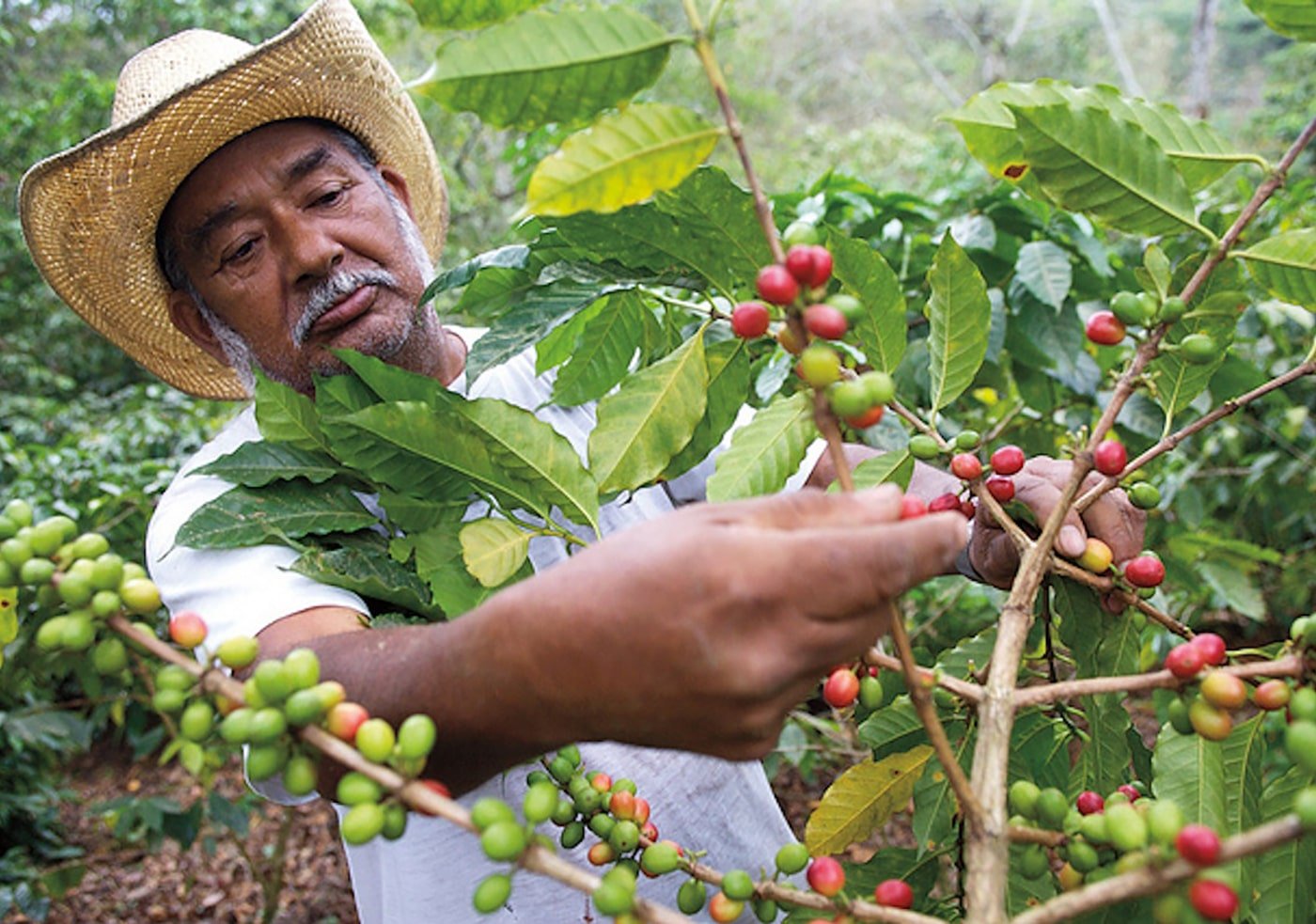
Costa Rica is strongly associated with selective manual harvesting, where ripe cherries are picked rather than harvesting everything indiscriminately. ICAFE describes manual selective picking of mature fruit as part of the country’s approach to coffee quality.
Harvest timing isn’t identical nationwide.
Earlier-maturing regions can begin harvesting before areas at higher elevations, so it’s better to consider the individual origin rather than assume one harvest calendar applies everywhere.
How Costa Rica coffee is processed
Processing is an especially interesting part of the Costa Rican speciality coffee scene.
Washed coffee
Costa Rica has a long history of wet processing.
The fruit is removed and the beans are cleaned before drying, helping produce coffees with clearly defined flavours and acidity.
Honey process
Costa Rica has also become particularly associated with honey processing.
Despite its name, no actual honey is added to the coffee.
Instead, varying amounts of the sticky fruit mucilage remain around the coffee seed while it dries.
Terms such as yellow, red and black honey may be used by producers to describe different approaches to managing mucilage and drying, although exact practices can vary.
Honey processing can produce a balance between clarity, sweetness, fruit characteristics and body.
Natural and experimental processes
Natural processing leaves the coffee seed inside the fruit during drying.
Some producers also experiment with controlled fermentations and other processing techniques to create distinctive flavour profiles.
As a result, processing is an important detail to check when comparing Costa Rica coffee beans.
What does Costa Rica coffee taste like?
There isn’t one flavour shared by every coffee from Costa Rica.
Depending on region, variety, processing and roast, you might encounter:
- Citrus
- Red fruit
- Stone fruit
- Caramel
- Honey-like sweetness
- Chocolate
- Nuts
- Floral characteristics
Many Costa Rican coffees are associated with noticeable acidity and clean, sweet flavour profiles.
However, a washed high-grown coffee can taste substantially different from a heavily fruited natural or honey-processed lot.
The tasting notes on an individual bag are therefore more useful than expecting every Costa Rica coffee to taste the same.
Is Costa Rica coffee good for filter brewing?
Costa Rican beans can be excellent for filter brewing, particularly when you want to highlight acidity, sweetness and individual fruit characteristics.
A V60 is a good choice for producing a clean cup with plenty of clarity.
A Chemex can also work particularly well with more delicate coffees.
For greater flexibility, try an AeroPress.
Adjust your recipe to the roast and individual beans rather than assuming every Costa Rican coffee requires exactly the same brewing parameters.
Is Costa Rica coffee good for espresso?
Yes. Suitable Costa Rican beans can make excellent espresso.
Coffees with caramel, chocolate and fruit characteristics can produce sweet, balanced shots, while brighter speciality roasts can create a more distinctive single-origin espresso.
The roast profile is particularly important when deciding how easy a coffee will be to extract as espresso.
Our guide to how to make espresso coffee covers dose, yield, grind and extraction in more detail.
Trying the same Costa Rica coffee as both espresso and filter coffee can reveal very different aspects of its flavour.
Choosing Costa Rica coffee beans
Don’t stop at the country name when comparing beans.
Look for information such as:
- Growing region
- Farm or producer
- Variety
- Processing method
- Roast level
- Tasting notes
For example, knowing whether you’re buying a washed Tarrazú or honey-processed Western Valley coffee gives you considerably more information than simply seeing “Costa Rica” on the bag.
Our best coffee beans guide explains what else to consider when choosing coffee.
Buying freshly roasted beans and grinding shortly before brewing can also help preserve aroma and flavour.
Discover Costa Rica coffee
More than two centuries of cultivation have made coffee an important part of Costa Rica’s history and agricultural identity.
Its eight growing regions demonstrate how much diversity can exist within one country. Tarrazú, the Central Valley, Western Valley, Turrialba and the other recognised origins each bring different growing conditions to the cup.
Add Arabica varieties and washed, honey and natural processing to that regional diversity, and there’s an enormous range to explore.
Browse our freshly roasted coffee beans and compare coffees from different origins, roast levels and flavour profiles.
Whether you prefer bright filter coffee, sweet espresso or want to explore honey processing, Costa Rica coffee provides plenty to discover.
Best Selling Products
-

Brazil Fazenda Pinhal Coffee
From: £9.99 — or subscribe to save 10% -
House Blend Coffee
From: £9.99 — or subscribe to save 10% -
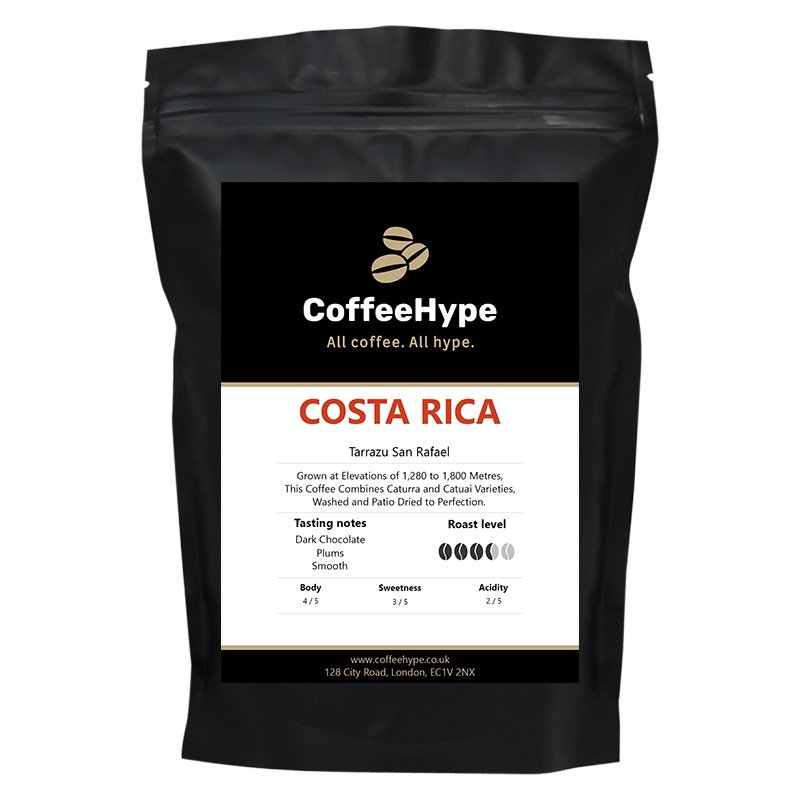
Costa Rica Tarrazu San Rafael Coffee
From: £9.99 — or subscribe to save 10% -
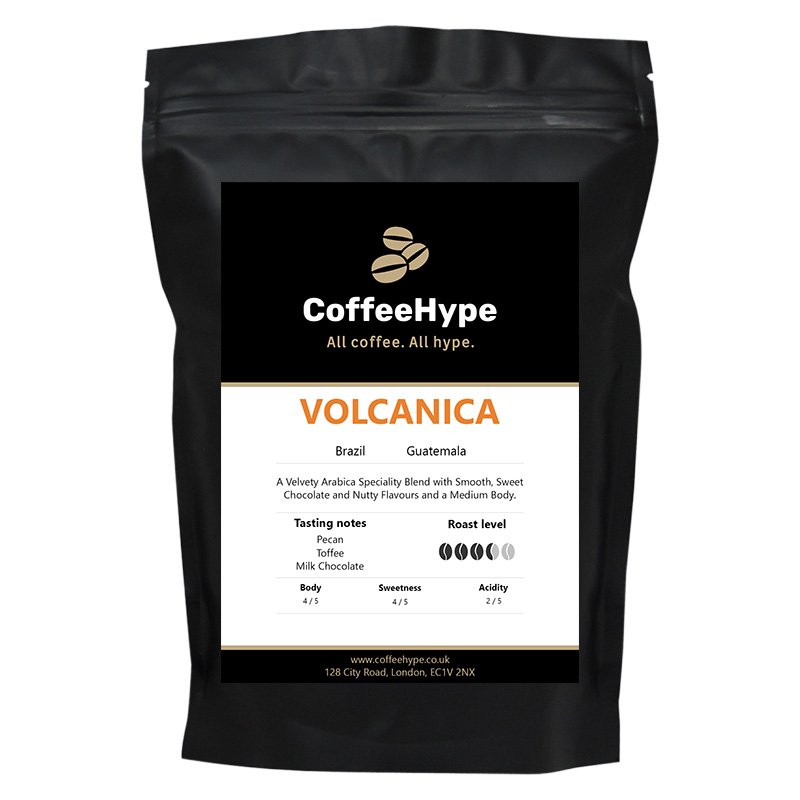
Volcanica Coffee Blend
From: £9.99 — or subscribe to save 10%


2023