The history of espresso stretches back more than a century, but the small, concentrated coffee we recognise today didn’t appear from a single invention.
Instead, the history of espresso developed through decades of experimentation with steam, pressure, temperature and increasingly sophisticated coffee machines.
From Angelo Moriondo’s pioneering machine in 1884 and Luigi Bezzera’s innovations at the beginning of the 20th century to Achille Gaggia’s high-pressure lever system, each development brought espresso closer to the drink we know today.
Its journey didn’t end in Italy either.
Espresso eventually became the foundation of cappuccinos, lattes, flat whites and countless other drinks served in coffee shops around the world.
Here’s how it happened.
Where does the history of espresso begin?
The history of espresso is closely connected with the development of machines capable of preparing coffee much faster than traditional brewing methods.
One of the earliest important developments came from Italian inventor Angelo Moriondo.
In 1884, Moriondo patented a steam-powered machine designed to prepare coffee quickly.
His machine wasn’t the same as a modern espresso machine and didn’t produce the individual high-pressure espresso shots we recognise today.
Nevertheless, it represented an important step in the history of espresso and towards mechanised, rapid coffee preparation.
The next major developments would come around the turn of the century.
Luigi Bezzera and the development of espresso
Luigi Bezzera is one of the most important names in the history of espresso.
In Milan in 1901, Bezzera developed and patented improvements to machinery for preparing coffee rapidly.
His system used steam to generate the heat and pressure needed to force water through ground coffee.
The result was coffee that could be prepared much faster than many traditional methods.
This idea suited a changing Italy, where cities were growing and industrialisation was altering the pace of everyday life.
However, Bezzera wasn’t the person who would turn the machine into a major commercial product.
That role fell to Desiderio Pavoni.
Desiderio Pavoni takes espresso into cafés
Desiderio Pavoni acquired rights to Bezzera’s invention and went on to establish La Pavoni in Milan in 1905.
The company began manufacturing commercial coffee machines, including the famous Ideale.
These early machines looked very different from the compact espresso machines found in cafés today.
They were imposing vertical boilers built from metal, with steam and hot water forming an important part of the brewing process.
La Pavoni’s history of its early espresso machines provides a fascinating look at this period in the history of espresso.
Commercial production helped move rapid machine-brewed coffee from an invention towards something cafés could actually serve.
And that helped establish one of espresso culture’s defining characteristics: speed.
Why is it called espresso?
The origin of the word “espresso” is sometimes oversimplified.
It is connected with the Italian idea of coffee being prepared rapidly and expressly for the customer.
Early machines were specifically promoted around their ability to prepare coffee quickly.
That speed differentiated machine-prepared coffee from slower brewing methods.
Over time, espresso came to describe not merely fast coffee, but a particular style of concentrated drink prepared by forcing hot water through finely ground coffee under pressure.
The technology still had a long way to go before reaching the modern espresso, though.
Early espresso was different from today’s drink
If you travelled back through the history of espresso to an Italian café in the early decades of the 20th century, your coffee wouldn’t necessarily resemble a modern espresso.
Early commercial machines relied heavily on steam pressure.
They could prepare coffee rapidly, but they operated differently from later machines capable of producing much greater brewing pressure.
Most importantly, the characteristic golden-brown crema associated with modern espresso hadn’t yet become a defining feature.
That transformation is closely connected with another famous Italian name: Achille Gaggia.
Achille Gaggia transforms the history of espresso
The next major chapter in the history of espresso began with Milanese café owner Achille Gaggia.
Gaggia spent years experimenting with ways to improve coffee extraction.
In 1938, he patented his “Lampo” system, which used hot water pressure rather than relying on steam passing through the coffee.
Then, in 1947, Gaggia registered another patent involving a lever-and-piston mechanism.
The system used a spring-loaded piston to push hot water through finely ground coffee at substantially higher pressure.
In 1948, Gaggia began producing commercial machines incorporating this technology.
It represented a major change in espresso preparation.
Gaggia’s history of its espresso technology documents the company’s early patents and an important turning point in the history of espresso.
The arrival of crema
Higher-pressure extraction did something visually striking to the coffee.
A layer of golden-brown foam appeared on top.
Today we know it as crema.
At the time, customers weren’t necessarily accustomed to seeing it.
Gaggia promoted the characteristic as “crema naturale” — natural coffee cream — helping turn what was unfamiliar into a desirable feature of the new espresso.
Crema is formed from gases, oils and other compounds released during espresso extraction.
Its appearance became closely associated with the modern espresso shot.
This moment is one of the most significant turning points in the history of espresso because the resulting drink was much closer to what we’d recognise in a café today.
Lever machines and the espresso shot
Gaggia’s lever machines also influenced espresso terminology.
Pulling the lever compressed the spring before the mechanism pushed water through the coffee.
This manual action is associated with the expression “pulling a shot”, terminology still widely used today even though most modern commercial machines no longer require the barista to pull a large lever.
The new system also made it possible to prepare concentrated coffee relatively quickly.
Espresso had become more than simply coffee made faster by a machine.
It was developing its own extraction style, appearance and café ritual.
Espresso culture grows in Italy
As the history of espresso progressed, espresso bars became an increasingly familiar part of Italian life.
The format suited quick social interaction.
Customers could enter a café, order an espresso at the bar, drink it relatively quickly and continue with their day.
But espresso also became the foundation for a growing family of drinks.
Steam systems on coffee machines made it possible to heat and texture milk, helping establish drinks such as cappuccino.
The intense flavour of espresso worked particularly well as the base because it remained noticeable when combined with milk.
If you’d like to make one yourself, our guide explains how to make a cappuccino.
How espresso machines became easier to use
Lever machines were revolutionary, but espresso-machine development didn’t stop there.
Later machines introduced electric pumps capable of generating brewing pressure without requiring the barista to manually operate a large lever for every extraction.
This helped make espresso preparation more consistent and practical in busy commercial environments.
Temperature control, boilers, group heads and pressure systems continued to evolve.
Modern commercial espresso machines may look dramatically different from the towering steam machines of the early 1900s, but they’re part of the same history of espresso.
The objective remains remarkably familiar: pass hot water through finely ground coffee under controlled conditions to produce a concentrated drink quickly.
Espresso spreads around the world
The history of espresso may begin in Italy, but Italian coffee culture didn’t stay there.
Italian migration helped introduce espresso machines and café traditions to countries around the world.
Espresso became established in coffee cultures across Europe, Australia, North America and elsewhere.
Different countries then adapted espresso to local tastes.
Some embraced short, intense drinks.
Others developed larger milk-based drinks.
Eventually, espresso became a kind of international coffee language.
Order an espresso, latte or cappuccino in cities thousands of miles apart and the details may vary, but the basic espresso foundation remains recognisable.
How Starbucks helped popularise espresso drinks
The expansion of large coffeehouse chains played another role in the history of espresso and took espresso-based drinks to a mass audience.
One commonly repeated version of the history gets an important detail wrong: Starbucks did not open its first shop in 1983.
Starbucks was founded in Seattle in 1971, originally selling whole coffee beans, tea and spices rather than operating as the espresso-focused coffeehouse most people recognise today.
Howard Schultz joined the company in 1982.
After visiting Milan in 1983, he became fascinated by Italian espresso-bar culture.
Starbucks experimented with serving café lattes in Seattle in 1984, and after a series of business changes, it emerged as an espresso-serving coffeehouse business in 1987.
During the following years, Starbucks and other expanding coffee chains helped introduce huge numbers of consumers to drinks such as lattes, cappuccinos and macchiatos.
Espresso was no longer primarily associated with Italian cafés.
It had become part of mainstream international coffee culture.
Espresso and the rise of the latte
As espresso spread internationally, milk-based drinks became particularly important.
The latte combined espresso with a much larger proportion of steamed milk, creating a milder drink that appealed to people who might find straight espresso too intense.
Variations involving syrups and different milk choices expanded the format even further.
Today, the latte is one of the most recognisable espresso-based drinks.
You can learn to prepare one at home with our guide on how to make a latte.
Where does the flat white fit into espresso history?
The flat white is a much more recent addition to the history of espresso.
Its exact origin remains disputed, with both Australia and New Zealand claiming an important role in its creation during the 1980s.
Rather than settling that long-running argument, it’s safer to say the drink emerged from Australasian coffee culture.
The flat white generally combines espresso with steamed milk and fine microfoam, typically producing a coffee-forward drink with a smooth texture.
Its later popularity in Britain and elsewhere demonstrates how espresso culture continued to evolve long after leaving Italy.
Our flat white guide explains how you can make one yourself.
The specialty coffee movement changes espresso again
By the late 20th and early 21st centuries, another transformation in the history of espresso was taking place.
Specialty coffee placed greater emphasis on factors including:
- Coffee origin
- Variety
- Processing
- Roast development
- Grind consistency
- Water
- Extraction
- Freshness
Espresso was increasingly treated as something to analyse and refine rather than simply a quick caffeine hit.
Baristas experimented with dose, yield, extraction time and temperature.
Coffee drinkers became more interested in where their beans came from and how different origins affected flavour.
The history of espresso had entered another stage: precision.
Espresso comes home
For much of the history of espresso, genuine espresso required large and expensive commercial equipment.
That gradually changed.
Domestic espresso machines became increasingly capable and widely available, giving coffee drinkers the ability to experiment with espresso in their own kitchens.
Home grinders improved too.
Today, home enthusiasts routinely discuss concepts once largely confined to professional cafés:
- Grind size
- Dose
- Yield
- Brew ratio
- Extraction time
- Water temperature
- Distribution
- Tamping
- Milk texture
For many people, making espresso at home has become a hobby as much as a way to prepare a drink.
Why the grinder matters
One lesson from modern espresso culture is that the machine is only part of the setup.
Espresso requires coffee to be ground finely and consistently.
Small adjustments to grind size can have a significant effect on how quickly water passes through the coffee and how the resulting espresso tastes.
This is why dedicated coffee grinders have become such an important part of home and professional espresso setups.
Fresh beans matter too.
Our guide to how to store your coffee covers some simple ways to protect coffee from air, moisture, heat and light.
How is modern espresso made?
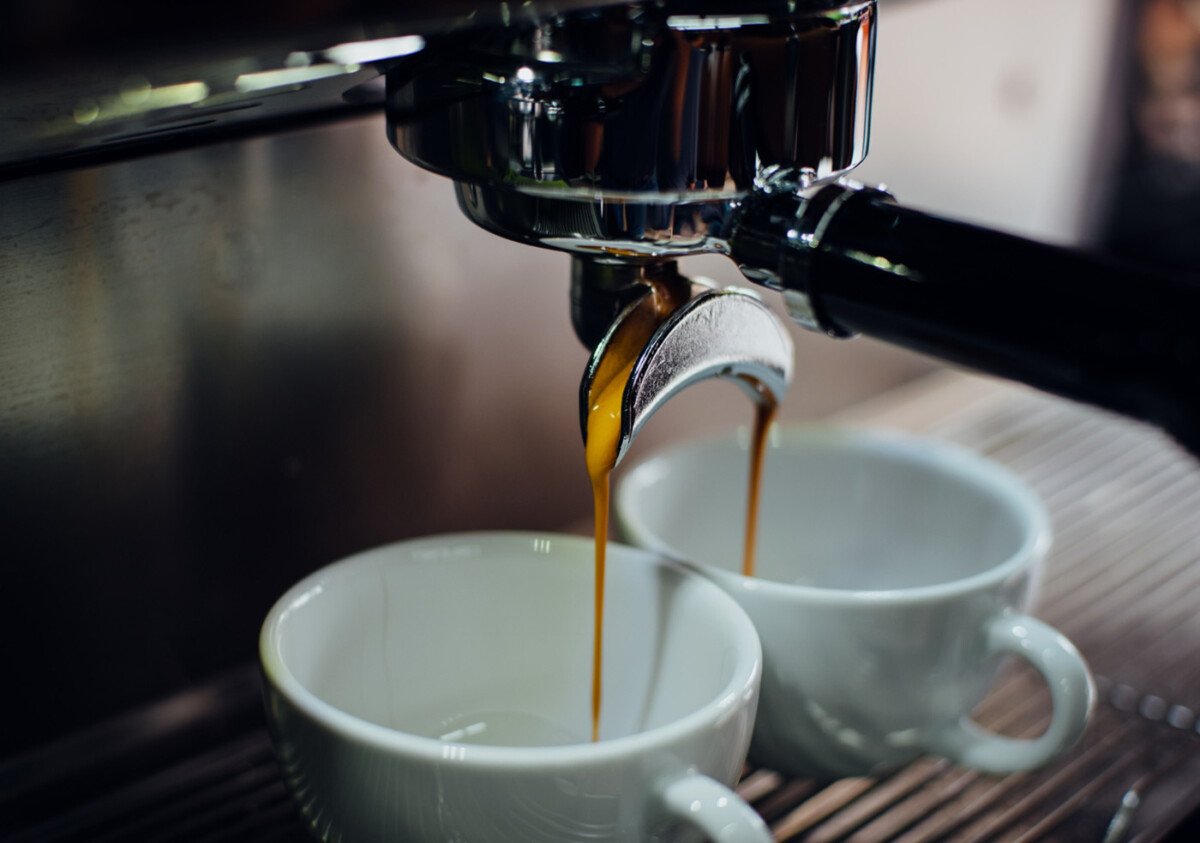
Modern espresso is prepared by forcing hot water through a compact bed of finely ground coffee under pressure.
Although recipes vary, the process happens quickly compared with many filter-brewing methods.
Small changes can noticeably affect the cup.
A grind that’s too coarse may allow water through too quickly.
A grind that’s too fine may restrict the flow.
Dose, distribution, tamping and the coffee itself can also influence extraction.
That’s why espresso can take some practice to master.
Our complete guide to how to make an espresso takes you through the practical brewing process.
Espresso becomes the foundation of modern café menus
One reason the history of espresso is so important is the sheer number of drinks built around it.
A typical café can use espresso to make:
- Americano
- Cappuccino
- Latte
- Flat white
- Macchiato
- Mocha
- Cortado
- Iced latte
Change the amount of espresso, water, milk and foam and you can create remarkably different drinks from the same basic foundation.
Espresso even moved beyond the traditional coffee menu.
The espresso martini combines coffee with vodka and coffee liqueur, while drinks such as Black Eye Coffee add espresso to brewed coffee for an altogether stronger experience.
What has changed during the history of espresso?
Compare a modern espresso setup with an early 20th-century machine and the technological differences are enormous.
The history of espresso has seen changes in:
- Brewing pressure
- Temperature management
- Boiler design
- Pump technology
- Grinder precision
- Portafilter design
- Water treatment
- Electronic controls
- Weighing and timing
- Milk steaming
Yet the fundamental appeal has remained surprisingly consistent.
Espresso offers a concentrated coffee experience prepared quickly and individually.
That combination helped make it successful more than a century ago and continues to make it relevant today.
Is espresso still evolving?
Absolutely.
The history of espresso is still being written as equipment manufacturers, coffee roasters, baristas and home enthusiasts experiment with extraction.
Pressure profiling, temperature control, precision grinders and increasingly sophisticated domestic machines give coffee makers more control than early espresso pioneers could have imagined.
At the same time, there’s renewed interest in the fundamentals: good beans, an appropriate roast, consistent grinding and careful preparation.
Technology has changed enormously, but great espresso still starts with the coffee.
The history of espresso continues
The history of espresso isn’t the story of one inventor or one machine.
Angelo Moriondo helped establish the idea of rapid machine-brewed coffee in the 19th century. Luigi Bezzera developed important improvements around the beginning of the 20th. Desiderio Pavoni helped commercialise the technology, and Achille Gaggia’s pressure-driven systems transformed the resulting drink.
Later innovations made machines easier to operate, while Italian café culture carried espresso far beyond its birthplace.
International coffeehouses then introduced espresso drinks to an even wider audience, and today’s specialty-coffee movement has brought unprecedented attention to extraction and flavour.
More than a century after those early machines appeared, the history of espresso continues to influence modern coffee culture.
Every time you pull a shot, make a cappuccino or steam milk for a flat white, you’re using techniques shaped by generations of experimentation.
And that makes every espresso a small continuation of coffee history.
Ready to put that history into practice? Browse CoffeeHype’s freshly roasted coffee beans and find a coffee for your next espresso.
Best Selling Products
-

Brazil Fazenda Pinhal Coffee
From: £9.99 — or subscribe to save 10% -
House Blend Coffee
From: £9.99 — or subscribe to save 10% -
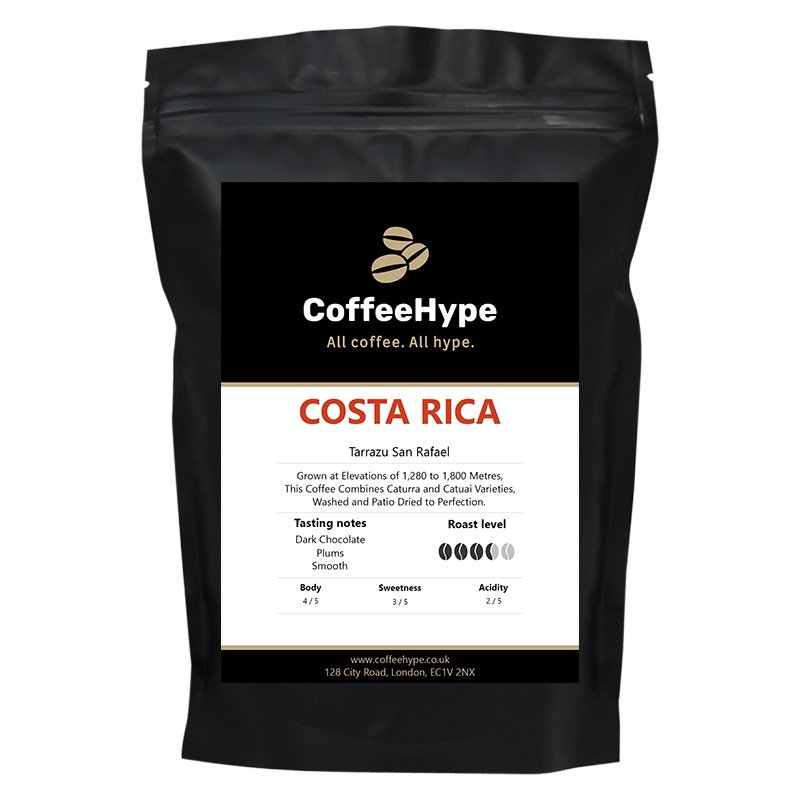
Costa Rica Tarrazu San Rafael Coffee
From: £9.99 — or subscribe to save 10% -
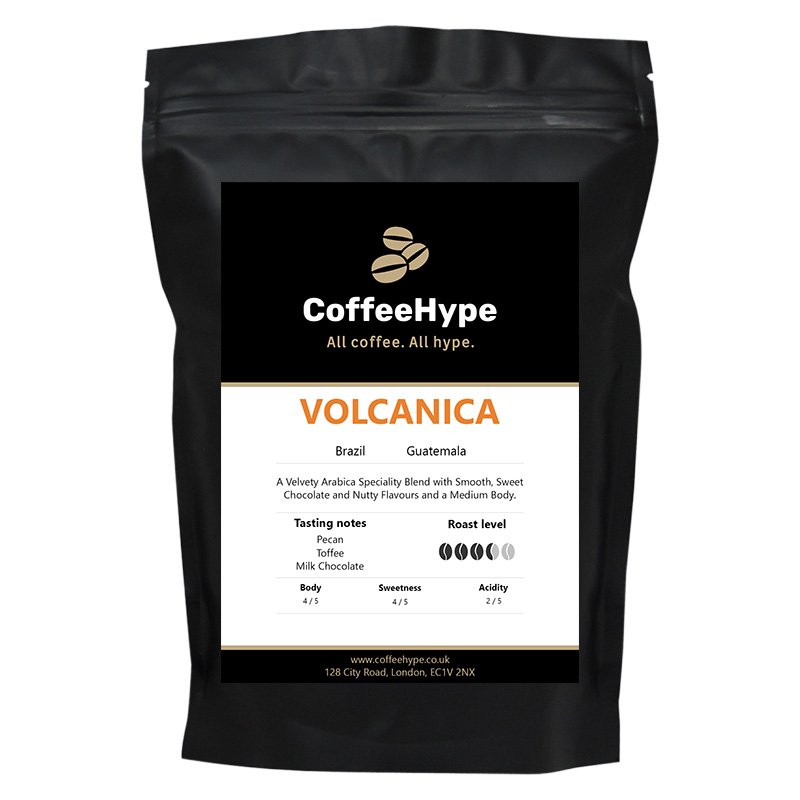
Volcanica Coffee Blend
From: £9.99 — or subscribe to save 10%


2025